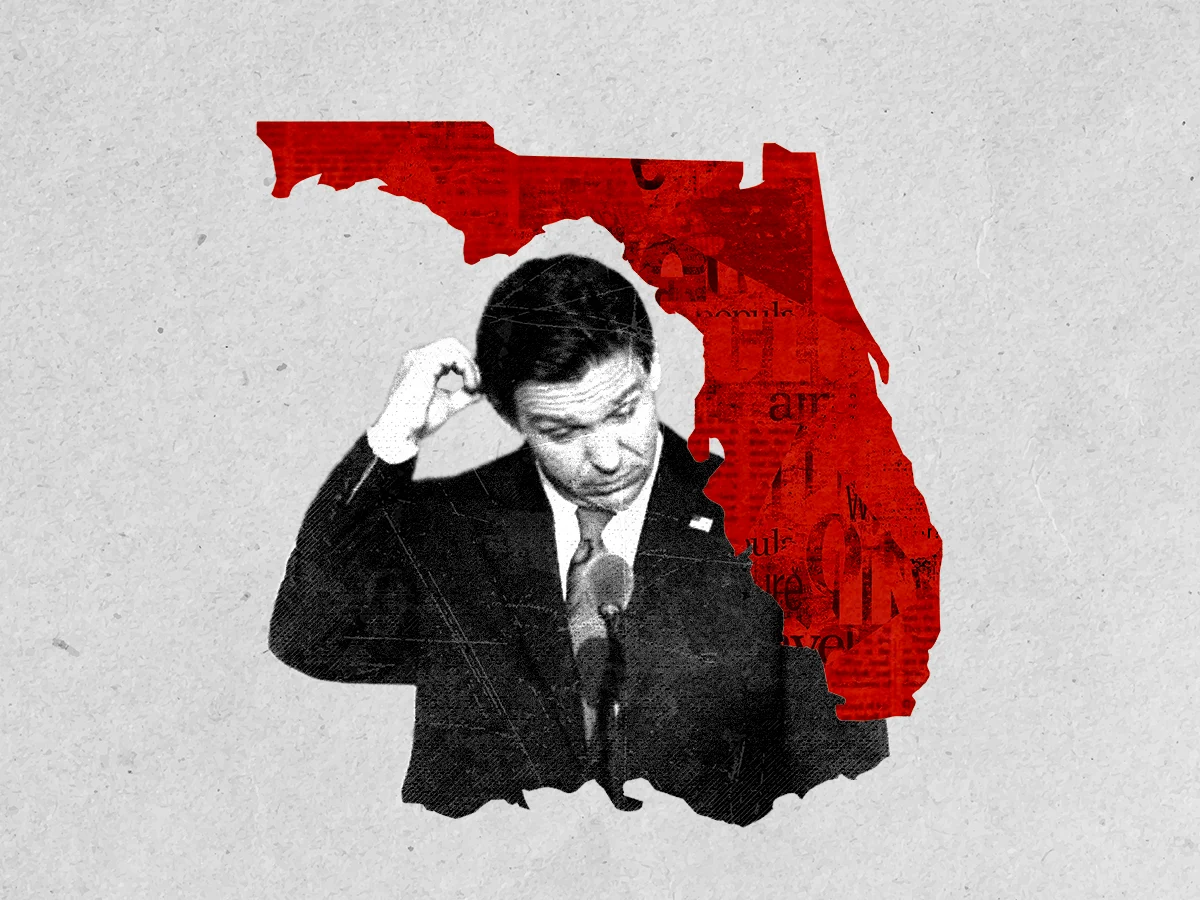
Florida Governor Ron DeSantis has emphatically positioned himself as a transformative figure, crediting his leadership with fundamentally reshaping the Sunshine State’s political landscape. His resounding 19-percentage-point reelection victory in 2022, he contends, signifies not merely a substantial win, but a definitive "realignment of Florida from being a swing state to being a red state." This assertion resonates with much contemporary political analysis, which widely acknowledges Florida’s discernible shift from its historical reputation for razor-thin electoral contests to a comfortably Republican-leaning stronghold. However, a deeper examination reveals that the extent of DeSantis’s personal credit for this profound change, and indeed whether it constitutes a permanent realignment, remains a subject of considerable debate.
The governor’s most prominent argument, that his anti-COVID-19 restriction policies attracted a wave of conservative "political refugees" to the state, is challenging to substantiate with concrete evidence. While his administration’s investment in the state Republican Party has yielded tangible results in voter registration, its success is intertwined with several pre-existing and concurrent factors. Furthermore, significant Republican gains among Hispanic voters, a crucial demographic in Florida, largely predate DeSantis’s most impactful policy decisions and align with broader national trends, suggesting his direct influence might be less pronounced than claimed. Finally, the dramatic partisan turnout disparities observed in the 2022 election introduce substantial doubt about the long-term sustainability of Florida’s perceived "red" status, cautioning against sweeping conclusions based on a single, albeit decisive, electoral outcome.
Florida’s Enduring Legacy as a Battleground State
For decades, Florida epitomized the term "swing state," a political enigma where presidential and statewide elections were often decided by mere hundreds or thousands of votes. The infamous 2000 presidential election recount, which ultimately determined the presidency, cemented Florida’s image as the nation’s most unpredictable electoral battleground. Through the early 2000s and into the 2010s, both Republican and Democratic candidates consistently vied for its 29 (now 30) electoral votes, investing heavily in campaigns that often went down to the wire. Governorships, Senate seats, and legislative control frequently swung between the two major parties, reflecting a finely balanced electorate. Figures like Republican Governor Jeb Bush, who served from 1999 to 2007, and later Rick Scott, who narrowly won the governorship in 2010 and 2014, navigated this volatile environment. Democrats also saw success, with Barack Obama winning the state in both 2008 and 2012. This historical context of intense electoral competition is vital for understanding the magnitude of the claimed shift under DeSantis. Florida’s unique demographic tapestry, comprising a significant elderly population, a diverse and growing Hispanic community (including long-established Cuban-Americans, Puerto Ricans, and recent arrivals from Central and South America), and a constant influx of domestic migrants, has always made it a microcosm of national political trends, albeit with its own distinct flavor.
Ron DeSantis’s Ascendancy and Policy Platform
Ron DeSantis, a former U.S. Congressman, was first elected governor in 2018 by a razor-thin margin of just 0.4 percentage points, defeating Democrat Andrew Gillum. His initial term was characterized by a relatively moderate approach, but this shifted dramatically with the onset of the COVID-19 pandemic in early 2020. DeSantis became a vocal opponent of stringent lockdown measures, mask mandates, and vaccine passports, advocating for an open economy and individual liberties. These policies, which sharply contrasted with those implemented in many other states, quickly garnered him national attention and solidified his appeal among conservatives.
Throughout his first term and leading into his 2022 reelection campaign, DeSantis expanded his policy agenda to encompass broader "anti-woke" initiatives. These included legislative actions restricting discussions of race and gender identity in schools ("Don’t Say Gay" bill), taking on Disney over its opposition to these laws, enacting stricter immigration policies, and championing parental rights in education. His approach, often characterized by aggressive challenges to perceived liberal orthodoxies, resonated deeply with a segment of the Republican base and transformed him into a leading figure in the conservative movement. This strategic alignment with national conservative priorities, particularly his willingness to engage in "culture war" battles, became a hallmark of his governorship and a central tenet of his presidential campaign narrative.
The "Political Refugee" Narrative: A Closer Look at Migration Trends
A cornerstone of DeSantis’s argument for Florida’s political transformation is the claim that his anti-lockdown stance during the COVID-19 pandemic attracted a substantial influx of conservative-leaning "political refugees" from states with more restrictive policies. Prominent Florida Republican political consultant Justin Sayfie, among others, has echoed this sentiment, suggesting that DeSantis’s COVID-19 policies are "responsible for the deeper shade of red that Florida has now become."
However, a closer examination of migration data reveals a more nuanced picture. Florida has long been a magnet for domestic migration, experiencing consistent population growth well before the pandemic. According to American Community Survey estimates, Florida saw 674,740 people move from other states or Washington D.C. in 2021, marking the largest influx of domestic migrants into any single state. While this figure represents an uptick from pre-pandemic levels, it is not an entirely unprecedented surge for Florida, which has historically attracted large numbers of newcomers. The increase in domestic migrants from 2019 (before the pandemic) to 2021 was approximately 73,129, a notable but not overwhelming difference in the context of the state’s overall population dynamics.
Furthermore, the motivations for relocation are complex and multifaceted. Surveys and anecdotal evidence consistently indicate that traditional factors such as lower taxes, more affordable housing (though this is becoming less true in recent years), and favorable weather conditions remain primary drivers for people moving to Florida. For instance, a 2022 open call by the Tampa Bay Times for reasons behind relocation yielded responses predominantly citing economic and lifestyle factors. While some respondents did mention dissatisfaction with COVID-19 restrictions in their previous states, others cited the newfound flexibility of remote work as a key enabler for their move, allowing them to pursue these long-standing Florida advantages. It’s also critical to note that Florida has had no personal income tax since 1968, a significant financial draw that predates DeSantis’s tenure and cannot be attributed to his policies. Therefore, while it is plausible that DeSantis’s COVID-19 policies may have influenced some individuals’ decisions to move, definitively proving a widespread, ideologically driven "political refugee" phenomenon large enough to fundamentally alter the state’s political composition remains challenging. Demographers and sociologists generally concur that economic opportunities and quality of life factors far outweigh political alignment as primary drivers for inter-state migration.
The GOP’s Strategic Party-Building and Democratic Disarray
While the impact of "political refugees" is debatable, DeSantis’s administration undeniably played a role in bolstering the state Republican Party’s organizational strength and voter registration efforts. Since the end of 2018, Florida has witnessed a net increase of 525,418 registered Republican voters. Shortly after his 2019 inauguration, DeSantis directed the state GOP to prioritize voter registration, an initiative that saw the party achieve its largest net gain of over 40,000 voters in a pre-presidential election year this century. This momentum continued into 2020, with the party adding a record-setting nearly half a million voters. In 2021, DeSantis personally contributed $2 million to this registration push, culminating in a historic milestone that November when registered Republicans officially surpassed registered Democrats in Florida for the first time. The trend was capped in 2022 with another 188,323 net Republican additions, the highest for a midterm year in at least two decades.
However, attributing this success solely to DeSantis overlooks crucial preceding trends and external factors. The Republican Party had been steadily narrowing the registration gap with Democrats for years, with significant accelerations observed during presidential election cycles. Former President Donald Trump’s campaigns in 2016 and 2020 are widely credited with energizing and registering a substantial number of new Republican voters, particularly in areas where he held strong appeal. The GOP’s strategic focus on data-driven grassroots organizing and continuous voter outreach predates DeSantis’s governorship, laying a fertile groundwork for the later gains.

Perhaps the most significant, yet often underappreciated, factor in the GOP’s registration ascendancy is the chronic disarray within the Florida Democratic Party. Beyond simply adding Republicans, the state has seen a decrease of 299,808 registered Democrats since the end of 2018, despite overall state population growth. The Florida Democratic Party has faced well-documented challenges for years, including persistent fundraising difficulties, organizational inefficiencies, and a lack of sustained investment in voter registration and engagement efforts. This systemic weakness has left the party ill-equipped to counteract natural voter attrition or mount effective counter-registration campaigns. Had the Democratic Party merely maintained its 2020 registration levels, it would still hold a statewide numerical advantage over Republicans, underscoring that the GOP’s success is as much a function of Democratic shortcomings as it is of Republican prowess.
The Shifting Allegiance of Hispanic Voters
The Republican Party’s recent dominance in Florida cannot be fully understood without acknowledging its significant inroads among Hispanic voters. Data from Catalist, a Democratic-aligned data firm, indicates a dramatic decline in Hispanic support for Florida Democrats. In 2022, Democratic gubernatorial nominee Charlie Crist garnered only 44 percent of the Hispanic vote, a stark contrast to Hillary Clinton’s 66 percent in the 2016 presidential race. This shift is particularly impactful given that Florida’s citizen voting-age population is approximately 21 percent Hispanic, a highly diverse demographic group.
However, the rightward movement of Hispanic voters in Florida largely predates DeSantis’s 2022 campaign. The most significant shift occurred in 2020, when President Biden received only 50 percent of the Hispanic vote in Florida, according to Catalist, accounting for the majority of the drop from 2016. This suggests that former President Trump played a pivotal role, leveraging his messaging on economic reopening during the pandemic and employing targeted outreach strategies tailored to Florida’s distinct Hispanic communities. His anti-socialist rhetoric, in particular, resonated strongly with many Cuban-Americans, Venezuelan-Americans, and other groups with direct experience of socialist or communist regimes.
Moreover, the rightward swing among Latinos is not unique to Florida; it represents a broader national phenomenon. Nationally, Hispanic support for Democrats fell from 71 percent in 2016 to 62 percent in both 2020 and 2022, based on presidential and national House popular vote data. While Florida’s Hispanic population is unique in its composition (predominantly Cuban, Puerto Rican, and South American descent, differing from the Mexican-American majority elsewhere), making it susceptible to distinct political priorities, the overall trend mirrors national patterns.
While Latinos in Florida did continue to shift towards Republicans between 2020 and 2022, unlike the national stabilization, this could be attributed to DeSantis’s specific campaigns or the unique demographics. However, a critical analysis by Florida Democratic data analyst Matthew Isbell highlights another crucial factor: turnout disparities. In 2022, Florida had nearly 960,000 registered Hispanic Democrats compared to about 728,000 registered Hispanic Republicans. Yet, only approximately one-third of registered Hispanic Democrats voted, while over half of Hispanic Republicans cast ballots. This disparity meant that the actual electorate contained more Hispanic Republicans than Hispanic Democrats, significantly contributing to the GOP’s perceived success among this demographic, irrespective of a direct ideological shift.
The 2022 Election: An Outlier or a New Normal?
The most compelling argument against a permanent "realignment" stems from an examination of the 2022 election’s turnout dynamics. Matthew Isbell’s analysis reveals a colossal partisan turnout gap: 63.4 percent of registered Republicans voted, compared to only 48.6 percent of registered Democrats. This 14.8-point disparity was unprecedented, standing significantly apart from the more typical 6-7 point gaps observed in Florida’s 2016, 2018, and 2020 elections.
This raises fundamental questions about the true extent of Florida’s shift. A single election, even one as lopsided as 2022, is an insufficient basis for declaring a permanent political transformation. History is replete with examples of landslide victories in states that quickly reverted to their competitive nature. Nevada, for instance, reelected Republican Governor Brian Sandoval by a massive 47 points in 2014, yet voted for President Obama by 7 points in 2012 and Hillary Clinton by 2 points in 2016. Similarly, Republican governors have often won by large margins in traditionally blue states like Massachusetts, only for those states to consistently vote Democratic in national elections.
While there is indeed evidence of Florida drifting toward Republicans in recent years, this trend largely predates DeSantis’s most significant electoral successes. The 2022 result appears to be a historical outlier, influenced by a unique confluence of factors: a national political environment highly favorable to Republicans (the traditional "red wave" phenomenon in midterms), particularly low Democratic enthusiasm, and the potent combination of DeSantis’s high profile and the Florida Democratic Party’s ongoing struggles. These conditions created a "perfect political storm," as Sayfie described it, that is unlikely to replicate in future cycles, especially in a competitive presidential election year where turnout dynamics would be fundamentally different.
Broader Implications and Future Outlook
The debate over Florida’s political trajectory carries significant implications for national politics and future election cycles. If Florida has indeed become a reliably red state, it would fundamentally alter the presidential electoral map, forcing Democrats to find alternative paths to the White House. However, if 2022 was an anomaly driven by specific turnout dynamics, then Florida could revert to its competitive nature, albeit with a noticeable Republican lean.
For the Republican Party, Florida’s apparent shift represents a successful model for party-building and conservative governance, potentially influencing strategies in other states with growing Hispanic populations or those grappling with similar "culture war" issues. For Democrats, the situation in Florida serves as a stark warning about the consequences of organizational weakness, voter disengagement, and an inability to adapt messaging to diverse demographics.
Ultimately, while Florida has undoubtedly become redder during DeSantis’s tenure, attributing this solely to his personal impact or declaring a permanent, irreversible realignment may be premature. The state’s political evolution is a complex tapestry woven from long-term demographic shifts, sustained Republican party-building efforts, the consistent struggles of the state Democratic Party, the powerful influence of national political figures like Donald Trump, and unique turnout dynamics in specific election cycles. DeSantis is undeniably a strong candidate who has capitalized on these circumstances, but the notion of a fundamental, lasting transformation solely at his hand remains a subject of ongoing, critical analysis. Future elections, particularly presidential ones with higher and more evenly distributed partisan turnout, will be the ultimate test of Florida’s true political hue.