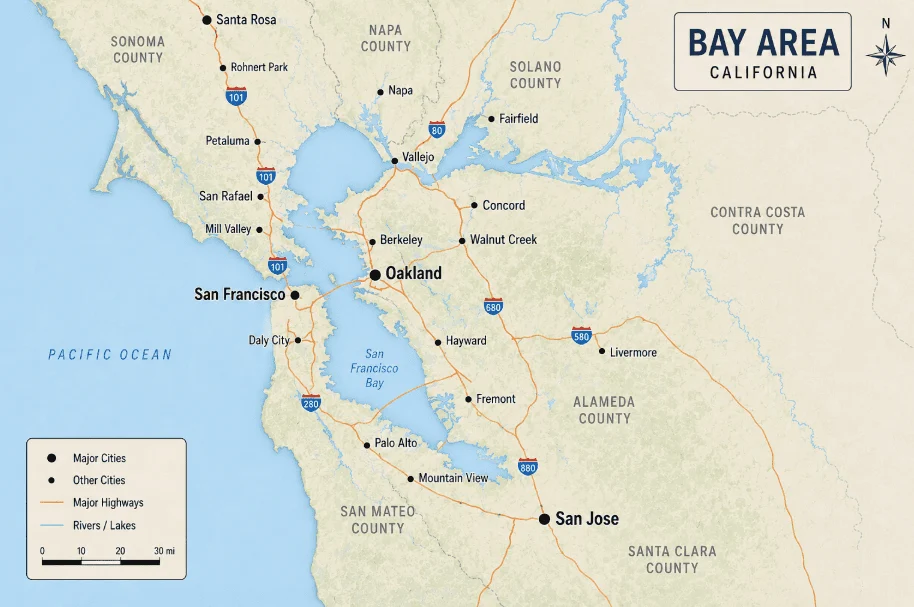
The impending public offerings of OpenAI and Anthropic, the two primary titans of the generative artificial intelligence sector, are projected to generate a level of private wealth so significant that it could fundamentally alter the residential real estate market of the San Francisco Bay Area. According to a detailed analysis of projected valuations and employee equity stakes, current and former staff members of these two companies could theoretically possess enough post-tax capital to purchase approximately 29% of all residential properties in the San Francisco metropolitan area. This figure does not merely represent a percentage of homes currently listed for sale, but rather nearly one-third of the entire housing stock within the metro region, highlighting an unprecedented concentration of wealth driven by the rapid commercialization of large language models.
While the San Francisco housing market has long been defined by the ebb and flow of the technology sector, the scale of the "AI boom" represents a departure from previous cycles. OpenAI, the creator of ChatGPT, is reportedly targeting a public valuation in the vicinity of $1 trillion. Simultaneously, its primary competitor, Anthropic, which recently filed a confidential S-1, is targeting a valuation between $965 billion and $1 trillion. The combined market capitalization of these two firms, should they reach these targets, would place them among the most valuable corporate entities in history at the time of their market debut. This surge in value is already exerting upward pressure on local real estate prices, even before the liquidity event of an Initial Public Offering (IPO) allows employees to convert their paper wealth into cash.
The Financial Architecture of the OpenAI and Anthropic Windfalls
The sheer volume of equity held by employees at these firms is the primary driver of this potential real estate transformation. OpenAI’s equity structure is relatively well-documented compared to its private peers. Reports indicate that the company has granted approximately $80 billion in vested equity to its workforce, with an additional $50 billion set aside in an employee stock grant pool. At a $1 trillion valuation, this implies that employee equity accounts for roughly 26% of the company, or $260 billion. When accounting for estimated federal and state income taxes—which are notoriously high for high-earning individuals in California—OpenAI employees are estimated to net approximately $135 billion in after-tax proceeds.
Anthropic’s equity distribution, while not publicly disclosed with the same level of granularity, follows the patterns of comparable late-stage technology firms. By subtracting known institutional stakes—including Amazon’s estimated 15% to 17% and Google’s 14%—analysts estimate that employee equity falls within the 10% to 15% range. At a midpoint valuation of $982 billion, this suggests an employee equity pool of roughly $120 billion. After adjusting for the tax obligations associated with the exercise of options and the sale of shares, Anthropic employees are projected to retain approximately $63 billion. Combined, the post-tax wealth of the workforces at these two companies could exceed $198 billion, a sum that rivals the annual GDP of many mid-sized nations.
A Chronology of the AI Real Estate Surge
The timeline of this economic phenomenon traces back to the late 2022 release of ChatGPT, which served as the catalyst for the current AI investment supercycle. However, the impact on the San Francisco housing market has followed a specific trajectory:
- Late 2022 – Mid 2023: The Birth of "Cerebral Valley." Following the viral success of generative AI, tech workers who had migrated away from San Francisco during the COVID-19 pandemic began returning to the city. Neighborhoods like Hayes Valley were rebranded as "Cerebral Valley" due to the high density of AI startups and "hacker houses."
- Early 2024: The Salary Surge. Before any IPO talk solidified, the market began to move based on high base salaries and signing bonuses. AI engineers started commanding total compensation packages ranging from $300,000 to over $1 million, allowing them to compete for high-end rentals and entry-level luxury homes.
- June 2026: The Anthropic S-1 Filing. Anthropic’s confidential filing for an IPO signaled the beginning of the "liquidity countdown." This event moved the prospect of employee wealth from a theoretical future to a near-term reality.
- Late 2026 – 2027: Projected OpenAI Listing. OpenAI’s anticipated move to the public markets, potentially delayed to 2027 following market volatility in other tech sectors, remains the "North Star" for the San Francisco economy.
Currently, San Francisco home prices are growing at their fastest pace in nearly a decade. This growth is occurring despite high interest rates that have cooled housing markets in other parts of the United States. In the Bay Area, the "wealth effect" of AI equity appears to be insulating the local market from broader macroeconomic headwinds.
Comparative Scale: The SpaceX Precedent in Texas
To understand the magnitude of the San Francisco projection, it is helpful to look at similar concentrations of tech wealth in other regions. A parallel study conducted on SpaceX, the aerospace firm led by Elon Musk, revealed a similar trend in San Antonio, Texas. SpaceX employees, many of whom are based near the company’s Starbase facility, hold an estimated $200 billion in equity. At a 10% to 15% ownership estimate, and after accounting for taxes, these employees would net roughly $120 billion.

In the context of the San Antonio housing market, which had a total valuation of approximately $297 billion in 2024, the SpaceX workforce could theoretically purchase 40% of all homes in the metro area. While the total wealth in the OpenAI and Anthropic pools is higher, the sheer value of the San Francisco real estate market—one of the most expensive in the world—means that their $198 billion post-tax windfall covers a smaller, yet still staggering, percentage of the total market (29%) compared to the SpaceX/San Antonio dynamic.
Implications for San Francisco’s Urban Fabric
The potential for a small group of tech professionals to acquire nearly one-third of a city’s housing stock raises significant questions about urban stability and affordability. For decades, San Francisco has struggled with a chronic housing shortage, driven by restrictive zoning laws and high construction costs. The sudden infusion of billions of dollars in liquid capital into a supply-constrained market typically results in rapid price appreciation, which can displace middle-income residents such as teachers, healthcare workers, and service staff.
Real estate analysts suggest that the impact will be most acute in the luxury segment. We are likely to see a surge in demand for properties priced above $5 million, particularly in historically prestigious neighborhoods like Pacific Heights, Sea Cliff, and Presidio Heights. Furthermore, the "IPO effect" often leads to a secondary wave of investment, as newly minted millionaires diversify their portfolios by purchasing investment properties or second homes within the Bay Area, further tightening the available inventory for traditional buyers.
However, there is also a potential for positive civic impact. The influx of wealth could lead to increased municipal tax revenues through property tax reassessments and transfer taxes. This revenue is critical for a city that has faced a "doom loop" narrative regarding its downtown core and commercial real estate vacancies. The AI boom is effectively rebranding San Francisco from a city in decline to the undisputed global capital of the next technological revolution.
Analysis of Market Volatility and Risk Factors
While the figures presented are based on current valuation targets, several factors could mitigate the eventual impact on the housing market. First is the "lock-up period." Following an IPO, employees are typically barred from selling their shares for 90 to 180 days. This delay means that the flood of capital into the real estate market is usually a gradual process rather than an overnight explosion.
Second, the $1 trillion valuations for OpenAI and Anthropic are predicated on continued exponential growth in the AI sector. Any significant regulatory crackdown, a slowdown in AI adoption, or a "bubble burst" in tech valuations could see these paper fortunes evaporate before they can be realized. Furthermore, the methodology used to calculate these figures assumes a broad tax rate; in reality, individual tax liabilities vary significantly based on the timing of option exercises and the specific type of equity (such as RSUs versus ISOs).
Conclusion and Methodology Summary
The data regarding the OpenAI and Anthropic wealth creation is derived from a combination of SEC filings, company announcements, and investigative reporting from the Wall Street Journal, Reuters, and Fortune. The OpenAI employee equity estimate of $260 billion is a reported figure based on known vested equity and established grant pools. The Anthropic estimate of $120 billion is a modeled figure based on the capital structure of comparable late-stage startups.
Total housing market values for the San Francisco, San Jose, and Oakland metro areas are based on Redfin’s comprehensive 2024 report on U.S. housing market values. While the calculations are illustrative and intended to convey the scale of wealth rather than predict specific real estate transactions, they serve as a potent reminder of the transformative power of the technology industry. As OpenAI and Anthropic move toward their respective market debuts, the eyes of the world will be not only on their technological breakthroughs but also on the profound economic ripples they leave in their wake across the streets of San Francisco.