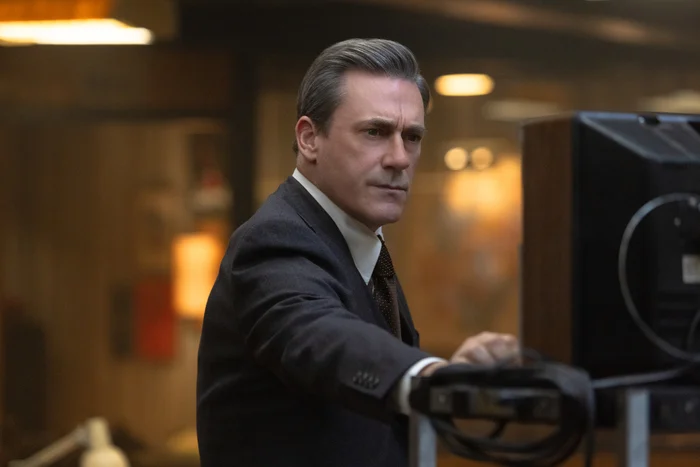
The upcoming premiere of American Hostage, set to debut on MGM+ on September 20, brings to the screen one of the most haunting true-crime narratives of the late 20th century. Starring Emmy Award winner Jon Hamm, the series depicts the harrowing 63-hour standoff between Indianapolis radio reporter Fred Heckman and Tony Kiritsis, a desperate borrower who kidnapped a mortgage broker to force a national spotlight on his grievances. While the events took place nearly five decades ago, the series serves as a mirror to contemporary anxieties, highlighting the erosion of institutional trust and the transformation of local crises into high-stakes, televised spectacles.
The 1977 Standoff: A Case Study in Crisis
The incident began on February 8, 1977, when Tony Kiritsis, a local businessman, abducted Richard Hall, a mortgage broker, and wired a shotgun to his neck. Kiritsis claimed that the mortgage company had been involved in a fraudulent scheme that stripped him of his livelihood and his future. He did not seek to disappear; rather, he sought a platform. He demanded that his side of the story be broadcast live on the radio, specifically requesting the voice of Fred Heckman, a trusted and highly respected local news broadcaster.
For three days, the city of Indianapolis—and eventually the nation—was gripped by the standoff. The situation was unique because it forced a media figure to act as an intermediary, effectively blurring the lines between objective reporting and active hostage negotiation. Heckman, played by Hamm, was thrust into a role he never sought, tasked with balancing his journalistic integrity against the literal life-or-death demands of a man pushed to the brink.
A Shifting Media Landscape
The Kiritsis case serves as a seminal moment in the history of American news coverage. Before the 24-hour news cycle and the advent of social media, the primary conduits for public information were local newsrooms and network television. The 1977 event stands as one of the first instances where a local grievance was catapulted into the national consciousness via live broadcasting.
Jon Hamm, speaking at the Toronto International Film Festival (TIFF), noted that this transition marked the beginning of the "salacious" era of news. "If you go back in time, this is one of the first times we see a local story explode nationally," Hamm remarked. He drew parallels to other defining media moments of the late 20th century, such as the Patty Hearst kidnapping and the 1994 O.J. Simpson police chase. These events, Hamm argued, set the stage for our current media environment, where content is frequently maximized for shock value and emotional resonance rather than purely informational utility.
The Erosion of Public Trust
One of the most pressing themes in American Hostage is the loss of public faith in journalism. In 1977, the figure of the local news anchor was often viewed as a "sacred" authority—a reliable voice that brought a community together. The series captures this dynamic, showing a populace that hung on every word spoken by Heckman because the news was seen as a unifying, factual baseline.
Data from the Gallup organization paints a starkly different picture of the modern landscape. According to recent polling, trust in mass media has plummeted to record lows. This "fractured" environment, as co-creator Shawn Ryan describes it, allows consumers to choose their own news ecosystems, often reinforcing existing biases rather than informing the public. Ryan, who co-created the series with Eileen Myers, emphasizes that the "journalistic aspect" of the show is more pertinent today than ever. "You can kind of choose your news more than the news really informing you these days," Ryan noted. "Back then, I’m old enough to remember what it was like for journalists to be trusted and for the news to be something that was sacred."
Thematic Resonance: The American Dream Under Siege
The title of the series, American Hostage, is a deliberate double entendre. While the plot revolves around the literal kidnapping of a mortgage broker, the narrative also questions whether Kiritsis was a hostage to the very American Dream he believed had failed him.
Hamm suggests that the story resonates today because of the persistent, underlying feeling among certain segments of the population that they have been overlooked or ignored by the mechanisms of power. Whether in 1977 or 2024, the sense of economic disenfranchisement remains a potent, and sometimes volatile, driver of social unrest. The series explores this by humanizing the hostage-taker’s desperation, not to justify his criminal actions, but to provide a psychological examination of what happens when a citizen feels they have no other way to be heard.
Production and Narrative Strategy
The television series is an expansion of a narrative podcast of the same name, which also featured Hamm in the lead role. By transitioning from audio to visual media, the production team aims to heighten the claustrophobic tension of the original standoff. The show functions as a psychological thriller, focusing on the internal conflict of Heckman, who must maintain a calm, professional demeanor while his own safety—and the lives of those involved—hang in the balance.
The creators have maintained a focus on the logistical constraints of the 1970s, which adds a layer of tension missing from modern, hyper-connected storytelling. Without cell phones or the internet, communication was slow, deliberate, and high-stakes. Every phone call and every radio transmission carried the weight of a potential breakthrough or a tragic mistake.
The Legacy of the Case and Future Implications
The resolution of the Kiritsis case in 1977 was complex and ultimately set legal precedents regarding the defense of "duress" in criminal cases. Following the standoff, Kiritsis was eventually apprehended after the hostages were released, but his trial became a media sensation that questioned the responsibility of the media in hostage situations.
For modern audiences, American Hostage serves as a reminder of how quickly a society can become captive to its own narratives. As viewers engage with the series, they are invited to reflect on the nature of truth in the modern age. If the 1977 standoff was the "beginning of where we are now," as Hamm suggests, then the series serves as a critical historical inquiry into how the media moved from a trusted institution to an often-contested arena of public debate.
The project represents a significant shift for MGM+, which is increasingly investing in high-quality, character-driven dramas that examine the intersection of history and modern social crises. By casting a high-profile talent like Jon Hamm, who has spent his career exploring complex, morally ambiguous characters, the network signals its commitment to prestige television that challenges its audience to think critically about the stories that define the national conversation.
As the premiere date approaches, the industry is watching closely to see if American Hostage will successfully bridge the gap between historical true crime and contemporary social commentary. With its emphasis on the fragility of journalistic integrity and the psychological cost of the American Dream, the series is positioned to be one of the more thought-provoking entries in the current television landscape. Whether it will lead to a broader reassessment of the media’s role in public life remains to be seen, but its arrival serves as a timely prompt to look back at the events of 1977 and consider how much, or how little, has truly changed.