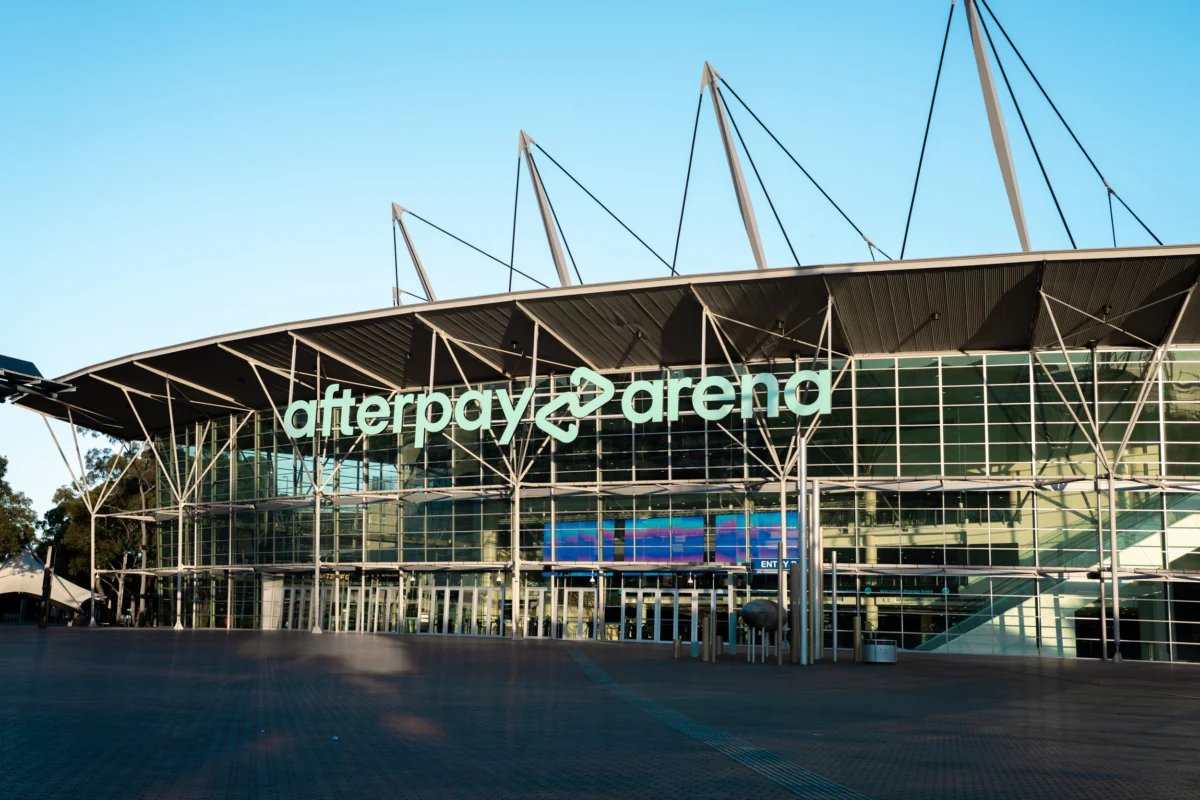
The Sydney entertainment landscape underwent a significant evolution on Thursday, July 23, as the venue formerly known as Qudos Bank Arena was officially unveiled as Afterpay Arena. The launch ceremony, held within the main arena bowl, marked the culmination of a comprehensive physical overhaul and the formal commencement of a landmark five-year naming rights partnership that is set to run through 2031. This transition represents more than a simple change in signage; it signals a fundamental shift in how fans interact with live entertainment, integrating financial technology directly into the spectator experience.
The inauguration event was attended by a cohort of high-profile executives and government officials, including Afterpay co-founder Anthony Eisen, Afterpay Vice President for APAC Mike Ryan, and Peter Loxton, the Chief Operating Officer for Asia Pacific and Middle East at Legends Global. Also in attendance was Simon Kennedy, the Federal Shadow Assistant Minister for the Digital Economy, highlighting the significance of the partnership within the broader context of Australia’s burgeoning fintech sector and its intersection with the multi-billion dollar live events industry.
A Technological and Aesthetic Metamorphosis
The rebranding of the 21,000-capacity venue follows months of intensive interior redesign and the integration of cutting-edge technology. The physical transformation of Afterpay Arena includes a significant uplift of the main foyer, the creation of two newly designed hospitality spaces, and a complete overhaul of venue-wide wayfinding systems to improve the flow of more than one million annual visitors. Perhaps the most striking addition is the installation of what the partners describe as one of the world’s largest transparent holographic LED systems, a move designed to provide immersive visual experiences for attendees from the moment they enter the building.
Beyond the aesthetic changes, the venue has been outfitted with a sophisticated commerce infrastructure. The partnership introduces the first full Square commerce integration at a venue of this scale in Australia. The arena now operates with 150 Square Registers and 65 Square Handheld devices, ensuring that the "tap-to-pay" experience for food, beverages, and merchandise is seamless. This integration is designed to reduce queue times and allow fans to spend more time watching the performances they paid to see.
The Rise of Payment Flexibility in Live Entertainment
Central to the Afterpay Arena proposition is the introduction of payment flexibility across the entire fan journey. For the first time in a major Australian entertainment destination, attendees can split the cost of ticket purchases into four interest-free instalments via Afterpay’s "Pay in 4" service. This same flexibility extends inside the venue, where the Buy Now, Pay Later (BNPL) model can be used for on-site purchases.
The decision to lean heavily into payment flexibility is backed by robust consumer data. Research commissioned by Afterpay revealed a significant barrier to entry for live music and sporting events in the current economic climate. According to the company’s findings, 94% of event-goers who have been affected by rising costs reported missing out on live events due to the burden of upfront payment barriers. Furthermore, 74% of respondents indicated they would be inclined to spend more at a venue if payment choice and instalment options were available.
By addressing these financial pain points, Afterpay and the venue’s management aim to drive higher attendance rates and increase per-head spending. Anthony Eisen emphasized this fan-centric approach during the launch, stating that the venue is now a "permanent home" for fans to experience moments that matter most to them. He noted that the entire ecosystem was built to keep fans "in the moment," from the initial ticket purchase to the final encore of the night.
Historical Context and Strategic Management
The venue located at Sydney Olympic Park has a storied history. Originally opened in 1999 as the Sydney SuperDome in preparation for the 2000 Summer Olympics, it has long served as the premier indoor arena in the Southern Hemisphere. Over the decades, it has undergone several name changes, including the Acer Arena and most recently Qudos Bank Arena, which held the naming rights from 2016 until the current transition.
The arena is operated by Ticketek Entertainment Group (TEG) and managed by Legends Global, a firm known for its expertise in stadium and arena operations worldwide. The partnership with Afterpay is viewed by management as a strategic alignment with a modern, digitally-native brand that resonates with the core demographic of concert-goers. Peter Loxton of Legends Global framed the deal as a collaborative effort to enhance the fan experience rather than a traditional sponsorship. He noted that Afterpay is the type of "engaged partner" required to navigate the next five years of the entertainment industry’s evolution.

The venue’s importance to the global music industry was recently solidified when it was named among Billboard’s Top 5 Live Music Venues in 2025. Drawing approximately 1.1 million attendees annually, Afterpay Arena remains a critical stop for major international touring acts and a home for significant domestic sporting events, including the home games of the Sydney Kings in the National Basketball League (NBL).
A Star-Studded Inaugural Calendar
To celebrate the launch, Afterpay Arena has secured an impressive roster of domestic and international talent for its inaugural season. Among the first acts scheduled to perform in the transformed space are Tame Impala, the Australian psych-rock powerhouse led by Kevin Parker, and American hip-hop heavyweight J. Cole. The lineup also features a diverse range of pop and R&B stars, including Khalid, Laufey, Robyn, Olivia Dean, and Zara Larsson.
In a move that highlights the venue’s appeal across different generations, pop icon Hilary Duff is also slated to perform, marking a significant moment for fans of early 2000s pop culture. This eclectic mix of artists underscores the arena’s mission to remain a versatile hub for all genres of music and performance art.
Economic and Industry Implications
The rebranding of Afterpay Arena occurs at a pivotal moment for the Australian economy and the global music industry. As inflation and interest rates continue to put pressure on discretionary spending, the entertainment sector has had to adapt to ensure its long-term viability. The integration of BNPL services into high-cost items like concert tickets is a trend that is gaining momentum globally, but the Sydney integration represents one of the most comprehensive applications of the model to date.
Industry analysts suggest that this move could set a precedent for other major venues in the Asia-Pacific region. By lowering the "barrier to entry" for younger demographics—who are the primary users of BNPL services—the venue is effectively future-proofing its audience base. However, the move also invites discussion regarding the ethics of credit in the entertainment space, a topic that regulators and consumer advocacy groups continue to monitor as the digital economy expands.
From a commercial perspective, the deal is a significant win for Afterpay, which was acquired by Block, Inc. (formerly Square) in a multi-billion dollar deal in 2021. The synergy between Square’s hardware and Afterpay’s consumer-facing financial products is on full display at the arena, providing a live "proof of concept" for the integrated ecosystem Block has been building.
Looking Toward the Future
As Afterpay Arena begins its five-year journey under its new identity, the focus will remain on maintaining its status as a world-class destination. The combination of physical upgrades, such as the holographic LEDs and refined hospitality spaces, with the convenience of modern payment technology, positions the venue to compete effectively with newer arenas being developed in other major Australian cities.
The presence of Simon Kennedy at the launch suggests that the government is watching these private-sector innovations closely. As the digital economy continues to intertwine with physical experiences, the success of Afterpay Arena will likely serve as a case study for how technology can be used to revitalize traditional infrastructure and drive economic activity in the post-pandemic era.
With a capacity to host over 20,000 fans per night and a calendar filled with some of the world’s most sought-after performers, Afterpay Arena is poised to remain the heartbeat of Sydney’s live entertainment scene well into the next decade. The transition marks the beginning of a new chapter for the Sydney Olympic Park precinct, one defined by digital integration, financial flexibility, and a renewed commitment to the fan experience.