The Manhattan commercial real estate market has staged a remarkable and unexpected recovery, positioning 2026 to be its most robust year for leasing activity since the turn of the century. Just three years after facing an existential crisis defined by soaring vacancy rates, plummeting property valuations, and widespread remote-work adoption, New York City’s primary business districts are experiencing an intense resurgence. Driven by a confluence of robust job growth, sweeping office-to-residential conversions, and an aggressive expansion by artificial intelligence and traditional financial firms, the market has flipped from a tenant-friendly landscape to a hyper-competitive environment where prime spaces command record-breaking rents.
The Great Reversal: From Pandemic Gloom to Record Leasing
The turnaround represents a stark contrast to the conditions of the early 2020s. At the height of the pandemic-era disruption in 2021, Manhattan commercial real estate was overwhelmed by an unprecedented surplus of space. The borough recorded roughly 52 million square feet of available office inventory, pushing vacancy rates to a concerning 22 percent. Landlords and brokers spent their days fielding distress calls from corporate tenants desperate to offload unneeded square footage and break long-term leases.
Fast forward to 2026, and the landscape is fundamentally altered. According to market data from Colliers, leasing activity is on a historic pace, with nearly 30 million square feet of office space leased since January. This puts the market within striking distance of pre-pandemic historical averages, which typically hovered around 34 million square feet annually. Availability rates in premier corridors have plummeted below 10 percent, while prime commercial real estate in hubs like Park Avenue and the World Trade Center features vacancy rates under 4 percent. In some luxury buildings, asking rents have surged by as much as 20 percent since the winter months, with trophy assets commanding rates as high as $250 per square foot.
Commercial brokers note that the shift caught many market participants off guard. Ruth Colp-Haber, who heads Wharton Properties, recalls a client who leased a cheap sublet on 46th and Sixth Avenue for $28 per square foot in 2023. When attempting to secure a long-term lease recently, the client discovered that rents in the building had tripled, forcing them to relocate to a lower-tier building where rates had still more than doubled. Kirill Azovtsev, vice-chairman at Savills, describes the current market climate as "red hot," noting that large blocks of contiguous office space in neighborhoods like SoHo and Hudson Square are virtually nonexistent.
The Catalyst: Artificial Intelligence and Tech Expansion
A major engine driving the current leasing boom is the technology sector, specifically the explosive growth of generative artificial intelligence enterprises. While traditional tech hiring cooled following pandemic-era overexpansion, AI startups and established industry giants have aggressively secured massive footprints across Manhattan.
In July, AI safety and research company Anthropic made headlines by leasing all 16 floors of 330 Hudson Street in Hudson Square. Earlier in the year, Harvey AI doubled its footprint at One Madison in the Flatiron District, expanding from nearly 100,000 square feet to nearly 200,000 square feet. Similarly, AI-focused sales platform Clay inked a 163,000-square-foot lease at SL Green’s 11 Madison Avenue, while tech titan Google reinforced its long-term commitment to the city by renewing a 411,000-square-foot lease at 315 Hudson Street.
According to reports from CBRE, tech companies accounted for 2.8 million square feet of newly leased office space in Manhattan during the first half of the year alone. Analysts point out that this wave mirrors the rapid expansion of the dot-com era, as well-funded AI startups aggressively secure top-tier talent and warehouse physical space to accommodate rapid head-count growth. Furthermore, labor market data indicates that New York City has eclipsed San Francisco in total tech job creation for the first time, cementing Manhattan as a primary global hub for artificial intelligence development.
Broad-Based Momentum: Finance and Legal Giants Double Down
Despite the high-profile nature of tech and AI leasing, industry experts emphasize that the broader market recovery is deeply diversified. Michael T. Cohen, principal at Williams Equities and tristate president of Colliers, notes that while tech grabbed recent headlines, the foundation of the recovery was built and sustained by foundational pillars of the New York economy: financial services and legal institutions.
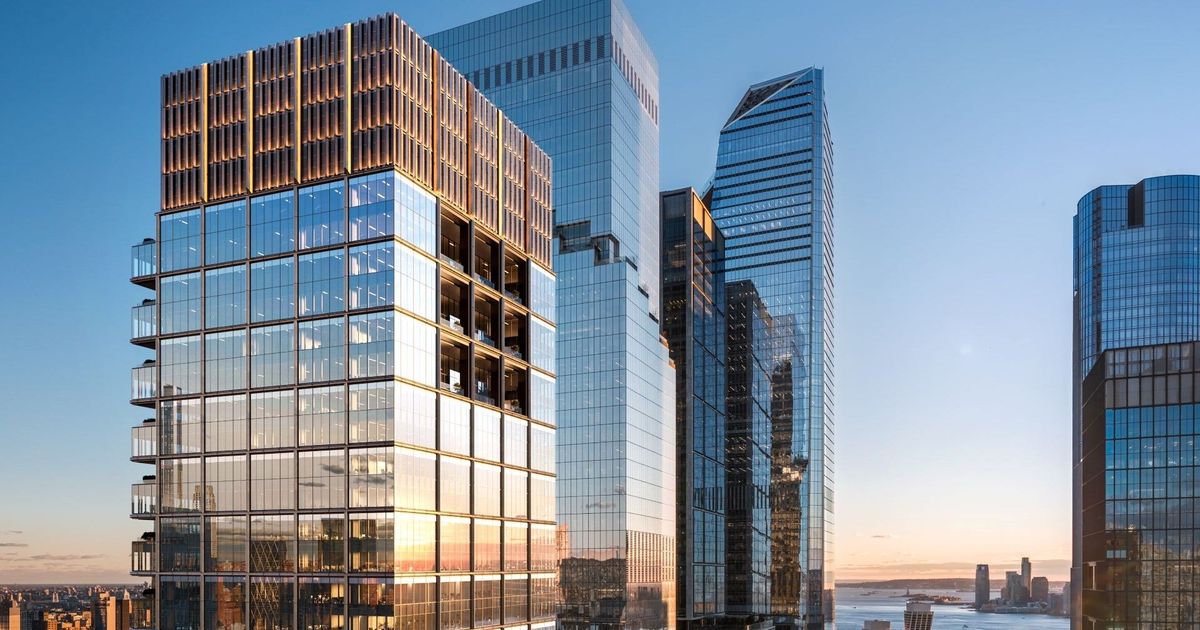
The legal sector has demonstrated immense confidence in physical office infrastructure. In June, prominent law firm Simpson Thacher & Bartlett signed a landmark lease for 916,000 square feet at Extell Development’s tower under construction at 570 Fifth Avenue, nearly doubling the size of its current Lexington Avenue headquarters.
Concurrently, financial institutions are leading a major wave of custom tower construction. American Express broke ground on 2 World Trade Center, securing its role as owner and primary occupant of the final tower in the World Trade Center master plan, developed under a ground lease held by Larry Silverstein. This move follows other massive capital commitments by Wall Street heavyweights, including JPMorgan Chase’s state-of-the-art headquarters at 270 Park Avenue and Citadel’s record-financed tower at 350 Park Avenue.
The Structural Shift: Conversions and Supply Constraints
Several systemic factors have converged to tighten inventory and drive up valuations across Manhattan’s commercial districts. Chief among them is the ongoing wave of office-to-residential conversions. Real estate analysts estimate that roughly 25 million square feet of obsolete office space is currently targeted for conversion into residential apartments across various neighborhoods.
These adaptive reuse projects have successfully removed blighted or functionally obsolete inventory from the commercial market, directly lowering vacancy rates in historically oversupplied areas such as the Financial District and Third Avenue. With approximately one-third of buildings in certain Midtown East corridors undergoing or slated for residential conversion, tenants face an increasingly constrained supply pool.
Park Avenue, long the preferred address for blue-chip financial and corporate institutions, now boasts vacancy rates hovering between 3 and 4 percent, with average rents easily exceeding $200 per square foot. As premium space along primary avenues becomes scarce, tenant demand has cascaded eastward toward Third Avenue and secondary corridors, squeezing out bargain-hunters and resetting baseline expectations across the entire market.
Market Implications for Tenants and Owners
The rapid evolution of the office market has forced businesses to recalibrate their real estate strategies. Anxiety regarding remote work policies—which dominated corporate boardrooms for years—has largely subsided. Most organizations have settled into hybrid or permanent workplace models, recognizing that they require consistent desk capacity regardless of whether employees work three or five days a week.
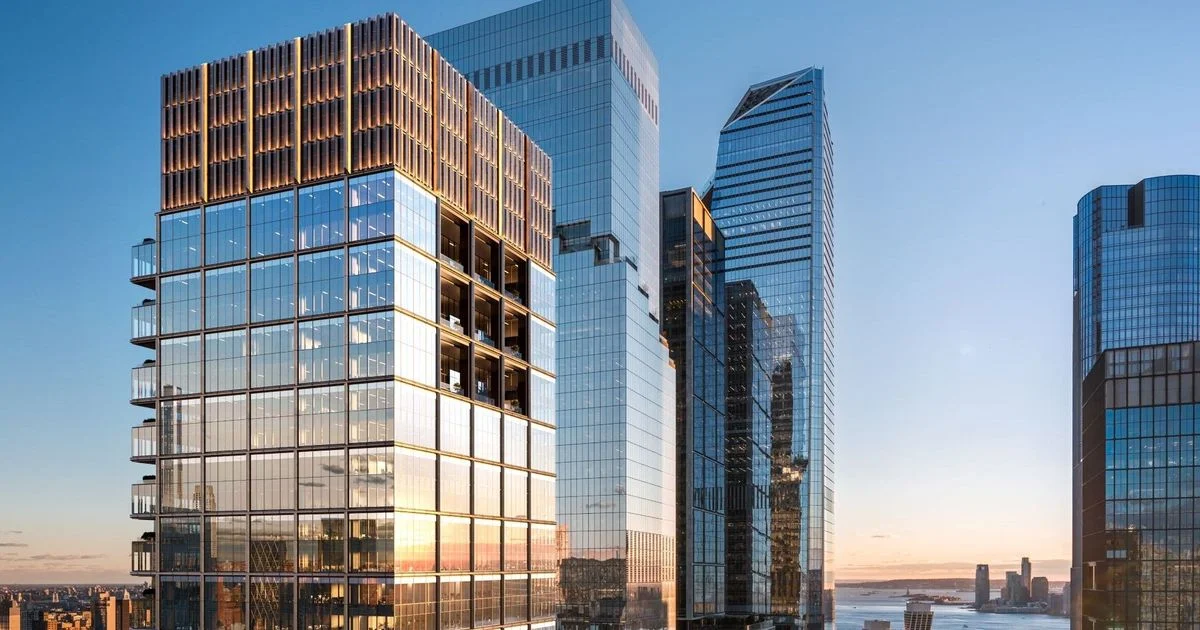
For enterprise tenants, the era of post-pandemic discounts has officially closed. Companies seeking to expand or upgrade their facilities are encountering bidding wars, particularly for high-end, newly constructed assets. At World Trade Center towers, occupancy rates now sit near 90 to 97 percent, with asking rents at 4 World Trade Center jumping from under $90 per square foot to $120 within an eight-month span, according to Savills data. Similar dynamics are visible in Hudson Yards, which boasts the second-lowest availability rate in the city at 4.5 percent alongside the highest average asking rents.
Even older prewar buildings on secondary side streets are benefiting from the supply crunch. Landlords who invest in lobby renovations, upgraded amenities, and move-in-ready prebuilt spaces are finding eager tenants among small and medium-sized businesses. Properties like 136 Madison Avenue have achieved full occupancy as multiple companies compete for remaining floor plates, highlighting an acute demand for immediate, functional workspace.
As Manhattan commercial real estate moves through the second half of the decade, the market has definitively transitioned from recovery to expansion. While high entry costs present challenges for smaller firms and startups, the sustained influx of capital from finance, law, and artificial intelligence underscores the enduring appeal of New York City as a global commercial center.