High above the relentless cacophony of midtown Manhattan, directly across the bustling asphalt from the iconic architecture of Madison Square Garden, sits a 2,000-square-foot architectural anomaly. This thirteenth-floor loft, housed within a 1927 former fur-processing atelier, represents a fascinating intersection of urban industrial history and meticulous private horticulture. For nearly fifty years, artist Bill Farmer and retired modeling executive Stewart Rahtz have cultivated an extraordinary domestic ecosystem inside this expansive space, transforming a gritty commercial relic into a botanical sanctuary defined by towering desert cacti and a deeply personal collection of global artifacts.
Evolution of a Midtown Industrial Relic
The building’s origins trace back to the height of New York City’s Garment District expansion in the late 1920s. For decades, the floorplate hummed with the high-intensity operations of the fur trade, requiring specialized infrastructure—including heavy-duty refrigerated vaults specifically designed to preserve delicate pelts. By 1980, however, the neighborhood’s industrial identity was rapidly shifting. As traditional manufacturing subsided, musicians, artists, and independent creators began occupying the vacant commercial footprints, establishing underground studios amidst a turbulent urban landscape marked by high crime rates, street-level prostitution, and civil safety patrols.
It was during this period of transition that Farmer, scanning the classified advertisements in the Village Voice, discovered the raw loft space. Securing the lease demanded a significant financial gamble for the young artist, who exhausted his liquid capital to acquire the unit. Seeking legal counsel before signing the commitment, Farmer consulted with attorneys who assured him that the gritty, unpolished neighborhood would eventually undergo a dramatic renaissance. Emboldened by this foresight, the couple embarked on a rigorous gut-renovation. They deployed sledgehammers to dismantle the industrial vestiges of the fur trade, including the thick, insulated walls of the subterranean-grade pelt vaults, clearing the canvas for an unconventional domestic layout.
Botanical Engineering and Natural Illumination
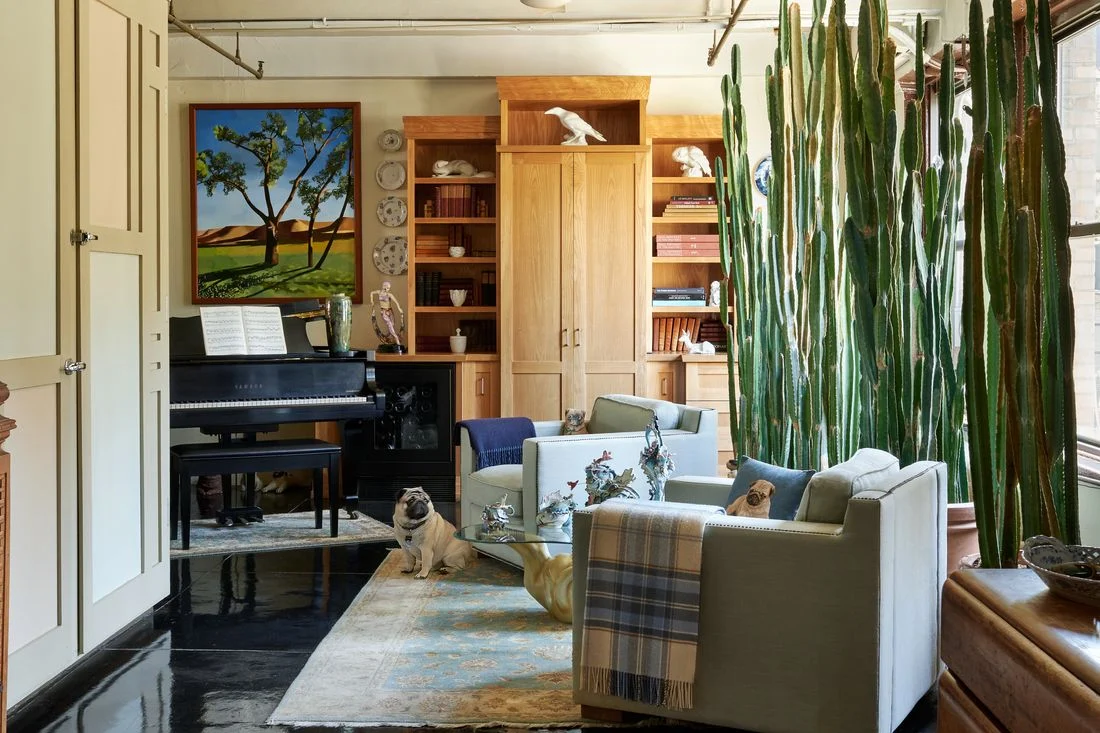
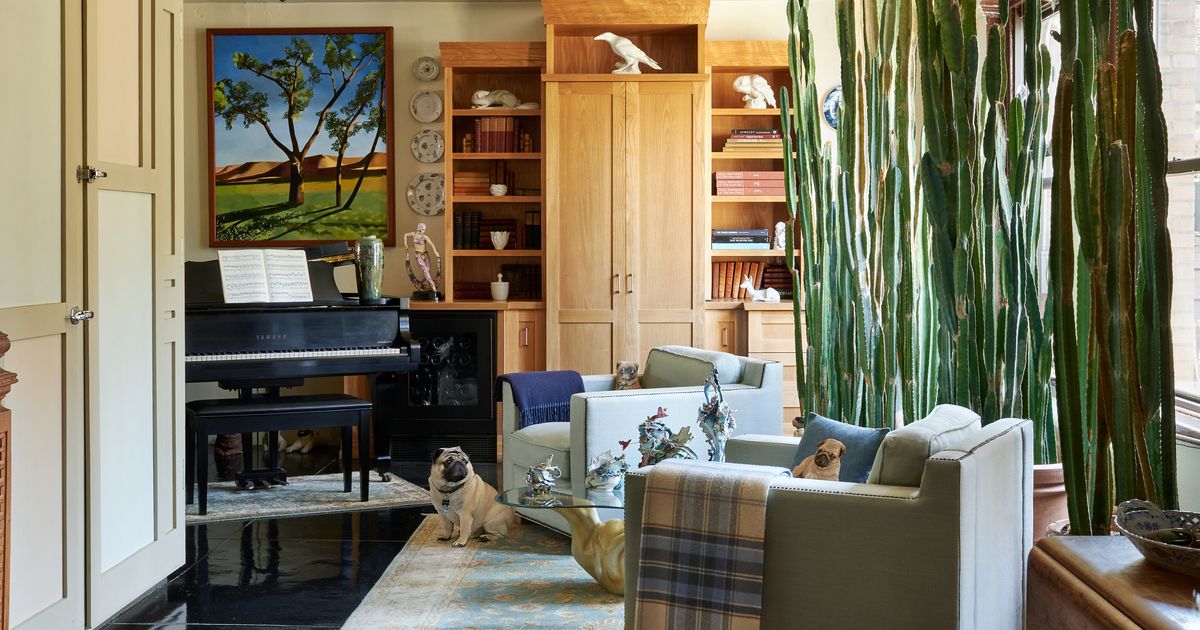
The defining characteristic of the apartment is its living boundary: a dense, towering wall of giant, spindly cacti positioned directly against the expansive, south-facing windows. Rather than opting for conventional fabric window treatments, which the residents found ill-suited for the harsh urban light and spatial dynamics of the loft, the couple integrated desert flora as a functional architectural screen.
The installation originated humbly in 1980 with a modest six-inch starter specimen salvaged from the city pavement. Over the ensuing decades, the flora flourished under minimal maintenance routines. According to the homeowners, the mature cacti require irrigation merely twice a year, relying entirely on the ambient climate of the loft to sustain rapid vertical growth. The towering plants now scrape the thirteen-foot ceilings, casting intricate geometric shadows across the interior while providing an organic privacy barrier from the bustling arena district below. On rare occasions, the mature cacti undergo a synchronized nocturnal bloom, releasing a potent, fleeting fragrance that lingers until dawn.
A Tapestry of Personal History and Global Artifacts
Beyond its botanical attributes, the interior functions as a curated archive of familial heritage and international travel. The furnishings and decorative objects tell a dual narrative of mid-century American migration and global exploration. Several foundational pieces originate from the couple’s respective family estates: custom swivel armchairs from Farmer’s ancestral home in Kansas, where his father operated as an oil wildcatter, sit alongside heritage dressers and decorative heirlooms from Rahtz’s maternal grandfather, a pioneering vaudevillian and early Astoria-based motion picture producer.
The loft’s vertical surfaces serve as a gallery for collaborative artistry. Acclaimed muralist David Friday executed expansive interior murals throughout the residence, complementing canvases painted by Farmer—including detailed landscape compositions and figurative works inspired by familial photographs. Integrated into these spaces are rare cultural acquisitions gathered during extensive international travels through Southeast Asia, featuring ceremonial masks, textile puppets, and carved wooden sculptures from Sri Lanka, Burma, and Bali. Additional focal points include delicate Nymphenburg porcelain fauna sourced from designer Ted Muehling, and whimsical handmade portrait dolls crafted by the late visual director Dustin Poché.

Architectural Resiliency and Urban Context
The structural integrity of the loft has faced ongoing adaptation, particularly concerning municipal compliance and zoning updates. Earlier in the decade, mandatory exterior restorations required city contractors to overhaul the building’s primary facade, prompting a complete replanting of the apartment’s private terrace. Today, the outdoor enclave features a resilient mix of tricolored willow trees, Japanese red maples, and seasonal flora, offering a verdant counterpart to the indoor desert landscape.
This dichotomy—between the arid, vertical interior garden and the lush, open-air urban terrace—highlights a broader trend in Manhattan interior design: the intentional creation of micro-ecosystems within dense commercial envelopes. As midtown Manhattan continues to densify through modern commercial developments and residential conversions, spaces like the Cactus Apartment illustrate the enduring viability of adaptive reuse. By honoring the industrial DNA of a 1920s fur atelier while superimposing a living, breathing botanical infrastructure, Farmer and Rahtz have preserved a rare domestic time capsule that remains largely immune to the transient stylistic shifts of the contemporary real estate market.