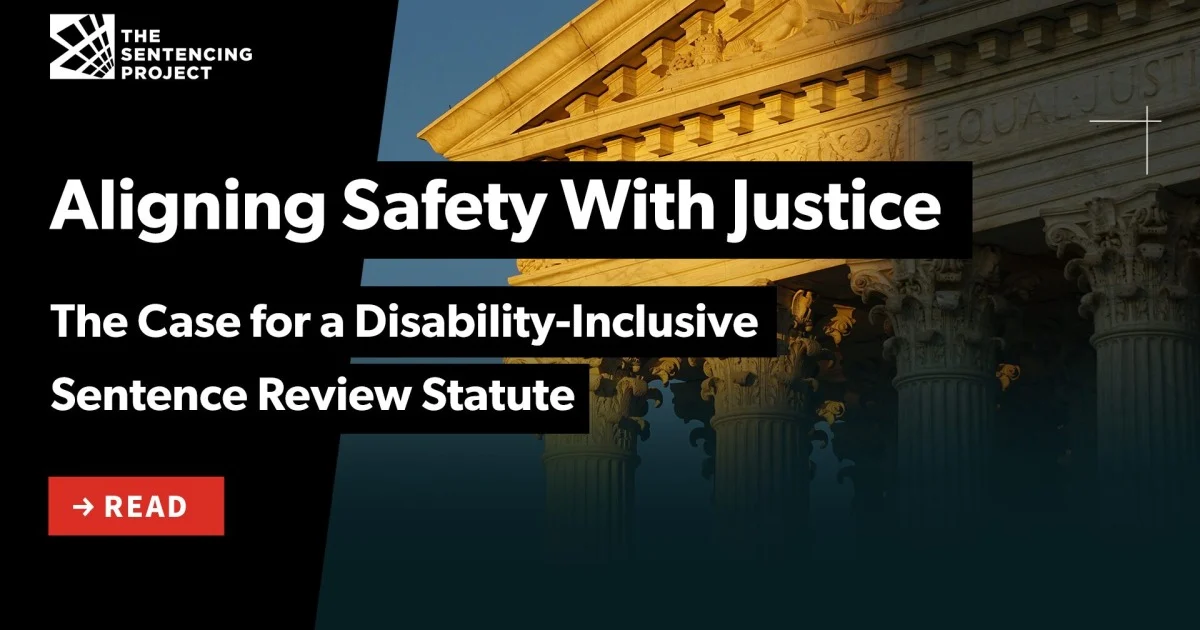
The United States criminal legal system is currently facing a critical inflection point regarding the treatment of individuals with disabilities, as advocates and policy experts argue that existing sentencing structures fail to account for the unique vulnerabilities of this population. The Sentencing Project, a leading research and advocacy organization, has formally proposed the adoption of “disability second look” statutes. These legislative frameworks are designed to provide individuals with physical, cognitive, and social impairments who are currently serving lengthy prison sentences with a structured, periodic opportunity for judicial review. This proposal comes amidst growing evidence that individuals with disabilities are not only overrepresented within the carceral system but are also systematically disadvantaged throughout the entirety of their involvement with law enforcement, the courts, and the correctional apparatus.
The Scope of Overrepresentation
Data compiled by The Sentencing Project indicates a stark disparity in the prevalence of disabilities between the general population and those behind bars. While approximately 15% of the general adult population in the United States reports one or more impairments, that figure balloons to 38% among individuals in state and federal prisons. This disproportionate representation is not the result of higher crime rates among the disabled population, as research consistently shows that people with disabilities do not commit offenses at a higher frequency than their counterparts. Instead, the disparity is driven by systemic interactions that prioritize punishment over accommodation.
From the moment of initial police contact, individuals with disabilities—particularly those with cognitive or developmental impairments—face a heightened risk of arrest. Their behavior, which may manifest as social misinterpretation or an inability to strictly follow law enforcement commands, is often mischaracterized as non-compliance or aggression. This dynamic continues through the courtroom, where a lack of appropriate legal accommodations can compromise a defendant’s due process rights, leading to unfavorable plea deals or convictions that might have been avoided had the individual’s disability been properly addressed or considered during the proceedings.
Chronology of Legislative Advocacy and Reform
The call for “second look” legislation is not entirely new, but its application to the disability community represents a significant expansion of existing criminal justice reform efforts. For years, advocates have pushed for sentencing relief for specific cohorts, including youth, veterans, and survivors of domestic violence. These efforts have yielded some success; currently, 15 states, the District of Columbia, and the federal government have enacted some form of judicial sentence review for these groups.
However, the specific needs of the disabled population have remained largely unaddressed in these legislative sessions. The following timeline outlines the evolving landscape of sentencing review:
- Late 20th Century: The rise of mandatory minimums and truth-in-sentencing laws significantly limits judicial discretion, making long-term incarceration the default for many offenses, regardless of the individual’s physical or mental capacity.
- 2010s–2020s: A wave of state-level “second look” reforms begins to gain momentum, focused primarily on juvenile offenders and those who committed crimes as young adults.
- July 2026: Legal challenges, such as the Commonwealth vs. Lee case in Pennsylvania regarding felony murder sentencing, highlight the instability of mandatory life-without-parole sentences and underscore the urgent need for comprehensive review mechanisms.
- Present: The Sentencing Project formalizes the “disability second look” proposal, seeking to bridge the gap between existing vulnerable-population protections and the largely ignored reality of disability-related culpability and rehabilitation.
A Model for Judicial Review
The proposed model statute developed by The Sentencing Project is comprehensive in its scope. It seeks to establish a legal pathway for sentence review by evaluating five specific areas where a disability may have fundamentally altered an individual’s trajectory within the system.
First, the statute would require courts to consider whether a disability contributed to the nature of the offense. Second, it would examine whether an individual’s behavior before, during, or after an arrest was impacted by misperceptions related to their disability. Third, the review would assess if the individual was denied meaningful due process due to an inability to fully access their rights during counsel representation or trial proceedings. Fourth, the proposal considers the struggle of the individual while incarcerated, specifically regarding disciplinary infractions that may be symptomatic of their disability, or the systematic exclusion from rehabilitative programming. Finally, the statute would review any obstacles the individual faced in developing a robust, realistic reentry plan.
By mirroring the mechanisms used for other protected groups, the proposed statute does not demand automatic release. Rather, it demands a mandatory, evidence-based review that acknowledges that the original sentence may have been predicated on a misunderstanding of the individual’s culpability or a failure to provide the necessary support structures.
The Role of Aging and Rehabilitation
Central to the argument for second look legislation is the well-documented "age-crime curve." Research indicates that the risk of re-offending drops precipitously as individuals age, a trend that holds true for both those with and without disabilities. Data suggests that after approximately seven years without a new arrest, the risk of recidivism for a person with a criminal record becomes nearly indistinguishable from that of a person with no criminal history.
By ignoring this biological and sociological reality, the current sentencing system often keeps individuals incarcerated long after they pose any significant risk to public safety. For people with disabilities, this is further exacerbated by the fact that the prison environment is rarely designed to support their specific medical or cognitive needs, which can lead to a rapid decline in health or the acquisition of new, secondary disabilities while in custody.
Institutional Training Requirements
The Sentencing Project emphasizes that legislative change alone is insufficient without a cultural shift in how law enforcement and legal practitioners interact with the disability community. Consequently, the proposal includes a mandatory training component. This training would be required for judges, prosecutors, defense attorneys, and law enforcement officers.
The curriculum would focus on:
- Legal Obligations: Ensuring all parties understand their responsibilities under the Americans with Disabilities Act (ADA) and other federal and state mandates to provide accommodations.
- Recognition and Response: Equipping officers and court staff with the skills to recognize symptoms of various disabilities—such as sensory, cognitive, or psychiatric impairments—and respond with de-escalation tactics rather than punitive force.
- Procedural Fairness: Training defense counsel and judges on how to ensure that legal proceedings are accessible, including the use of communication aids or specialized support personnel.
Broader Implications for the Justice System
The broader implication of this proposal is a movement toward a more individualized justice system. By integrating disability considerations into sentencing law, the state would essentially be acknowledging that the current "one-size-fits-all" approach to criminal justice is ineffective and discriminatory.
Critics of such reforms often express concerns regarding public safety or the perceived weakening of the deterrent effect of the law. However, proponents argue that a system that punishes disability under the guise of justice fails to serve its intended purpose of promoting public safety and rehabilitation. When a person is excluded from rehabilitative programming because their disability prevents them from participating, the system fails to prepare them for reintegration. Providing a “second look” is not merely an act of mercy; it is a mechanism to correct the inaccuracies of the initial sentencing process and to ensure that the state is not continuing to incarcerate individuals who have matured and are capable of living successfully in the community.
As states continue to grapple with prison overcrowding and the fiscal burden of long-term incarceration, the disability second look statute offers a data-driven path toward efficiency and equity. If implemented, this framework could serve as a model for addressing the intersection of disability rights and criminal justice, ensuring that the legal system is capable of distinguishing between those who pose a persistent risk to society and those who have been caught in a cycle of punishment that failed to account for their basic human needs and capabilities.