
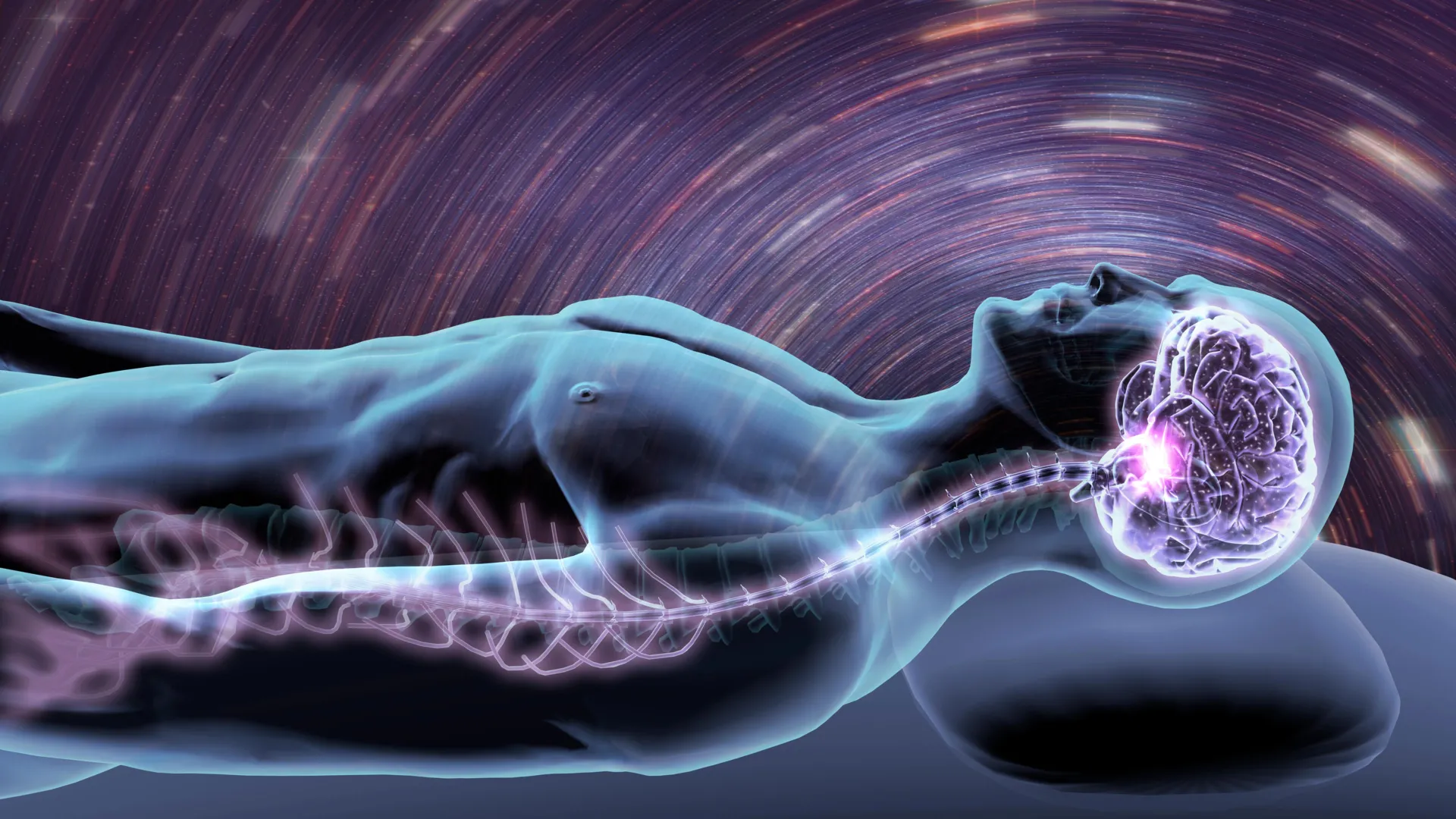
For years, the public debate surrounding caffeine consumption has centered on a simple, binary question: does a late-afternoon espresso prevent you from falling asleep? While anecdotal evidence has long suggested that some individuals possess a "caffeine immunity" that allows them to consume stimulants before bed without consequence, contemporary neuroscientific research suggests this perspective is fundamentally flawed. Scientists are increasingly shifting the focus away from sleep onset latency—the time it takes to fall asleep—toward the more elusive question of what caffeine does to the architecture of the brain once sleep has actually begun.
The Shift Toward Quantitative Sleep Assessment
To investigate the nuances of sleep architecture, researchers are increasingly utilizing electroencephalography (EEG). Unlike traditional actigraphy, which merely tracks movement to estimate sleep duration, or polysomnography, which monitors basic physiological markers, quantitative EEG analysis offers a granular view of the brain’s electrical activity. By recording oscillations in brain waves, scientists can observe the specific neurophysiological states that characterize human rest.
Prof. Donata Kurpas, a specialist from the Department of Nursing at Wroclaw Medical University, emphasizes that EEG technology has revolutionized our understanding of nocturnal recovery. "EEG allows us to see not only whether a person is sleeping, but also how the brain is sleeping," she explains. "Classical sleep assessment looks at duration and broad stages, whereas quantitative EEG analysis reveals subtle, critical changes—such as reduced slow-wave activity—which serves as a primary marker for sleep depth and the brain’s restorative capacity."
Slow-wave activity (SWA), often referred to as "deep sleep" or N3 stage sleep, is the period during which the brain undergoes essential maintenance. It is characterized by high-amplitude, low-frequency oscillations. This stage is biologically linked to physical recovery, the consolidation of memories, the replenishment of metabolic energy reserves, and the clearance of neurotoxic waste products that accumulate during waking hours.
The Illusion of a Good Night’s Rest
A common misconception among habitual caffeine users is that if they manage to fall asleep and remain in bed for seven or eight hours, their sleep is by definition "good." However, neurophysiological data suggest that caffeine can induce a state of "fragmented restoration." Even if a person does not experience conscious awakenings, caffeine molecules—which act as adenosine receptor antagonists—can continue to exert influence on the brain throughout the night.
"Caffeine may shorten sleep or make it more difficult to fall asleep; however, even when sleep duration appears normal, it may reduce slow-wave activity and shift the EEG pattern toward a more ‘wakeful’ brain," Prof. Kurpas notes. In practical terms, this means a person might spend eight hours in bed, yet their brain remains in a state of superficial arousal. Because the disruption is sub-threshold—meaning it does not trigger a full awakening—the individual remains oblivious to the degradation of their sleep quality. The subjective perception of having "slept through the night" is often a poor proxy for the biological reality occurring at the synaptic level.
A Chronology of Stimulant Research
The scientific journey to understand caffeine’s impact on sleep has evolved significantly over the last three decades. In the 1990s, research focused primarily on "caffeine half-life," the duration required for the body to eliminate half of a consumed dose. The general consensus established that the half-life of caffeine is approximately five to six hours in a healthy adult. This led to the widely circulated advice to avoid caffeine after 2:00 PM.
By the early 2010s, studies began to incorporate more sophisticated metrics, moving beyond simple sleep-onset latency to examine "sleep architecture." Research published in journals such as Sleep Medicine Reviews began to document that even when total sleep time remained constant, caffeine consumption significantly reduced the power density of delta waves—the signature of deep, restorative sleep.
In recent years, the integration of wearable technology and portable EEG devices has allowed researchers to move beyond the artificial environment of the sleep lab, providing a more accurate picture of how caffeine interacts with real-world lifestyle variables. This has led to the current understanding: that sensitivity to caffeine is not uniform, but is heavily modulated by a complex interplay of genetics, liver metabolism (specifically the CYP1A2 enzyme), age, and chronic stress loads.
The Biological Variability of Caffeine Sensitivity
One of the most significant findings in modern sleep research is the high degree of inter-individual variability in caffeine response. This is not merely a matter of habituation, but a reflection of distinct biological blueprints.
- Genetic Factors: Variations in the CYP1A2 gene determine how quickly the liver metabolizes caffeine. "Fast metabolizers" may clear caffeine rapidly, experiencing minimal sleep disruption, while "slow metabolizers" may feel the effects of a morning cup well into the late evening.
- Age and Metabolism: As individuals age, the efficiency of metabolic processes often declines, extending the duration that caffeine remains active in the bloodstream.
- Chronic Stress: High levels of cortisol, often seen in high-performing professionals or athletes, can exacerbate the "alertness" effect of caffeine, potentially overriding the body’s natural homeostatic sleep drive.
For the modern worker or athlete who relies on caffeine for sustained cognitive or physical performance, these findings suggest a paradox. While caffeine provides a necessary boost to meet the demands of a high-pressure lifestyle, it may be systematically undermining the very neurological recovery required to perform at a high level the following day.
The Vicious Cycle of Borrowed Energy
The physiological impact of caffeine creates what experts call a "fatigue cycle." When an individual consumes caffeine to compensate for a lack of deep, restorative sleep, they may feel a temporary spike in alertness. However, this is essentially a loan taken against the body’s future energy reserves. If the subsequent night’s sleep is further compromised by the presence of caffeine, the individual wakes up more tired, necessitating an even higher dose of stimulants.
"If caffeine helps a person function during the day while simultaneously worsening the quality of nighttime recovery, a vicious circle may develop: greater fatigue, greater need for stimulation, and poorer sleep," says Prof. Kurpas. This cycle is particularly dangerous because it masks the cumulative debt of sleep deprivation. Unlike hunger or thirst, the body’s internal signals for "sleep quality" are often muted by stimulants, leading people to believe they are functioning optimally when, in fact, their cognitive executive functions and physical recovery processes are operating at a deficit.
Broader Implications for Public Health
The broader implication of this research is a necessary shift in how society views sleep hygiene. We must move beyond the "sleep duration" metric, which has dominated public health discourse for decades. Aiming for eight hours of sleep is insufficient if that time is not spent in the appropriate stages of restorative deep sleep.
From a policy and workplace wellness perspective, this highlights the need for a more personalized approach to stimulant consumption. Organizations that promote high-performance cultures might consider educating employees not just on the timing of caffeine intake, but on the potential for "hidden" sleep debt. For athletes, the stakes are even higher, as deep sleep is the primary window for muscle repair and hormone regulation.
Ultimately, the goal of this research is not to vilify caffeine. Caffeine remains one of the most effective and widely used ergogenic aids and cognitive enhancers in existence. Instead, the expert consensus is that caffeine should be viewed as a tool that requires calibration.
"Caffeine is neither ‘good’ nor ‘bad,’" concludes Prof. Kurpas. "It is a biologically active substance whose effects depend on dose, time of day, age, lifestyle, sleep quality, stress burden, and individual sensitivity." As neuroscientists continue to map the subtle effects of stimulants on brain waves, the message is clear: true restoration is not just about the hours you spend in bed, but the quality of the neural silence you achieve while there. Understanding the individual’s unique threshold for caffeine metabolism is the first step toward reclaiming that restorative potential.