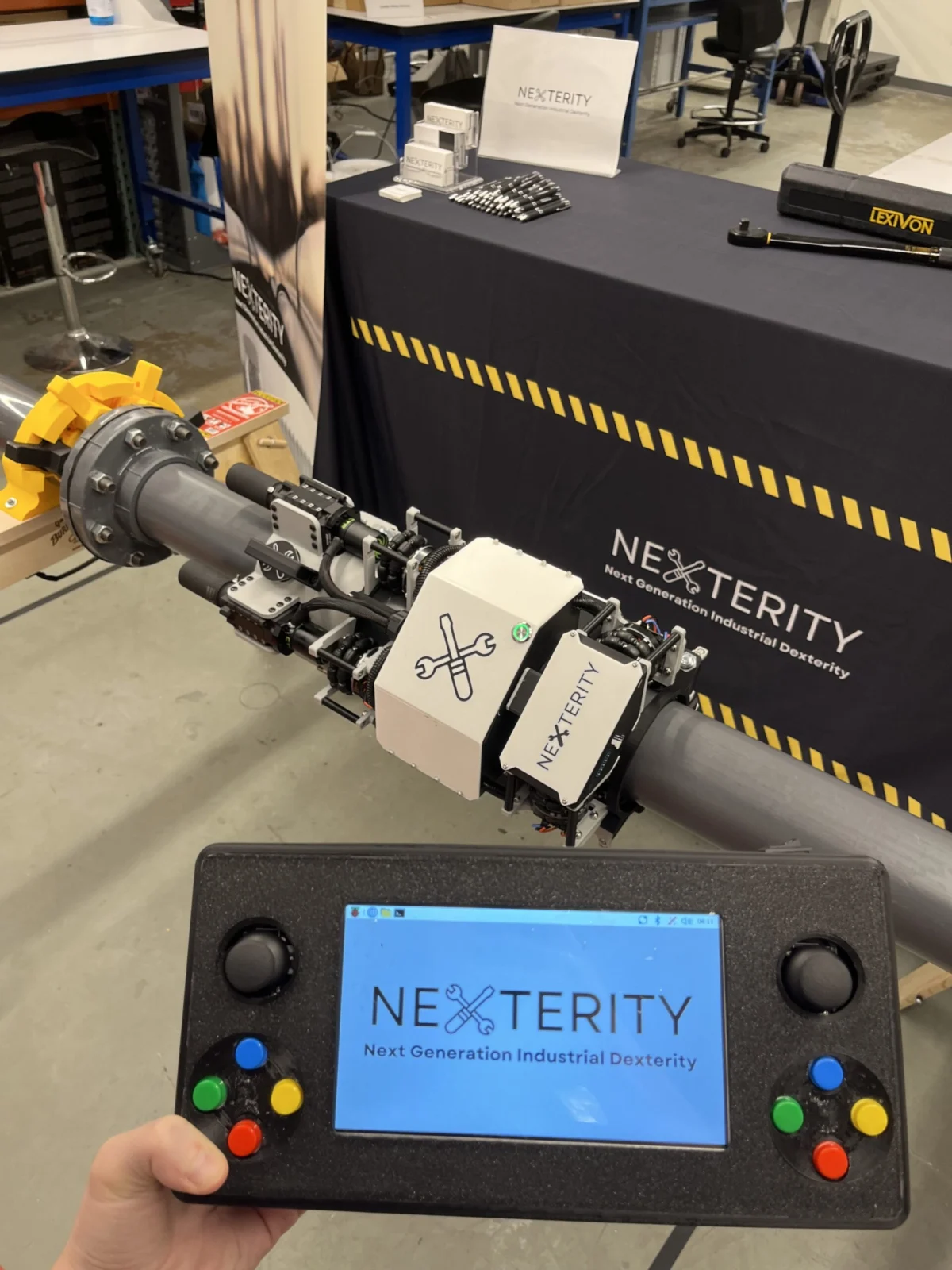
For the vast majority of the global population, the complex networks of piping that underpin modern civilization remain entirely invisible. These arteries of oil, gas, water, and chemical processing facilitate everything from daily energy consumption to municipal waste management. Yet, behind the scenes, the maintenance of this infrastructure is an arduous, dangerous, and increasingly labor-strapped endeavor. Lindsey Elliott, a former engineer and planner at ExxonMobil, has identified a critical point of failure in this system: the bolted flange joint. Her startup, Nexterity, is now attempting to modernize this sector by introducing robotics into an environment that has relied on manual, high-torque physical labor for decades.
As one of the Startup Battlefield 200 companies selected for TechCrunch Disrupt, Nexterity represents a growing trend in industrial technology: the application of robotics to "dirty, dull, and dangerous" tasks that have historically been overlooked by the rapid advancements seen in software and consumer electronics.
The Anatomy of an Industrial Problem
The core of the issue lies in the physical nature of pipe maintenance. Pipefitters are tasked with connecting sections of massive industrial piping using bolted flange joints. This process requires the manual application of immense force to tighten or loosen bolts to precise specifications. In a sprawling petrochemical refinery or a nuclear power plant, a single maintenance cycle may involve hundreds of these joints, all requiring repetitive, high-impact physical effort.
"Those people get really tired when they’re asked to work 12 hours a day for three months in a row," Elliott explained during an interview. The resulting fatigue is not merely a matter of comfort; it is a primary driver of workplace injuries and a significant hurdle to operational efficiency. Elliott’s research, bolstered by conversations with pipefitters across the United States and Canada, suggests that North American pipefitting productivity is notoriously low, a sentiment echoed by various industry trade associations.
The labor crisis in the skilled trades further complicates this. As an aging workforce retires and fewer younger workers enter the manual labor sector, companies are struggling to maintain existing infrastructure with a shrinking pool of qualified personnel. This gap is precisely where Nexterity intends to insert its robotic solution.
From the Bolting Symposium to Startup Battlefield
Elliott’s journey to founding Nexterity was not born in a vacuum but through years of engagement with the niche, highly technical world of industrial fastening. Her participation in the annual Bolting Symposium—a gathering she describes as a haven for "torque dorks"—provided the essential field data required to validate her business model.
At the 13th annual Bolting Symposium, Elliott observed that the industry was ripe for disruption, provided the solution was practical. Her design philosophy was shaped by direct feedback from members of the Pressure Vessels & Piping Division of the American Society of Mechanical Engineers (ASME). Through these dialogues, she discovered a critical metric: approximately 80% of industrial piping falls within the Nominal Pipe Size (NPS) range of two to eight inches.
This high degree of standardization made the process an ideal candidate for automation. By focusing on this specific range, Nexterity was able to develop a modular, battery-powered robot capable of clamping onto a pipe, sliding into position, and simultaneously manipulating four bolts at once. The robot’s design emphasizes portability; it can be broken down and transported in a Pelican case by a single worker, a stark departure from the heavy, cumbersome machinery often associated with industrial automation.
Operational Efficiency and the Rental Model
Nexterity’s business model is strategically aligned with the reality of construction and maintenance cycles. Rather than selling expensive, fixed-asset machinery that may sit idle for long periods, Nexterity treats its robots as rental construction equipment. This flexibility is vital for contractors who move from site to site and cannot afford to maintain proprietary, single-purpose hardware.
The robot functions as a force multiplier. By automating the most physically demanding aspect of the pipefitter’s job, Nexterity aims to shift the labor dynamic. As the company’s motto suggests, the goal is "more dork, less torque." By offloading the mechanical strain to a battery-powered device, the pipefitter transitions from a manual laborer to a supervisor of robotic systems. This shift could potentially extend the career longevity of experienced tradespeople, who are often forced into early retirement due to the cumulative physical toll of their work.
Broader Implications for Global Infrastructure
The market for such technology is vast. While Nexterity’s origins are rooted in the oil and gas sector, the mechanical principles of flange bolting are universal across almost all heavy industries. Water treatment facilities, mining operations, food and beverage manufacturing, and nuclear energy plants all rely on the same standardized piping configurations.
From a macroeconomic perspective, the adoption of such technology could have profound implications for infrastructure maintenance costs. In the United States, where much of the energy and water infrastructure is reaching the end of its projected lifespan, the cost of repair and replacement is a major concern for both public and private sectors. If Nexterity can prove that its robots can increase the speed and safety of these repairs, the ripple effect on operational uptime could be significant.
Furthermore, the integration of automation into these environments offers the possibility of better data collection. A robotic system, by its nature, can log the torque values and maintenance history of every joint it services, providing a digital audit trail that manual methods simply cannot replicate. This could lead to a future of "predictive maintenance," where infrastructure failure is anticipated and mitigated before it occurs, rather than reacting to leaks or breaks after they have happened.
Navigating the Path to Adoption
Despite the clear benefits, the path to widespread adoption is not without challenges. The industrial sector is notoriously risk-averse, particularly in environments where safety protocols are governed by stringent regulatory bodies and the consequences of failure—such as a chemical leak or an explosion—are catastrophic.
Nexterity will need to demonstrate that its robots can perform under the extreme environmental conditions typical of heavy industry, including exposure to high temperatures, corrosive chemicals, and outdoor elements. The robots must not only be effective but must also be "industrial-grade" in terms of durability.
Moreover, the company faces the challenge of workforce integration. Historically, the introduction of automation into blue-collar trades has been met with skepticism or outright resistance due to fears of job displacement. Elliott’s focus on productivity and safety suggests a strategy of "augmentation" rather than "replacement," which will be essential in securing buy-in from unions and site managers alike.
The Road Ahead
As Nexterity prepares to showcase its technology at TechCrunch Disrupt, the company finds itself at the intersection of traditional engineering and modern robotics. The success of the venture will likely depend on its ability to scale production while maintaining the ruggedness required for field operations.
By focusing on the "torque dork" feedback loop, Elliott has grounded her startup in the realities of the industry, rather than the abstract promises of tech-driven disruption. The data points—80% standardization, a clear labor shortage, and the universal need for pipeline integrity—suggest that the foundation for a successful business is present.
As the global economy continues to grapple with aging infrastructure and shifting labor demographics, the solutions provided by companies like Nexterity will become increasingly relevant. If the startup can successfully move its robotic solution from the conference floor to the refinery floor, it may set a new standard for how industrial maintenance is conducted, proving that even the most manual, traditional tasks are ripe for a high-tech evolution. The shift from human-powered torque to machine-assisted precision is not just a technological upgrade; it is a fundamental reconfiguration of one of the most critical, yet often overlooked, pillars of the modern industrial world.