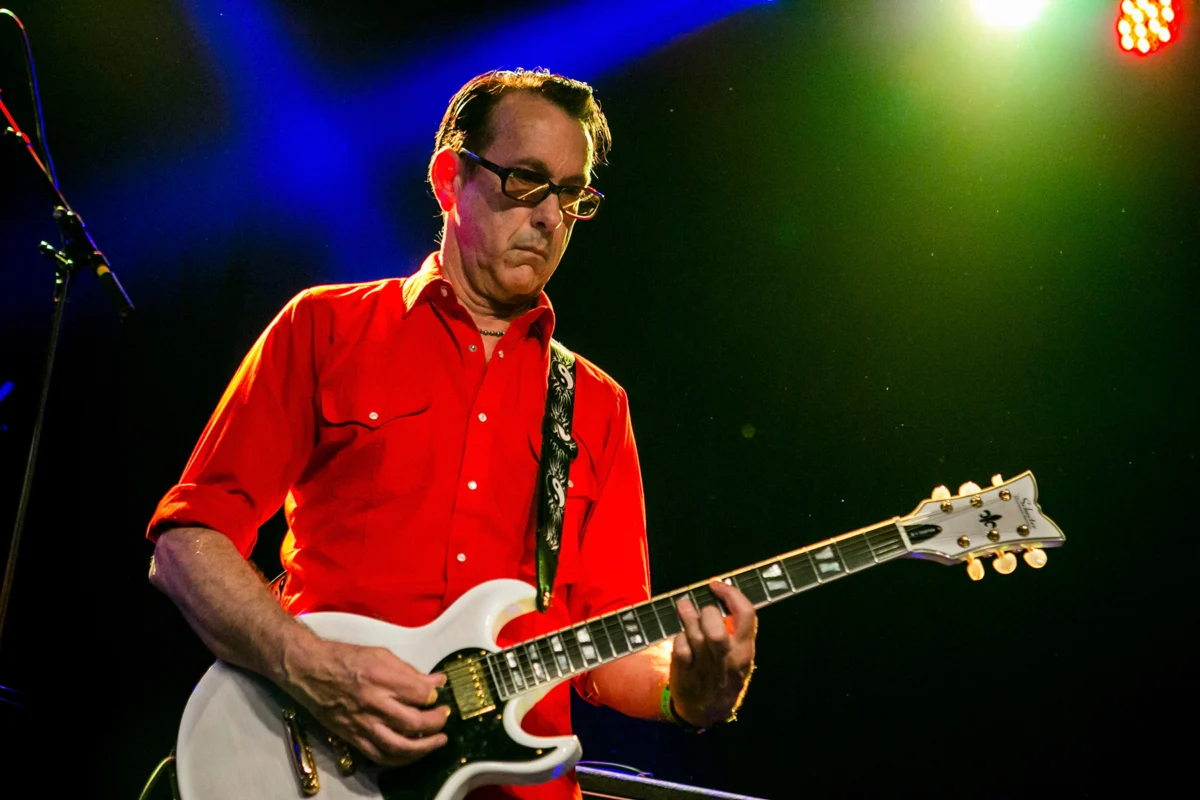
The punk rock community received sobering news this week when management for the legendary California hardcore band Dead Kennedys announced that founding guitarist East Bay Ray has been diagnosed with Parkinson’s disease. Despite the progressive neurological condition, the pioneering musician has expressed a firm commitment to continuing his performance schedule, intent on sharing the stage with his bandmates for as long as his health allows.
The announcement, delivered via the band’s official social media channels alongside a striking black-and-white portrait of the artist, has drawn an outpouring of solidarity from fans, peers, and industry veterans alike. Known for his jagged, surf-infused guitar riffs and sharp political sensibilities, East Bay Ray—born Raymond John Pepperell—helped forge the blueprint for American hardcore punk in the late 1970s. As the group prepares for an upcoming series of West Coast tour dates, the music world is once again reminded of the aging pioneers of a genre that famously chanted "live fast," yet continues to grapple with the realities of longevity, health crises, and the passage of time.
A Lifetime of Sonic Disruption and the Birth of a Movement
To understand the weight of East Bay Ray’s diagnosis, one must look back at the seismic cultural shifts of late-1970s San Francisco. Formed in June 1978, the Dead Kennedys emerged from a decaying urban landscape, channeling socio-political disillusionment, anti-establishment fury, and biting satire into a high-speed, abrasive sonic assault.
While many punk bands of the era relied on simplistic, three-chord rage, East Bay Ray injected a sophisticated, cinematic darkness into the band’s compositions. Borrowing elements from spy movie soundtracks, spaghetti westerns, and surf rock—best exemplified on tracks like "Holiday in Cambodia" and "California Über Alles"—his distinct guitar work became a defining pillar of the band’s identity. He was not merely a instrumentalist; he was an architect of a movement, co-producing the band’s records and navigating the treacherous waters of independent distribution through their seminal label, Alternative Tentacles.
The band’s initial trajectory was incendiary but brief. Following critical acclaim and underground commercial success, internal tensions and legal battles led to an acrimonious breakup in 1986. However, the cultural footprint of the Dead Kennedys proved indelible, influencing generations of alternative, punk, and metal bands, ranging from Nirvana to Green Day. When Ray, alongside original bassist Klaus Flouride and drummer D.H. Peligro, chose to reactivate the moniker in 2001—initially with vocalist Brandon Cruz and subsequently with long-serving frontman Ron "Skip" Greer, who joined in 2008—they preserved a vital chapter of musical history for live audiences around the globe.
Navigating Health Crises within the Punk Legacy
East Bay Ray’s Parkinson’s diagnosis is the latest in a series of solemn milestones for a band that has weathered profound personal and professional trials over the decades. The group’s inner circle has faced immense loss and health challenges in recent years, testing the resilience of the musicians who defined a counterculture.
In October 2022, the punk community mourned the passing of longtime powerhouse drummer D.H. Peligro, who died at the age of 63 following a trauma-induced head injury from an accidental fall at his Los Angeles home. Peligro’s dynamic rhythmic precision had been the engine driving the band since 1981, and his loss left an irreplaceable void within the lineup, subsequently filled by current drummer Steve Wilson.
Compounding these trials, earlier this year, founding and former frontman Jello Biafra—who famously did not participate in the band’s 2001 reunion and has maintained a decades-long estrangement from his former bandmates—suffered a stroke. Updates provided through Biafra’s social media channels in May offered a cautiously optimistic outlook, noting that his speech had largely returned and cognitive faculties remained intact, though he continues to manage lingering physical weakness on his left side.
The coincidence of these significant medical events within the broader Dead Kennedys ecosystem highlights a bittersweet reality for fans of classic punk rock: the architects of a youth-driven rebellion are now navigating the complex medical landscape of aging.
Clinical Realities of Parkinson’s Disease in Performing Artists
Parkinson’s disease is a progressive disorder of the central nervous system that affects movement, often including tremors, rigidity, and slowness of movement (bradykinesia). While the condition can profoundly impact fine motor skills—crucial for instrumentalists such as guitarists—advancements in medical treatment, physical therapy, and pharmacological management have enabled many public figures and musicians to continue their professional pursuits following a diagnosis.
Neurological specialists emphasize that maintaining physical activity, cognitive engagement, and creative expression can be vital components of managing the progression of Parkinson’s. East Bay Ray’s declaration that he intends to perform for as long as his health permits aligns with a growing body of anecdotal and clinical evidence suggesting that purposeful activity and the adrenaline of live performance can offer meaningful psychological and physical benefits for individuals managing chronic neurological conditions.
Upcoming Tour Dates and Immediate Outlook
Despite the diagnosis, the Dead Kennedys’ operational schedule remains active. The band is slated to embark on a concentrated West Coast tour run, kicking off on October 6 at the historic Showbox at the Market in Seattle, Washington. The itinerary includes subsequent stops before culminating on October 11 at the Riverside Municipal Auditorium in Riverside, California.
Management’s statement underscored that Ray’s participation in these dates will be continually evaluated against his physical well-being. "Ray says he plans to continue performing and touring with Dead Kennedys for as long as his health allows, and expressed his appreciation to everyone for their continued support," the band’s Instagram post read. Promoters and concertgoers have responded with immense respect, recognizing the dedication required for a veteran artist to maintain such a grueling travel and performance schedule under challenging circumstances.
Broader Industry Impact and Cultural Legacy
The announcement has prompted a broader conversation within the music community regarding the aging demographic of legacy rock and punk acts. As artists who came of age during the explosion of 1970s and 1980s underground music enter their senior years, audiences are increasingly forced to confront the mortality and health vulnerabilities of their idols.
Unlike corporate pop acts backed by extensive health-support infrastructures, independent punk musicians often face distinct financial and logistical hurdles when confronting chronic illnesses. However, the outpouring of support for East Bay Ray demonstrates the enduring bond between foundational punk acts and their loyal fanbase.
Ultimately, East Bay Ray’s handling of his diagnosis reflects the defiant ethos that has defined his career for over four decades. Whether facing the political establishments of the Reagan era, corporate music industry corruption, or the biological realities of degenerative illness, the guitarist continues to approach adversity on his own terms. As the Dead Kennedys prepare to take the stage in Seattle this October, audiences will not merely be witnessing a legacy act playing classic anthems; they will be observing a master craftsman asserting his agency, resilience, and unwavering dedication to his art in the face of formidable odds.