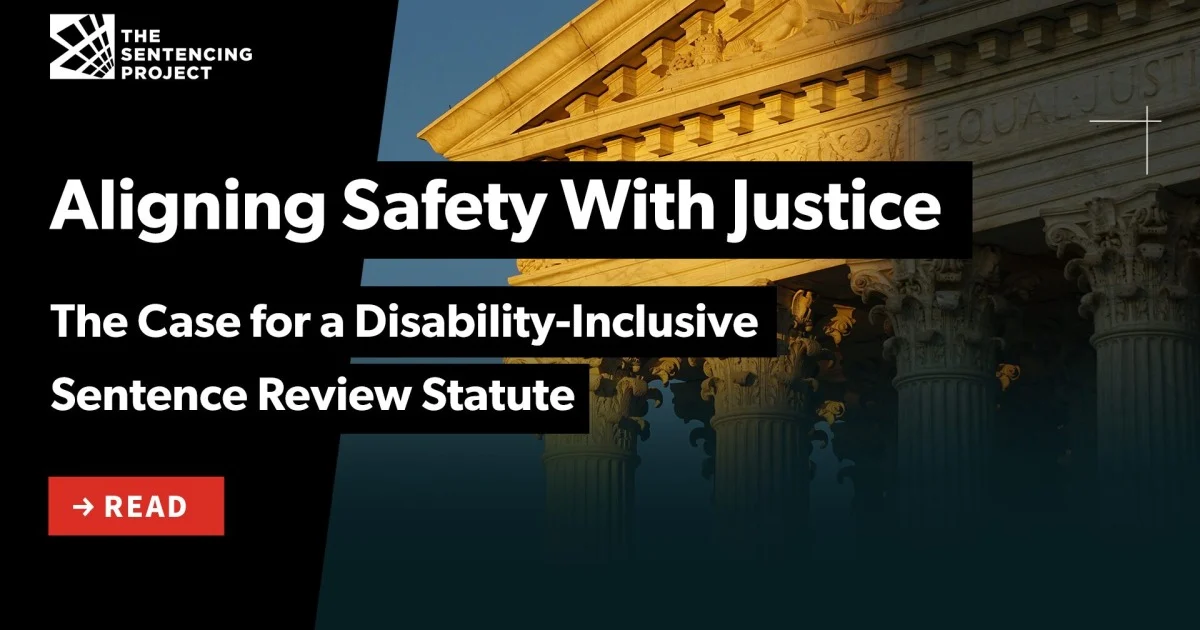
The United States criminal legal system is currently facing a reckoning regarding its treatment of incarcerated individuals with disabilities. A new policy initiative spearheaded by The Sentencing Project advocates for the implementation of “disability second look” statutes—legislative frameworks designed to provide a judicial review process for individuals with physical, cognitive, or social impairments who are currently serving long-term prison sentences. This proposal arrives at a time when data indicates that people with disabilities are disproportionately represented behind bars, often navigating a system that fails to provide the necessary accommodations required by law.
The Scope of Disparity
Current statistics paint a stark picture of the intersection between disability and incarceration. According to data analyzed by The Sentencing Project, individuals in state and federal prisons are approximately 2.5 times more likely to report one or more impairments compared to the general adult population. While approximately 15% of the average U.S. adult population identifies as having a disability, that figure jumps to 38% within the incarcerated population.
This demographic skew is not reflective of higher crime rates among people with disabilities. Research consistently shows that individuals with disabilities do not commit crimes at higher rates than their non-disabled counterparts. Instead, the disparity is rooted in the initial contact with law enforcement, the nature of legal proceedings, and the systemic barriers within the correctional environment. From the moment of arrest, people with disabilities are more likely to be targeted, apprehended, and convicted, often because their behavioral responses or cognitive processing are misinterpreted by law enforcement officers who lack specific training in disability awareness.
A Cycle of Exclusion
The barriers do not vanish upon sentencing. Once incarcerated, individuals with disabilities often face an environment that is structurally and programmatically ill-equipped to support them. In many facilities, those with cognitive or physical impairments are frequently excluded from rehabilitative programming and reentry services. This exclusion creates a self-fulfilling prophecy: because the system denies them the tools for growth, they are subsequently judged as “unreformed” during parole hearings or sentence reviews.
Furthermore, these individuals are frequently penalized for their impairments. It is not uncommon for a person with a sensory or cognitive disability to be disciplined for “infractions” that are actually manifestations of their disability—such as failing to follow a verbal command they did not hear or misinterpreting a complex instruction. These disciplinary records are then used to justify the denial of early release, effectively extending sentences for conditions that are beyond the individual’s control.
The Logic of Second Look Statutes
The proposed model statute aims to rectify these inequities by creating a legal pathway for sentence review. Under this proposal, an individual would be eligible for a “second look” if their disability was a contributing factor in several key areas:
- The nature of the offense itself.
- Behavioral responses or misperceptions during the arrest process.
- An inability to effectively access due process rights during legal representation and courtroom proceedings.
- Struggles during incarceration, including disproportionate disciplinary actions.
- Persistent obstacles to creating a viable reentry plan.
The concept of “second look” legislation is not entirely new; it has gained traction in various states for specific populations, including youth, veterans, and survivors of domestic violence. Currently, 15 states, the District of Columbia, and the federal government have enacted some form of judicial sentence review for these specific groups. However, to date, no jurisdiction has explicitly codified such a process for people with disabilities, despite the clear legal and moral parallels.
The Aging Factor and Reentry
A critical component of the argument for these statutes is the correlation between age and recidivism. Criminological research has long established that the risk of criminal offending declines significantly as a person ages, regardless of disability status. Data indicates that for individuals with criminal records, seven years without a new arrest results in a risk profile that is nearly indistinguishable from that of the general population.
By failing to provide a review process for older, disabled prisoners, the system continues to warehouse individuals who no longer pose a significant public safety risk. This “aging out” of criminal behavior suggests that the continued incarceration of many disabled individuals is not a matter of public safety, but rather a failure of the state to recognize the maturation and rehabilitation that occurs over decades of confinement.
Mandatory Training as a Foundational Pillar
Beyond the creation of a judicial review mechanism, The Sentencing Project emphasizes that policy change must be accompanied by cultural and educational reform. The proposal includes a mandatory training mandate for all stakeholders in the criminal legal system, including law enforcement officers, judges, prosecutors, and defense counsel.
This training would focus on two fronts: developing a nuanced understanding of various disabilities and ensuring strict adherence to federal and state mandates regarding reasonable accommodations. Too often, the failure to provide a sign language interpreter, a clear explanation of rights in accessible language, or appropriate physical accommodations leads to a violation of constitutional due process. By formalizing this training, the proposal aims to prevent the systemic disenfranchisement of disabled individuals before they even reach the sentencing phase.
Broader Implications and Legal Context
The call for these statutes comes amid a broader national conversation about the constitutionality of extreme sentencing. In states like Pennsylvania, for example, the legal landscape regarding life-without-parole sentences remains in flux. Recent rulings have challenged the constitutionality of mandatory life sentences for felony murder, forcing courts to grapple with the retroactivity of these decisions. As these cases move through the appellate process, the proposed “disability second look” adds another layer to the discussion: the duty of the state to account for individual culpability.
Legal scholars argue that if the criminal legal system is to maintain its legitimacy, it must be able to account for circumstances that reduce an individual’s agency. If a court acknowledges that a person’s disability may have precluded them from participating in their own defense or that it contributed to their behavior during an incident, then justice requires that this same disability be considered when determining the duration of their punishment.
The Path Forward
The proposal for disability second look statutes faces significant political hurdles, primarily the skepticism surrounding the reopening of finalized criminal cases. However, proponents argue that the current system is already failing the taxpayers by maintaining high costs for the incarceration of aging and disabled individuals who are, by and large, not a threat to public safety.
The economic argument for such reform is also compelling. The cost of medical care for an aging prisoner population is substantially higher than that of the general prison population. By providing a pathway for release, jurisdictions could potentially see a reduction in the long-term fiscal burden of maintaining high-security medical facilities within prisons.
Ultimately, the initiative is a plea for the criminal legal system to catch up with contemporary understandings of human rights and disability. As lawmakers continue to refine sentencing guidelines across the country, the inclusion of people with disabilities in the “second look” conversation represents a necessary evolution in the pursuit of a more equitable, transparent, and humane legal framework. Whether these proposals will be adopted by state legislatures remains to be seen, but the urgency of the issue—highlighted by the significant overrepresentation of disabled people in the system—suggests that this topic will remain at the forefront of criminal justice reform discussions for the foreseeable future.