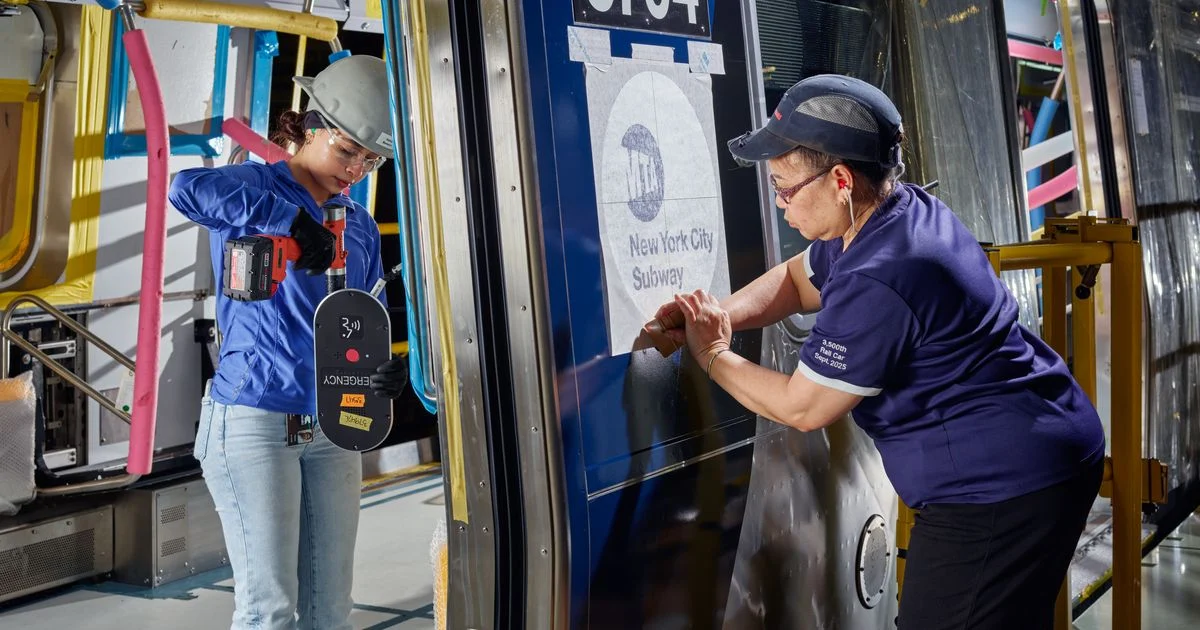
The sprawling, subterranean machinery that powers New York City operates largely in the shadows, keeping a metropolis of over eight million residents in motion while remaining virtually invisible to the millions of daily commuters who pass through its stations. For decades, the Metropolitan Transportation Authority (MTA) has functioned behind closed doors, managing a colossal web of tracks, tunnels, bridges, and maintenance yards that rarely see the light of day. Now, a new public art and photography exhibition titled In Service: MTA Photographs by Christopher Payne seeks to pull back the curtain on this hidden civic ecosystem. Commissioned by MTA Arts & Design and slated to open on September 22, the exhibition features 50 striking images distributed across 52 light boxes in five major subway hubs, including Grand Central Terminal, Bowling Green, and Atlantic Avenue.
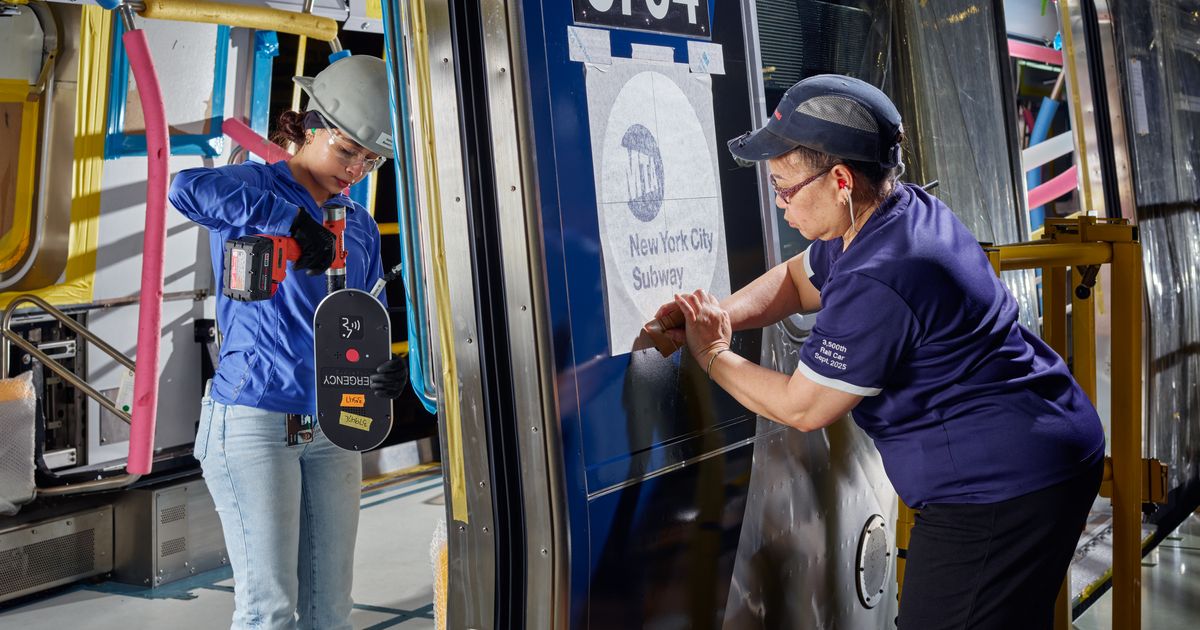
Documenting the unseen infrastructure required an extraordinary logistical effort, sending the acclaimed industrial photographer across multiple states and deep into restricted zones over a five-month period. From crawling through bus manufacturing facilities in Sacramento, California, to coordinating with heavy-rail car builders in Lincoln, Nebraska, Payne’s lens captures the intersection of monumental design, brute mechanical force, and the essential human labor required to sustain urban mobility.
Behind the Lens: Capturing the Unseen Transit Network
Christopher Payne is no stranger to monumental industrial spaces. Over the past twenty years, he has built an extensive portfolio documenting American manufacturing, architecture, and engineering feats. Yet, gaining access to the inner sanctums of the nation’s largest public transit network presented a unique challenge.
Reflecting on his journey, Payne recounts midnight excursions into restricted arteries of the city, such as the Hugh L. Carey Tunnel (commonly known as the Battery Tunnel). During a scheduled overnight closure intended for routine tile maintenance—where crews scrub roughly 400,000 individual wall tiles—Payne captured workers operating a specialized cleansing apparatus affectionately dubbed "the toothbrush." Collaborating closely with transit workers Stefano Como and Rosario Mannino, Payne engineered specific lighting arrays and camera positioning to prevent the workers from dissolving into mere silhouettes against the vast, dark expanse of the vehicular tube.
The resulting images emphasize not just the scale of the infrastructure, but the deliberate, physical exertion required to maintain it. "If the picture is just an object, there’s no story," Payne notes. "What’s the narrative? And that’s the nice thing about getting people in shots… You want to honor people who do the work."
A Chronology of Access and Exploration
The creation of In Service represents the culmination of a rigorous, multi-month collaboration between an independent artist and a massive municipal agency. The project unfolded across a carefully coordinated timeline:
- Spring: Planning and security clearances are established, granting Payne access to secure manufacturing plants and off-limits heavy-repair facilities across the country.
- Early Summer: Fieldwork begins at historic and operational sites, including the Richmond Hill rail yards in Queens and the Coney Island Overhaul Shop.
- Mid-Summer: Nighttime shoots commence inside restricted vehicular tunnels, bridge catwalks, and maintenance depots during operational lulls.
- Late Summer: Final selections are curated down to 50 definitive images, optimized for large-scale public display.
- September 22: The exhibition officially opens to the public, illuminating transit hubs across New York City with large-format light boxes.
The geographical reach of the project highlights the far-flung industrial supply chain that supports New York’s local transit. While passengers experience the final product locally, the network’s rolling stock and heavy components are forged in factories thousands of miles away. By bridging the gap between distant assembly lines and local maintenance bays, Payne’s work illustrates the vast, interconnected web of labor and engineering that underpins daily life in the region.
Engineering, Architecture, and the Human Element
Among the standout pieces in the exhibition is a photograph taken from the Marine Parkway Gil Hodges Memorial Bridge. Suspended 200 feet above the Rockaway Inlet, Payne sought to capture the relationship between dynamic movement and structural permanence. Rather than settling for a standard panoramic vista, he worked with bridge operators to frame the shot from a cramped, suspended control room, utilizing a custom-rigged support arm to extend his lens past aging industrial hardware. The resulting composition highlights the intricate geometry of steel cables and load-bearing beams that motorists speed past daily at 60 miles per hour without a second thought.
Similarly, at the Grand Avenue Central Maintenance Facility in Maspeth, Queens, Payne photographed municipal buses elevated on industrial jacks, stripped of their wheels and opened up for major overhauls. By focusing on the intersections where human technicians immerse themselves inside towering machinery, the photographs challenge commuters to reconsider familiar objects through an entirely unfamiliar lens.
At the historic Richmond Hill yard in Queens—a facility servicing the Long Island Rail Road that has operated since the 1880s—Payne spent hours waiting for the right atmospheric conditions. Utilizing one of the city’s last remaining 19th-century functioning railway turntables, he ultimately captured a nighttime frame featuring a nimble switch engine, blending historical preservation with contemporary industrial documentation.
Official Responses and Institutional Objectives
MTA Arts & Design, the division responsible for curating visual and performing arts across the transit network, views exhibitions like In Service as a vital bridge between the agency and the public. By commissioning artists of Payne’s caliber, the MTA aims to foster a deeper appreciation for the immense logistical challenges involved in running a 24/7 transit system that serves millions of riders daily.
"We are not just moving people from point A to point B; we are maintaining a living, breathing machine that requires constant vigilance, technical mastery, and round-the-clock human dedication," an MTA spokesperson noted regarding the exhibition’s conceptual goals. Agency officials hope the light installations will transform routine subway commutes into moments of reflection and discovery, encouraging riders to look past the platform edge and consider the hidden mechanics of the city.
Broader Impact and Implications for Urban Infrastructure
The release of In Service arrives at a critical juncture for urban infrastructure discourse in the United States. As major metropolitan areas grapple with aging transit systems, deferred maintenance crises, and the ongoing demand for modernization, public visibility into infrastructural upkeep remains limited.
Public transit systems are frequently judged solely by their immediate performance metrics: on-time rates, fare adjustments, and service delays. Cultural projects like Payne’s exhibition offer a counterweight to standard public grievances by visualizing the invisible labor force and complex industrial processes that prevent systemic failure. By elevating municipal maintenance work to the realm of fine art, the exhibition reframes infrastructure not merely as a utilitarian utility, but as a monumental civic achievement worthy of preservation, respect, and continued public investment.
As commuters navigate Grand Central, Bowling Green, and Atlantic Avenue beginning September 22, they will be greeted not by commercial advertisements or standard transit maps, but by illuminated portals into the secret, beating heart of New York City.