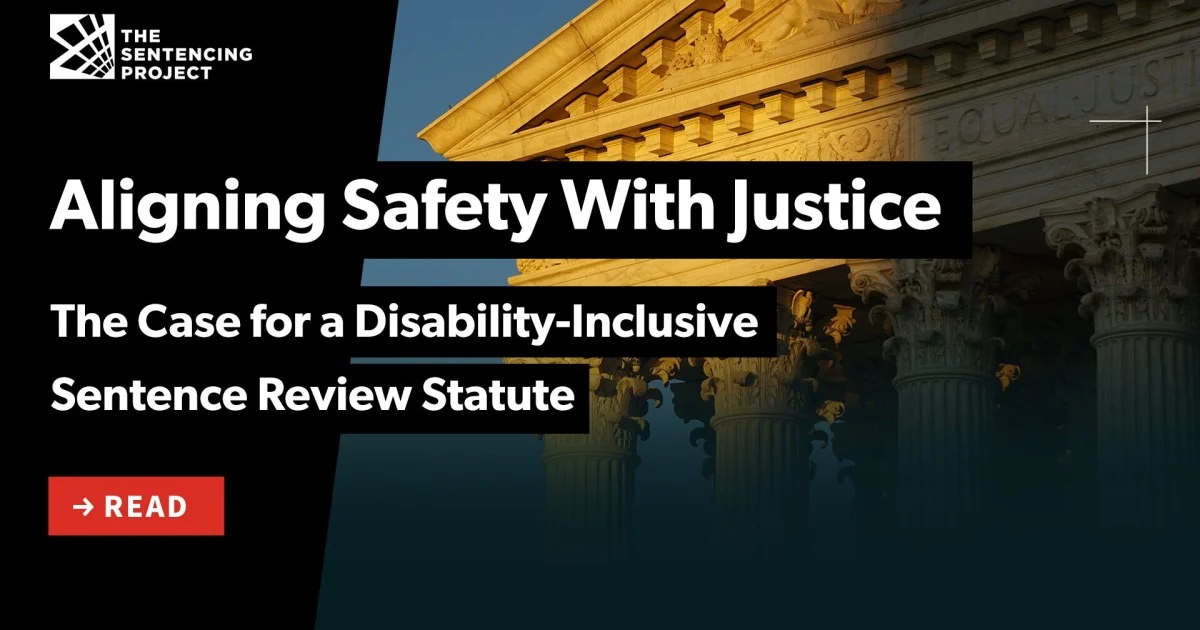
The United States criminal legal system is currently facing a critical call for reform as advocacy groups and legal experts highlight the profound overrepresentation of individuals with disabilities behind bars. A new proposal by The Sentencing Project advocates for the enactment of “disability second look” statutes—legislative mechanisms designed to provide a judicial review process for incarcerated individuals whose disabilities played a significant role in their offenses, their trial proceedings, or their experience within the prison system. While the nation has begun to embrace second-look policies for specific groups such as youth offenders, military veterans, and survivors of domestic violence, proponents argue that the disability community remains conspicuously excluded from these opportunities for relief.
The Scope of the Disability Disparity
The data surrounding the prevalence of disability in American correctional facilities is stark. According to recent findings, individuals in state and federal prisons are approximately two and a half times as likely to report one or more physical, cognitive, or social impairments compared to the general population. While roughly 15% of the average American adult population identifies as having a disability, that figure jumps to 38% within the incarcerated population.
This disparity does not stem from a higher propensity for criminal behavior among those with disabilities. Research consistently indicates that people with disabilities do not offend at higher rates than their non-disabled counterparts. Instead, the disparity is rooted in the architecture of the legal system itself. Individuals with disabilities are more likely to be arrested, more likely to be convicted, and more likely to face severe sentencing outcomes. This systemic friction begins at the point of contact with law enforcement, where atypical behavior or a failure to comply with commands—often due to a sensory or cognitive impairment—is frequently misinterpreted as resistance or aggression.
The Legal and Procedural Barriers
The challenges faced by people with disabilities are not confined to the initial arrest. During the judicial process, these individuals often struggle to access their due process rights. Inadequate legal representation, a lack of necessary accommodations during court proceedings, and the failure to provide appropriate assistive technologies can result in an inability to effectively participate in one’s own defense.
Furthermore, once incarcerated, individuals with disabilities face a double burden. They are frequently excluded from essential rehabilitative programming, vocational training, and reentry services because facilities are not equipped to accommodate their specific needs. This exclusion creates a cycle: the lack of access to programming prevents the individual from demonstrating the very rehabilitation that parole boards and sentencing judges typically require for release. Consequently, an individual may be denied a second look or parole not because they have failed to grow, but because the system denied them the tools required to prove that growth.
Defining the Model Statute
The proposed model statute developed by The Sentencing Project seeks to codify a pathway for judicial review by identifying five specific areas where disability intersects with the legal process:
- Nature of the Offense: Recognition that a disability may have influenced the circumstances surrounding the commission of a crime.
- Behavioral Misperception: Addressing instances where symptoms of a disability were misinterpreted by law enforcement or judicial actors as criminal intent or non-compliance.
- Due Process Obstacles: Assessing whether the defendant was provided with the necessary accommodations to navigate legal proceedings fairly.
- Incarceration Struggles: Accounting for disciplinary infractions or the acquisition of additional disabilities while in custody that might unfairly influence a record.
- Reentry Barriers: Acknowledging that the lack of institutional support for disability management can hinder the development of a viable post-release plan.
By mirroring the structures of existing second-look laws, the proposal suggests that courts should be authorized to re-evaluate the sentences of those who, despite their challenges, have demonstrated personal growth and maturity.
The Science of Recidivism and Aging
A central pillar of the argument for second look legislation is the well-documented relationship between age and criminal risk. Criminological research has long established that the risk of re-offending drops precipitously as individuals age, a phenomenon known as the “age-crime curve.” For those with criminal records, the risk of re-arrest becomes almost indistinguishable from that of the general population after seven years of being arrest-free.
Proponents argue that continuing to hold individuals—particularly those with disabilities—well past the point where they pose a public safety risk is both a fiscal drain on the state and a moral failing. The goal of the proposed statutes is not to bypass accountability but to align the justice system with the reality of human development and the diminishing returns of prolonged incarceration.
Training and Institutional Reform
The Sentencing Project’s proposal is not limited to sentencing relief; it emphasizes the necessity of institutional training. The model calls for mandatory education for law enforcement officers, judges, prosecutors, and defense counsel. This training would focus on the intersection of disability and the law, ensuring that legal actors understand their federal and state obligations to provide reasonable accommodations. Without such training, advocates argue, the cycle of misinterpretation and exclusion will continue regardless of new sentencing laws.
Broader Implications for the Justice System
The push for disability second look statutes emerges during a period of intense national debate over the efficacy of extreme sentencing. In states like Pennsylvania, for example, the legal system is currently grappling with the aftermath of court rulings regarding mandatory life-without-parole sentences for felony murder. With over 1,100 cases unresolved in the wake of shifting judicial interpretations, the need for a comprehensive framework for sentence review has never been more urgent.
Legal scholars suggest that the inclusion of disability as a factor for sentencing review would signify a major evolution in how the United States conceptualizes justice. Currently, 15 states and the District of Columbia have enacted some form of second-look legislation, yet the omission of disability criteria suggests a significant blind spot in these reform efforts.
By integrating disability into the sentencing review process, lawmakers have the opportunity to address a long-standing inequity. The move would not only fulfill the spirit of the Americans with Disabilities Act (ADA) within the context of the criminal legal system but would also provide a pathway for individuals who have historically been sidelined by a system that fails to account for their lived experiences.
Conclusion and Future Outlook
As the debate moves toward legislative chambers, the proposal faces the typical hurdles of criminal justice reform. Critics of such measures often cite concerns over public safety and the finality of sentencing. However, supporters contend that the current system is already failing to deliver on the promise of public safety by neglecting the root causes of recidivism and the specific needs of the most vulnerable.
The introduction of the model statute marks a turning point in the conversation, moving from a general acknowledgment of disability disparities to a concrete, policy-driven solution. As stakeholders and policymakers review these recommendations, the central question remains: how can the legal system evolve to ensure that culpability and rehabilitation are evaluated with a full understanding of human capacity and systemic constraint? The proposed second look statutes represent a significant step toward answering that question, ensuring that justice is not merely a process of punishment, but one that acknowledges the complexities of human life.