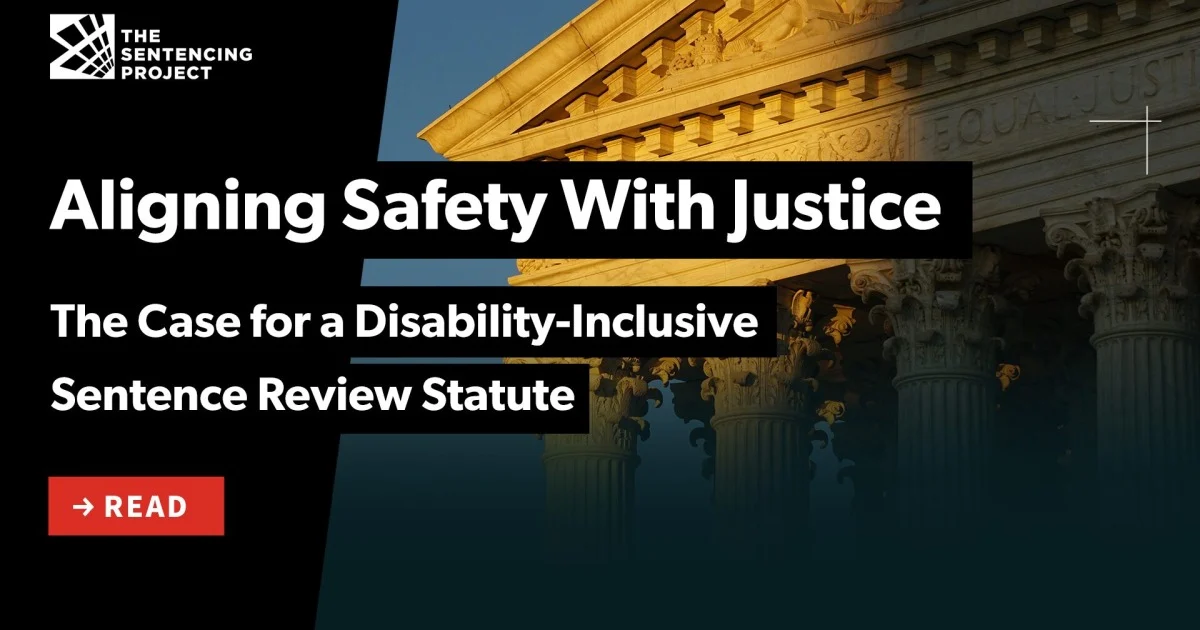
The United States criminal legal system is currently facing a critical reckoning regarding the treatment of incarcerated individuals with disabilities. As advocacy groups and legal scholars increasingly scrutinize the mechanisms of extreme sentencing, The Sentencing Project has released a formal proposal advocating for the implementation of "disability second look" statutes. This legislative initiative seeks to establish a structured pathway for sentence review specifically tailored to the unique challenges faced by individuals with physical, cognitive, and social impairments who are currently serving long-term prison sentences.
The proposal arrives at a time when the incarceration rate for individuals with disabilities has reached a disproportionate level. Current data indicates that approximately 38% of the prison population reports at least one impairment—a figure more than double the 15% rate found within the general adult population. By introducing these statutes, proponents argue that the justice system can begin to address the structural biases that have long disadvantaged this vulnerable demographic.
The Anatomy of Systemic Bias
The call for reform is rooted in the recognition that disabilities often act as a compounding factor in legal proceedings, beginning long before a trial commences. Individuals with disabilities are frequently targeted by law enforcement due to behavioral traits or communication difficulties that may be misinterpreted as suspicious or non-compliant. These initial encounters often set a trajectory toward arrest and conviction at rates that far exceed those of the non-disabled population, despite research consistently showing that people with disabilities do not commit crimes at higher rates than their peers.
The systemic disadvantages continue through the adjudication process. Many defendants with cognitive or social impairments face significant hurdles in navigating the complexities of the courtroom. The right to due process—a cornerstone of American jurisprudence—is often compromised when a defendant cannot fully understand or participate in their own defense. Legal counsel may struggle to communicate effectively with clients whose disabilities require specific accommodations, and the failure to provide these accommodations can result in unfair trial outcomes.
Furthermore, once incarcerated, the challenges for these individuals do not subside. Prison environments are often ill-equipped to provide necessary medical or behavioral support, leading to a cycle of discipline for infractions that may stem directly from an individual’s impairment. This, in turn, often results in the denial of rehabilitative programming, which is frequently a prerequisite for parole or early release. By excluding these individuals from reentry services, the system creates a self-fulfilling prophecy of recidivism.
The Case for Second Look Legislation
The model statute proposed by The Sentencing Project is designed to offer a judicial review mechanism for individuals whose disabilities contributed to the circumstances of their case. The criteria for eligibility are multifaceted, covering five key areas:
- The role of the disability in the nature of the offense.
- Misperceptions of behavior by law enforcement or the court before, during, or after the arrest.
- The inability to access due process rights during legal proceedings.
- Struggles during incarceration, including disproportionate disciplinary actions or the acquisition of new disabilities.
- Structural obstacles preventing the development of a viable reentry plan.
By creating this "second look" opportunity, the legal system would acknowledge that a person’s culpability can be mitigated by their underlying health conditions. This approach aligns with existing laws in fifteen states, the District of Columbia, and the federal government that allow for sentence reviews for other populations, such as veterans, survivors of domestic violence, and individuals who committed offenses as minors. Despite these precedents, individuals with disabilities remain the only group among these vulnerable classes without a dedicated pathway for judicial reconsideration of their sentences.
Aging and the Risk of Recidivism
A central pillar of the argument for reform is the well-documented intersection of aging and criminal behavior. Extensive research confirms that the propensity to commit crimes declines significantly as an individual ages, regardless of their disability status. For those with criminal records, the risk of re-arrest drops precipitously after seven years of non-offending, eventually becoming statistically indistinguishable from the risk posed by the general public.
When applied to the population of incarcerated people with disabilities, these findings suggest that many individuals who have been imprisoned for decades no longer pose a significant threat to public safety. Keeping them incarcerated past the point of rehabilitation, especially when their ability to demonstrate that rehabilitation has been hindered by a lack of accessible programming, serves little penological purpose.
Mandatory Training and Legal Obligations
Beyond the legislative changes to sentencing, The Sentencing Project emphasizes the necessity of comprehensive training for those who operate within the justice system. The proposal calls for mandatory education for law enforcement officers, prosecutors, judges, and defense attorneys. This training would focus on identifying disabilities, understanding the legal obligations under the Americans with Disabilities Act (ADA) and other federal and state mandates, and providing reasonable accommodations during every stage of the legal process.
The rationale for this training is clear: the law requires equal access, but in practice, the system often relies on outdated perceptions of behavior. By formalizing training requirements, jurisdictions can reduce the incidence of wrongful arrests and ensure that courtroom proceedings are accessible to all, thereby strengthening the integrity of the entire system.
Broader Implications and Current Legal Climate
The push for disability-inclusive sentencing occurs against a backdrop of wider challenges in the American judiciary. For instance, in July 2026, the expiration of a 120-day stay regarding the Commonwealth vs. Lee ruling in Pennsylvania highlighted the volatility of current sentencing laws. With over 1,100 felony murder cases left in legal limbo, the state of Pennsylvania represents the urgent need for clarity and reform in how the courts handle long-term sentences.
The prevalence of "felony murder" laws, which often mandate life-without-parole sentences even when the individual did not intend for a loss of life, creates an environment of extreme sentencing that disproportionately impacts vulnerable populations. When these policies intersect with a lack of disability-informed legal practice, the results are often catastrophic for families and communities.
Legal experts point out that the implementation of second look statutes would not be an act of leniency, but rather an act of constitutional consistency. If the criminal legal system is to claim a foundation in fairness and individual accountability, it must account for the biological, cognitive, and social realities that shape human behavior. Failure to do so risks maintaining a system that is not only expensive and ineffective but fundamentally at odds with the equitable treatment of citizens.
Looking Toward Implementation
The transition to a disability-informed legal system will require sustained political will and a shift in how lawmakers view the "deservingness" of incarcerated individuals. While the proposal by The Sentencing Project provides a robust framework, the implementation phase will likely face challenges regarding resource allocation and the need for new administrative structures within the judiciary.
However, the long-term benefits—reduced prison overcrowding, increased public safety through successful reintegration, and a more robust adherence to human rights standards—present a compelling case for reform. As states look to address the ballooning costs of aging prison populations and the humanitarian crises within correctional facilities, the adoption of second look statutes for people with disabilities may prove to be a necessary step in the evolution of American criminal justice.
In conclusion, the proposal serves as a vital critique of a system that has historically overlooked the intersection of disability and incarceration. By integrating judicial review mechanisms and mandating professional training, jurisdictions have the opportunity to transform their legal outcomes, moving toward a model that prioritizes individual capacity and public safety over the rigid application of outdated sentencing practices. The call for a "second look" is, ultimately, a call for the system to recognize the full humanity of those it governs, ensuring that the law serves to facilitate justice rather than exacerbate disability.