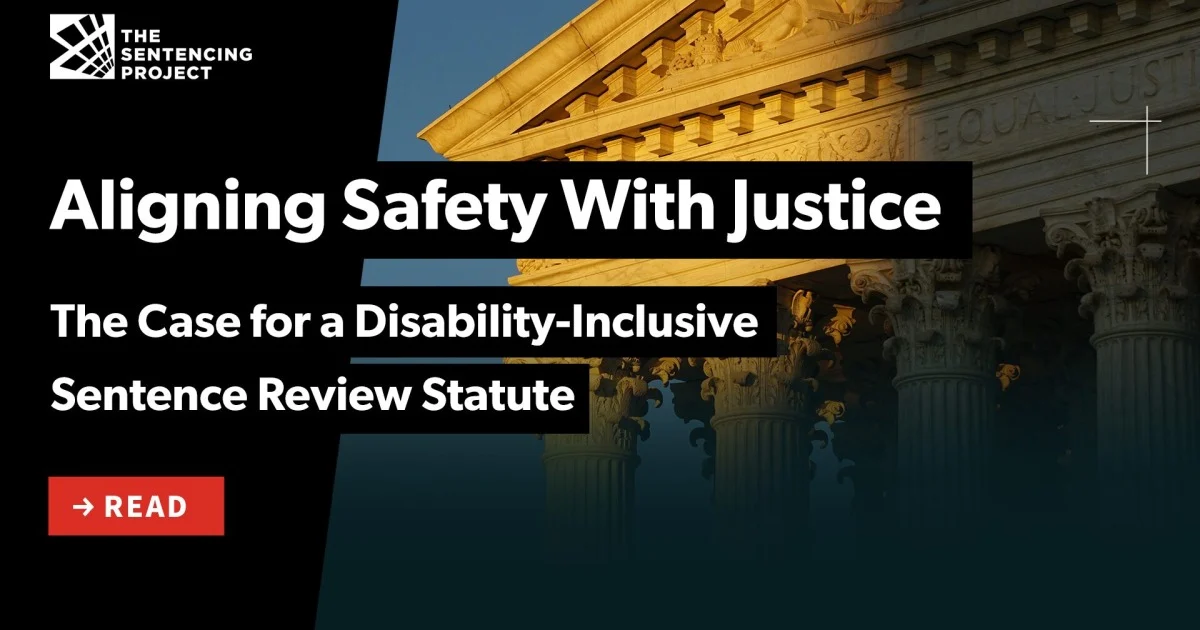
The United States criminal legal system is currently facing a reckoning regarding its treatment of incarcerated individuals with disabilities. According to a comprehensive policy proposal released by The Sentencing Project, a national research and advocacy center, the time has arrived for jurisdictions to implement “disability second look” statutes. These proposed laws aim to provide a formal mechanism for judicial sentence review for incarcerated individuals whose disabilities—whether physical, cognitive, or social—played a role in their interactions with the law, their underlying offenses, or their experiences within the carceral environment.
The Scope of the Disability Disparity
The data regarding the prevalence of disabilities within American correctional facilities is stark. While approximately 15% of the general U.S. adult population reports one or more impairments, that figure balloons to 38% among the state and federal prison population. This represents a statistical overrepresentation of two and a half times. These impairments are not merely incidental; they are systemic variables that influence every stage of the criminal legal process, from the initial point of police contact to the final stages of sentencing and reentry.
The Sentencing Project argues that these individuals are frequently subjected to a cycle of disadvantage. Disabilities can alter an individual’s behavior, speech patterns, and cognitive responses in ways that law enforcement may misinterpret as defiance, guilt, or aggression. During legal proceedings, this can manifest as an inability to fully access due process, potentially leading to inadequate legal representation or a failure to accommodate the defendant’s needs in the courtroom. Furthermore, once incarcerated, individuals with disabilities often face systemic exclusion from rehabilitative programming and reentry services, which are frequently designed for a neurotypical or able-bodied population.
Defining the Model Statute
The proposed model statute is designed to be narrow yet impactful. It would create eligibility for a “second look” for individuals whose disabilities contributed to five specific areas:
- Nature of the Offense: Recognition that a disability may have influenced the circumstances leading to the criminal act.
- Behavioral Misperceptions: Addressing how a disability may have led to misinterpretations of the individual’s behavior by law enforcement before, during, or after an arrest.
- Due Process Barriers: Acknowledging that an inability to fully participate in legal proceedings due to a disability may have compromised the integrity of the trial or plea process.
- Incarceration Struggles: Accounting for disciplinary issues stemming from a disability, or the acquisition of additional disabilities while in custody, as well as the denial of access to essential programs.
- Reentry Obstacles: Addressing the unique difficulties faced by individuals with disabilities when attempting to develop viable plans for successful integration back into society.
By framing the legislation in this manner, The Sentencing Project seeks to mirror existing second-look laws that have already been adopted in various forms across the country for other vulnerable groups, such as youth offenders, veterans, and survivors of domestic violence.
A Chronology of Reform and Current Status
The push for second-look sentencing is not entirely new, but its application to the disability community represents a significant evolution in justice reform. Over the past decade, a growing number of states—fifteen in total, plus the District of Columbia and the federal government—have enacted laws allowing for judicial sentence review hearings. However, despite the progress made for other demographics, individuals with disabilities remain largely excluded from these relief mechanisms.
The urgency of this proposal is underscored by recent judicial developments across the country. In late July 2026, for example, the legal landscape in Pennsylvania faced a crisis following the conclusion of a 120-day stay regarding the Commonwealth vs. Lee ruling. That ruling had declared mandatory life-without-parole sentences for felony murder unconstitutional, yet the state legislature failed to establish a clear framework for applying that ruling retroactively to over 1,100 people. This vacuum highlights the broader, systemic tendency of the law to leave vulnerable populations in limbo, often ignoring the nuance of an individual’s history, health, or cognitive state.
The Rationale: Culpability and Reform
The central argument supporting this initiative is rooted in the principle of culpability. The criminal legal system is predicated on the idea that the law must account for personal characteristics that reduce an individual’s moral and legal responsibility. Research has consistently demonstrated that the risk of re-offending declines significantly with age, regardless of disability status. Moreover, studies suggest that for individuals with a criminal record, the risk of re-arrest becomes statistically indistinguishable from that of the general population after seven years of remaining arrest-free.
Critics of the current system point out that, while courts acknowledge reduced culpability in various contexts, this recognition rarely extends to those with documented disabilities. This creates a paradox where an individual may be deemed less culpable due to their condition, yet they are denied the very tools of rehabilitation—such as educational programs or mental health services—that would facilitate their eventual successful reentry. By providing a pathway for sentence review, the state could acknowledge that individuals are capable of growth, maturation, and rehabilitation, even when their journey is shaped by the complexities of living with a disability.
The Necessity of Comprehensive Training
The Sentencing Project emphasizes that legislative change alone is insufficient. They advocate for the mandatory implementation of training programs for all stakeholders in the criminal justice ecosystem. This includes law enforcement officers, prosecutors, judges, and public defenders. Such training would focus on the legal obligations under both federal and state law to provide reasonable accommodations for individuals with disabilities.
The goal is to ensure that the justice system does not just react to the presence of a disability as a point of contention, but proactively manages it as a matter of civil and human rights. This includes understanding the nuances of neurodivergence, physical mobility impairments, and cognitive delays, ensuring that these factors are not conflated with criminal intent.
Broader Implications for the Legal System
The introduction of disability-focused second look statutes would represent a significant shift toward a more restorative model of justice. If enacted, these laws would force courts to grapple with the intersection of disability and the carceral state. This would likely require increased investment in forensic evaluations and specialized legal advocacy, potentially altering the fiscal landscape of the justice system.
However, the long-term economic and social implications may prove positive. By providing an avenue for the release of individuals who have aged out of their period of peak criminal activity and who may have been inappropriately penalized for their disability, states could reduce the astronomical costs of long-term incarceration.
Furthermore, this initiative aligns with a growing body of research suggesting that the "felony murder" and "extreme sentencing" models—which often fail to account for the role of the individual in the crime or their personal circumstances—are ripe for reform. As legal scholars and activists continue to analyze the outcomes of cases like those in Pennsylvania, the focus on disability as a mitigating factor is expected to gain significant traction.
Ultimately, the proposal by The Sentencing Project serves as a bridge between current policy and a more equitable future. It asks the legal system to apply the same standard of humanity to those with disabilities that it has begun to apply to other protected classes. Whether state legislatures will heed this call remains to be seen, but the data clearly indicates that the current approach is not only unsustainable but also fundamentally at odds with the evolving understanding of justice and equity in the 21st century. As the legal community continues to debate the efficacy of mandatory sentencing and the role of rehabilitation, the inclusion of disability-aware policies will likely become a cornerstone of the next generation of criminal justice reform.