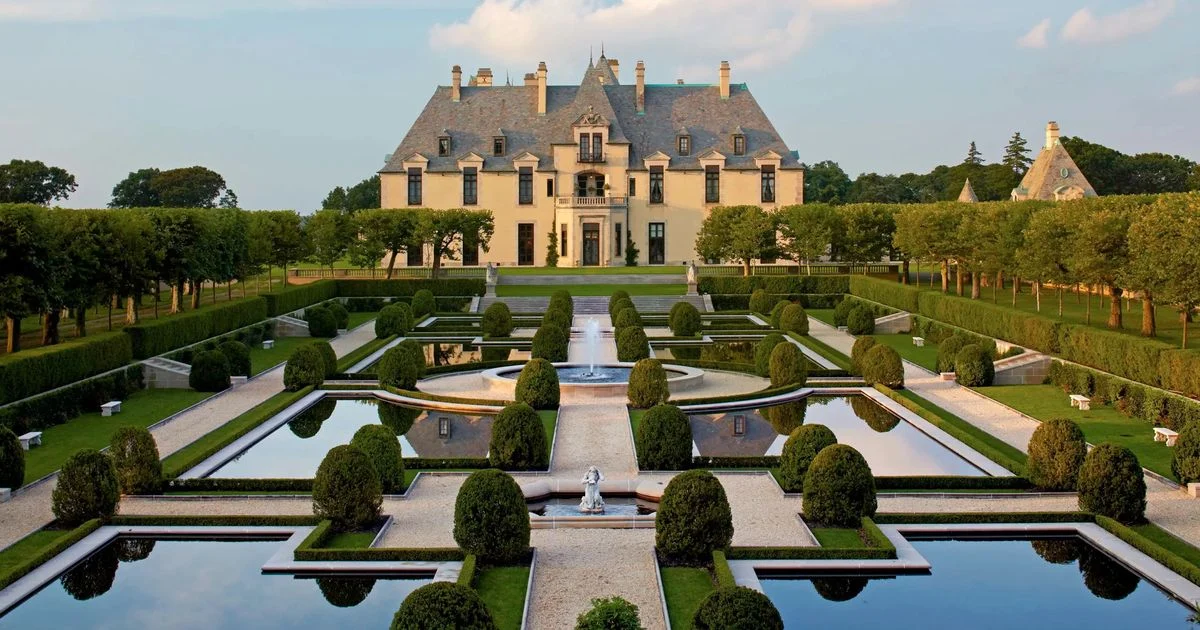
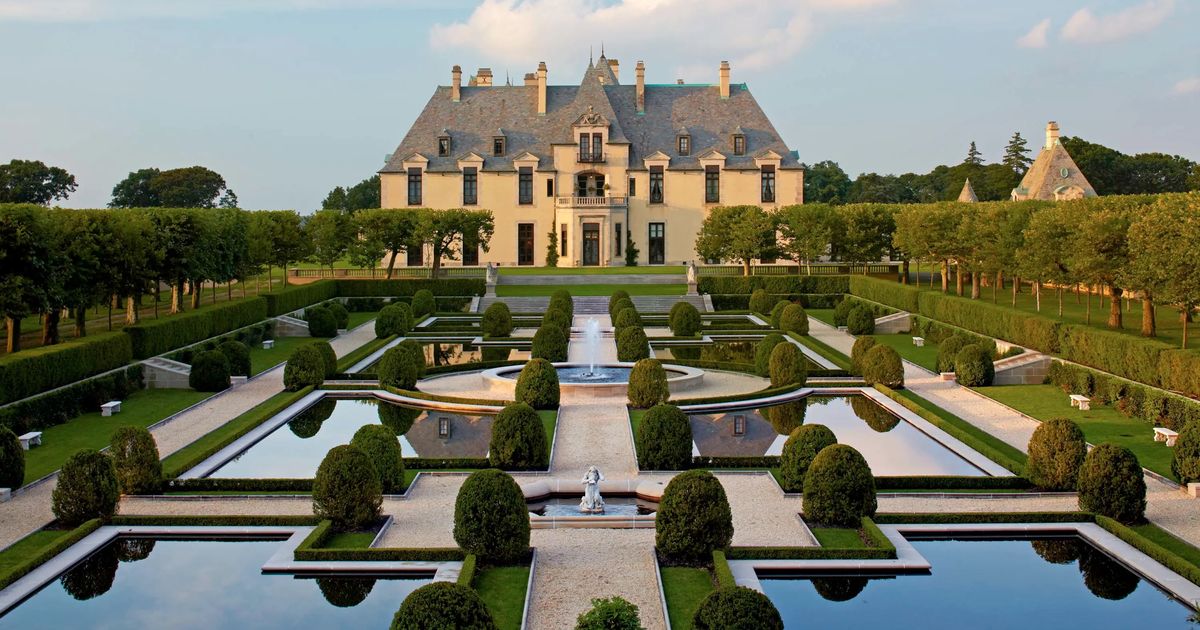
Oheka Castle, the sprawling 127-room Gilded Age mansion nestled on the highest point of Long Island in Huntington, New York, is heading to public auction on October 27. Set on 23 acres of meticulously manicured formal gardens designed by the renowned Olmsted brothers, the 110,000-square-foot estate cuts a striking silhouette that resembles a European château scaled up to grand American proportions.
The upcoming auction, managed by Concierge Auctions in partnership with luxury real estate broker Adam Modlin of the Modlin Group, features no minimum bid. The sale follows bankruptcy proceedings for developer Gary Melius, who spent decades and millions of dollars restoring the architectural marvel to its former glory. As the historic property prepares for its next chapter, real estate experts, preservationists, and luxury housing analysts are closely watching to see who will acquire one of the most iconic private residences in American history.
Main Facts and Property Specifications
The estate at 135 West Gate Drive is far more than a residential dwelling; it is a sprawling commercial and historical compound. The main French-style château encompasses 110,000 square feet across multiple floors, featuring 34 hotel guest suites, a massive 72-foot-long ballroom, formal dining rooms, a restaurant and bar, and a complex subterranean network of tunnels originally built for staff access.
Outdoors, the grounds boast nine reflecting pools, expansive stone terraces, and sweeping lawns. Crucially, the sale will also include a separate, approved five-acre subdivided lot with zoning permissions to construct 95 residential condominiums—a development potential that adds significant commercial value to the acquisition.
Despite its grandeur, the property requires substantial financial investment. The winning bidder will inherit not only a high-end luxury hospitality business and wedding venue but also the monumental ongoing maintenance costs associated with preserving a century-old masonry castle.
A Storied Chronology: From Jazz Age Excess to Modern Bankruptcy
The history of Oheka Castle—an acronym derived from the name of its original owner, Otto Hermann Kahn—is a narrative of immense wealth, near-ruin, and relentless revival.
1919–1920s: The Rise of a Xanadu
Otto Kahn, a German-born investment banker and partner at Kuhn, Loeb & Co., commissioned the estate as a summer home to rival the country houses of European nobility and American industrial titans like the Vanderbilts. Reportedly serving as the visual inspiration for the character who became the Parker Brothers’ Monopoly Man, Kahn spared no expense, spending an estimated $11 million at the time—equivalent to hundreds of millions today—to construct the palace. Excluded from elite anti-Semitic country clubs of the era, Kahn essentially built his own private resort, where he hosted royalty, Hollywood stars, and political leaders.
1934–1984: Decline and Institutional Fragmentation
Following Kahn’s death in 1934 and the financial pressures of the Great Depression, his heirs sold the estate in 1939. For the next several decades, Oheka changed hands multiple times, serving institutional purposes that severely degraded its architectural integrity. It operated as a retreat for municipal sanitation workers, a military academy for the Merchant Marine, and a boarding school. By the late 20th century, the castle had fallen into a state of severe disrepair, plagued by vandalism, fires, and structural decay.
1984–Present: The Melius Restoration and Financial Pressures
In 1984, developer Gary Melius purchased the derelict castle and embarked on what is widely considered one of the most expensive private historic restorations in United States history, pouring an estimated $40 million into reviving the interiors and gardens. Melius transformed the estate into a premier luxury hotel, a premier filming location, and a high-end wedding venue, hosting notable events such as the wedding of political aide Huma Abedin and former U.S. Representative Anthony Weiner.
However, the immense operational and debt-servicing costs of maintaining the estate eventually caught up with ownership. Following financial distress and bankruptcy filings, the property has been forced onto the auction block.
Cultural Footprint and Pop Culture Legacy
Oheka Castle occupies a unique space in American popular culture, serving as a physical manifestation of Gilded Age opulence that continues to capture the imagination of filmmakers, musicians, and television producers.
The estate’s cinematic pedigree dates back nearly a century. It heavily influenced F. Scott Fitzgerald’s descriptions of West Egg in The Great Gatsby, capturing the reckless optimism and hollow luxury of the 1920s elite. Decades later, Orson Welles used the estate’s cavernous halls and grand staircases to represent Xanadu, the fictional estate of Charles Foster Kane in the cinematic masterpiece Citizen Kane.
In recent years, the castle has served as a high-profile backdrop for modern media:
- Taylor Swift’s "Blank Space" (2014): The music video utilizes the castle’s hand-painted faux bois library walls and gilded reception rooms to depict a lavish, chaotic romance.
- Succession (HBO): The estate featured prominently as the setting for the infamous corporate retreat episode where Logan Roy forces his executives to play the psychological dominance game, "Boar on the Floor."
Market Context and Brokerage Pedigree
The auction is being spearheaded by Adam Modlin of the Modlin Group alongside Concierge Auctions, placing the sale in the hands of a broker accustomed to handling some of the most controversial and high-value residential properties in the United States. Modlin previously negotiated the sale of Jeffrey Epstein’s former Upper East Side townhouse and successfully closed a $47 million transaction for media mogul Ronald Perelman’s Manhattan property after years on the market.
However, selling an aging, historic castle with commercial hospitality operations presents a vastly different challenge than offloading a Manhattan mansion. While urban townhouses offer shared party walls and straightforward residential utility, Oheka is an isolated commercial enterprise requiring specialized management, historic preservation compliance, and a massive capital reserve.
Broader Implications and Future Outlook
The auction of Oheka Castle raises broader questions about the sustainability of maintaining sprawling Gilded Age estates in the 21st century. Across the United States, private ownership of century-old architectural behemoths has become increasingly untenable due to crushing property taxes, soaring labor and material costs, and strict historic preservation easements.
For the Town of Huntington and the local Long Island economy, the sale carries significant weight. Oheka is a major regional employer, a tourism driver, and a staple of the local hospitality sector. The inclusion of the five-acre, 95-unit condominium development lot in the auction signals a potential shift in how the estate’s sprawling footprint may be leveraged for financial viability moving forward.
Whether the winning bidder chooses to maintain the property as a luxury hotel, restore it as a private single-family compound reminiscent of its Otto Kahn era, or pursue mixed-use residential development on the subdivided acreage, the auction on October 27 will mark a definitive turning point for Long Island’s most famous modern castle.