Google’s most recent quarterly earnings call has triggered a noticeable ripple effect across Wall Street, illuminating the complex and often contradictory financial realities of the technology sector’s aggressive pivot toward artificial intelligence. For years, financial markets have rewarded tech conglomerates for leading the generative AI charge, viewing the technology as an inevitable horizon of boundless growth and efficiency. However, Alphabet, Google’s parent company, has now found itself confronting a foundational economic paradox of its own creation: the very features designed to revolutionize the user experience are actively cannibalizing its core revenue engine.
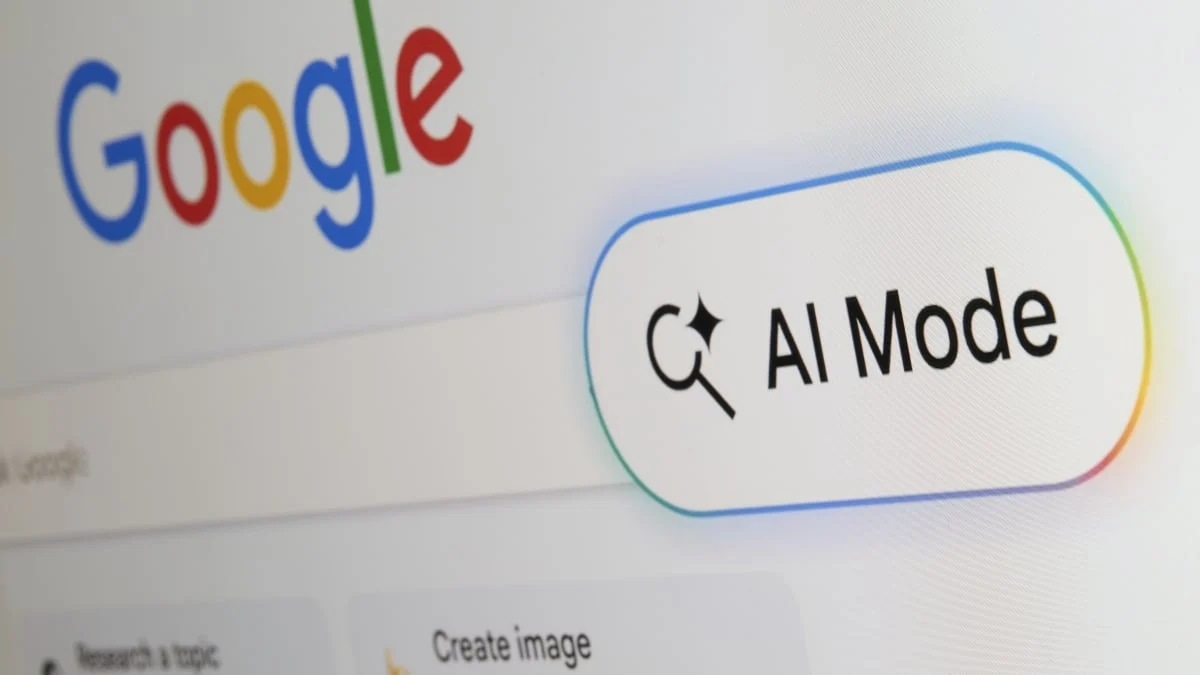
The core of the tension lies within Google’s AI Mode—the generative AI summaries that synthesize web content to answer complex user queries directly on the search engine results page. While these summaries offer unprecedented convenience for consumers by eliminating the need to sift through multiple blue links and visit third-party publishing sites, they have precipitated a dramatic rise in "zero-click searches." When users receive a comprehensive answer instantly at the top of the screen, the incentive to click through to authoritative source links diminishes significantly. This behavioral shift creates a direct threat to Google Ads, the pay-per-click advertising juggernaut that has historically generated tens of billions of dollars in revenue each quarter, funding the company’s vast research and development ecosystem.
Despite the turbulence reflected in recent stock market dips following the earnings report, Alphabet leadership has made it abundantly clear that there is no turning back. Having poured immense capital, computational power, and engineering talent into artificial intelligence infrastructure, Google is fully committed to the AI-first paradigm. To reconcile the decline in traditional click-through ad revenue with the skyrocketing operational costs of running generative AI models, the company has settled on a straightforward, albeit controversial, economic fix: significantly expanding the presence of advertisements within AI-generated search environments.
The Anatomy of the Zero-Click Crisis and Financial Disclosures
To understand the current market anxiety, one must examine the economic mechanics that have sustained Google’s dominance for over two decades. Traditional search engine optimization (SEO) and pay-per-click (PPC) advertising operated on a symbiotic transactional relationship: users typed queries, Google provided a curated list of relevant links interspersed with sponsored listings, and advertisers paid only when a user clicked through to their landing page. This model created a frictionless funnel that rewarded both high-intent traffic for businesses and high-margin ad revenue for Google.
The introduction of AI Mode fundamentally disrupts this funnel. By keeping users inside the walled garden of the AI-generated summary, Google satisfies the immediate information need without directing outbound traffic to advertisers or publishers. Consequently, traditional search ad impressions and subsequent click-through rates face downward pressure. Financial analysts tracking the third-quarter earnings disclosures noted that while user engagement with AI search features is scaling rapidly, the monetization efficiency of these interactions lags behind the legacy search architecture.
According to financial disclosures and reporting from industry analysts at outlets like Ars Technica, Google openly acknowledged to investors that AI-driven search currently generates lower yields per query compared to conventional search results pages. This discrepancy is driven by two primary factors: a nascent advertiser ecosystem that is still adapting to the unique format of generative AI placements, and a deliberate, cautious rollout by Google to prevent overwhelming users with intrusive commercial interruptions during early testing phases.
Chronology of the Pivot: From Experimental Labs to Monetized Reality
The trajectory of Google’s search monetization strategy has evolved rapidly over a compressed timeline, reflecting the breakneck speed of the generative AI boom.
In the early stages of generative search development—widely publicized through initiatives like the Search Generative Experience (SGE)—Google focused primarily on user acquisition, capability demonstrations, and computational scaling. The priority was proving that large language models could be integrated safely and efficiently into a massive, real-time web index serving billions of daily active users. During this phase, monetization took a back seat as engineers wrestled with latency, hallucination rates, and server infrastructure costs.
As the technology matured and transitioned into mainstream features collectively referred to as AI Mode, the financial toll of running complex neural networks alongside traditional web crawling became glaringly apparent. Wall Street began pressing executives on margins. Analysts noted that computing an AI-generated summary for a query is exponentially more expensive than serving a static list of indexed links.
By the time of the latest earnings call, the divergence between rising operational expenditures and shifting ad dynamics came to a head. Confronted by spooked markets and a dip in stock valuations, Google executives detailed the next phase of their commercial strategy. Rather than scaling back AI investments to protect legacy margins, the company announced a comprehensive roadmap to weave commercial messaging deeper into the fabric of conversational and summarized search results.
Expanding the Ad Ecosystem Within AI Mode
Google’s strategic remedy for the revenue shortfall involves a multi-pronged expansion of its advertising architecture tailored specifically for generative interfaces.
Currently, Google displays contextual ads within AI Mode, appearing adjacently to the synthesized responses. However, the company’s newly announced roadmap scales this approach significantly. Google plans to introduce dynamic sponsored placements that swap out or integrate directly into a user’s ongoing session as they interact conversationally with the AI chatbot. If a user asks a follow-up question or refines a query within AI Mode, the underlying advertising engine will dynamically serve relevant sponsored options tailored to the evolving context of the conversation.
Furthermore, this expanded ad model is no longer confined to domestic testing grounds. Google confirmed plans to systematically roll out AI Mode monetization across international markets, scaling the infrastructure globally to capture foreign ad spend and offset regional variations in legacy search revenue.
Despite these aggressive expansion plans, corporate leadership has urged patience among investors, issuing clear warnings that the transition will not yield immediate financial parity. The company emphasized that building a robust advertiser base for AI Mode will take time. Advertisers must retool their campaigns, experiment with conversational ad formats, and learn to measure the value of brand visibility within a generative summary rather than relying strictly on traditional cost-per-click metrics. Furthermore, consumer adaptation plays a crucial role; users must become accustomed to seeing commercial suggestions seamlessly integrated into AI dialogues without feeling that the objectivity of the synthesis is overly compromised.
Broader Industry Implications and Stakeholder Reactions
The friction between Google’s AI ambitions and its advertising revenue model carries profound implications for the broader digital economy, touching advertisers, web publishers, and regulatory bodies alike.
For digital marketers and brands, the shift requires a fundamental reimagining of digital advertising strategies. Standard keyword-bidding campaigns optimized for static search results pages may lose effectiveness if they fail to capture placement within the dynamic, multi-turn dialogue of AI Mode. Advertisers will need to develop creative assets that align with conversational contexts, ensuring their products or services are recommended naturally when an AI model synthesizes complex consumer research.
Web publishers and content creators face an even more precarious predicament. For decades, the digital publishing ecosystem relied on organic search traffic driven by Google’s blue links to generate the readership necessary to support journalism, blogs, and independent content creation. As zero-click searches retain users on Google’s platform, publisher referral traffic continues to erode. While Google attempts to offset this by including source citations within AI summaries, publishers argue that the referral volume is a fraction of what traditional search provided, threatening the economic viability of web publishing.
From a regulatory standpoint, Google’s tightening grip on both information synthesis and ad placement within the same interface is likely to attract heightened scrutiny from antitrust authorities. Critics and competitors may argue that leveraging a dominant search engine position to promote AI tools—while simultaneously squeezing out independent publishers and monopolizing the monetization of synthesized queries—reinforces anti-competitive behaviors.
Looking Ahead: The Balancing Act of Modern Search
As Google navigates this high-stakes transition, the company finds itself walking a structural tightrope. On one side lies the imperative to lead the artificial intelligence revolution, satisfying investor demands for technological innovation and capturing the future of human-computer interaction. On the other side lies the necessity of preserving a trillion-dollar advertising machine that funds the very research required to build these advanced systems.
The market’s initial panic reflects the anxiety of uncharted territory, but Google’s decisive pivot toward more integrated AI advertising signals that the company views monetization not as an afterthought, but as an essential co-evolution of search technology. Whether advertisers will embrace AI Mode placements at scale, how publishers will adapt to declining referral traffic, and how consumers will respond to a search experience increasingly saturated with conversational commerce remain the defining questions for the digital landscape in the years ahead. For now, one reality is certain for the billions of people who rely on Google every day: the future of search is conversational, intelligent, and accompanied by more ads than ever before.