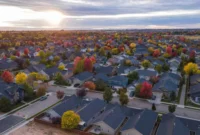
Nestled at the terminus of Jasmine Lane, a quiet cul-de-sac in the historic maritime and agricultural community of Southold, Long Island, a verdant wall of reforestation historically separated suburban domesticity from protected agrarian acreage. For decades, local residents enjoyed the uninterrupted tranquility of a suburban neighborhood characterized by classic two-story colonial homes, manicured lawns, and low-density traffic. However, this suburban illusion was permanently disrupted when a newly formed limited liability company purchased a 16-acre parcel for $650,000. The acquisition set off a high-stakes local battle that exposes the complex friction points where suburban lifestyle expectations collide with robust agricultural protection laws, generational wealth legacies, and modern land-use politics.
The catalyst for the dispute emerged in January, when public filings for a proposed enterprise dubbed "Rejuvenate Farms" revealed plans to operate an intensive organic poultry farm on the reforested site. The blueprint detailed an operation housing approximately 6,000 pasture-raised hens roaming among six mobile shelters, supported by a centralized utility and storage barn. For the residents of Jasmine Lane—many of whom purchased their homes in the early 1990s through middle-income housing initiatives featuring price points under $100,000—the proposal struck an immediate and alarming chord. Homeowners voiced intense apprehension regarding localized environmental degradation, vector attraction, plummeting property values, and the general degradation of their quality of life.
Chronology of a Neighborhood Crisis
The trajectory of the dispute transformed from simmering discontent into an organized municipal crisis over the course of several months, marked by escalating tensions, public protest, and administrative interventions.
- January: Neighborhood residents discover development plans for "Rejuvenate Farms" at a public planning board meeting. The project’s public face is introduced as 21-year-old New York University student Grant Callahan.
- Spring: Land clearing operations commence on the 16-acre site, involving significant tree removal and the installation of infrastructure that prompts immediate alarm among adjacent property owners regarding environmental impacts and the positioning of the main agricultural structures.
- June: Local residents document unauthorized construction activity when temporary coops are erected prior to the formal issuance of municipal permits. A resident’s video documentation posted online prompts the Town of Southold to swiftly issue an official stop-work order.
- September: Confronted by relentless community pressure and mounting legal scrutiny, the town attorney announces formal administrative steps to compel the LLC to reveal the true beneficial owners behind the enterprise. Concurrently, legal representatives for the farm submit a dramatic amendment to their application, abandoning the poultry proposal in favor of an organic produce and vegetable farm.
- October: Local stakeholders remain deeply skeptical of the pivot, viewing the vegetable farming alternative as a strategic maneuver designed to defuse public outrage while preserving the underlying infrastructure for a future return to poultry operations.
The Right to Farm Versus Suburban Expectations
At the heart of the Southold controversy lies a profound legal and cultural contradiction. The Town of Southold, like many rural and semi-rural municipalities across New York State, has adopted the state’s stringent "Right to Farm" legislation. This statutory framework is explicitly designed to shield bona fide agricultural operators from undue interference, nuisance lawsuits, and excessive regulatory overreach by adjacent suburban landowners or municipal bodies.
During packed town hall meetings, local officials repeatedly emphasized the legal limitations of municipal authority. Planning board representatives informed frustrated constituents that local government lacks the legal standing to summarily reject a commercial agricultural application simply because it generates neighborhood controversy or public opposition. Municipal oversight is strictly limited to narrow parameters, primarily encompassing traffic management, vehicle access, and the specific geographic placement of physical structures on the property.
Consequently, the localized battle lines were drawn over the precise location of the proposed storage barn, which developers originally sought to anchor directly adjacent to the Jasmine Lane cul-de-sac. Residents argued that positioning a high-intensity agricultural structure feet away from children’s play areas and residential property lines constituted an intentional provocation. Conversely, agricultural advocates and regional farming organizations categorized the residents’ resistance as classic, textbook NIMBYism (Not In My Back Yard). Industry representatives argued that the public routinely champions the abstract aesthetic of open agricultural vistas while actively rejecting the messy, operational reality of actual food production.

Behind the Enterprise: Ownership and Legacy
As public scrutiny intensified, attention inevitably shifted toward the individuals financing and directing the acquisition. Public records indicated that the 16-acre parcel was acquired by an LLC linked to a post office box, with applications filed by a similarly structured corporate entity. The face of the project, Grant Callahan, presented himself as an ambitious young entrepreneur with a background in real estate studies, track-and-field athletics, and campus leadership. However, his relative youth and suburban upbringing in Old Westbury created skepticism regarding his agricultural expertise.
Investigative inquiries by local journalists and legal representatives soon uncovered deeper genealogical ties that added a layer of controversy to the proceedings. Public records and legal databases connected the enterprise to Brian Callahan, Grant Callahan’s father, who—along with an associate—had previously orchestrated one of the largest financial fraud schemes in Long Island history. That $118 million Ponzi scheme, which collapsed in the wake of the 2008 economic recession, bilked numerous local investors, including a municipal fire department’s retirement fund. Following a federal prosecution and subsequent conviction, the elder Callahan served a portion of a 12-year prison sentence before receiving a presidential commutation in late 2024.
The revelation of these familial ties drastically altered the tenor of the local debate. What began as a traditional land-use dispute between suburban homeowners and an incoming farmer evolved into a crisis of institutional trust. Local attorneys and community leaders openly questioned the transparency of the corporate entities driving the project, leading the Southold town attorney to initiate formal legal mechanisms to pierce the corporate veil and identify every financial stakeholder involved in the application.
Broader Implications for Long Island Real Estate
The North Fork chicken-farm dispute serves as a bellwether for the evolving socio-economic pressures facing historic agricultural regions within proximity of major metropolitan areas. As suburban sprawl meets the preservationist imperative to save remaining farmland, municipalities across Long Island and the broader Northeast are increasingly forced to adjudicate competing visions of land utilization.
The tension highlights a fundamental systemic challenge: while public policy heavily subsidizes and protects the preservation of agricultural land through development rights purchases and tax incentives, the practical realities of modern farming—including odor, noise, and intensive logistical operations—frequently clash with the expectations of suburban residents who purchased homes assuming adjacent acreage would remain permanently dormant, picturesque green space.
Furthermore, the Southold case illustrates the growing intersection of speculative real estate investment, corporate anonymity through LLC utilization, and local regulatory oversight. As the town moves forward with legal demands for transparent ownership disclosures and evaluates the revised produce-farming proposal, the ultimate resolution of the Jasmine Lane dispute will likely establish a critical legal and administrative precedent for how municipalities balance individual property rights, corporate transparency, and community welfare in an era of rapid suburban and rural transformation.