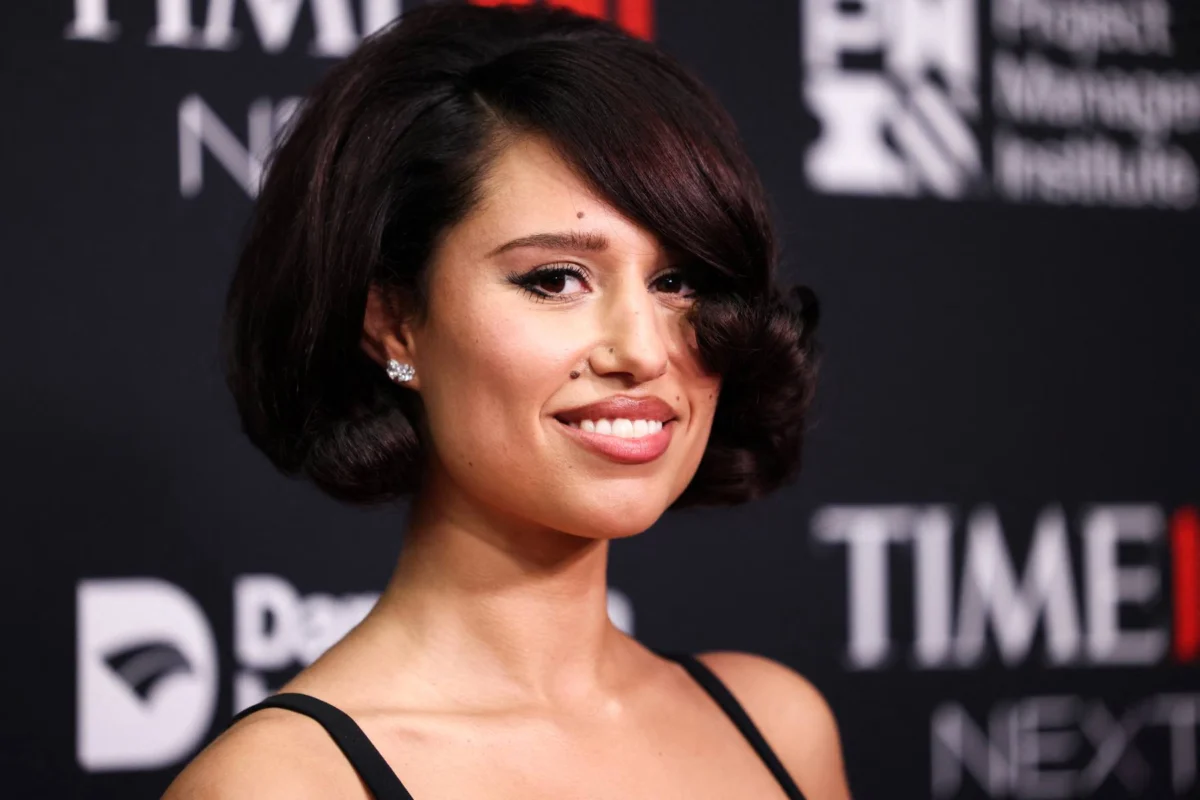
Grammy-winning artist Raye is officially expanding her cinematic footprint, signing on to compose original music and take on a voice role in Benny Safdie’s highly anticipated upcoming feature film, Lizard Music. The ambitious project, which seamlessly blends live-action footage with cutting-edge computer-generated imagery (CGI), continues to build one of the most eclectic and star-studded ensemble casts in recent Hollywood history. Alongside Raye’s musical contributions, the film features a powerhouse roster of talent including Dwayne Johnson, who also serves as a producer, Theo Leber, Alicia Silverstone, Tim Heidecker, Arya Parvathi, Regina Hall, Colman Domingo, Jeff Goldblum, Rachel McAdams, David Krumholtz, and Andrew Dice Clay.
The feature-length film is scheduled for a theatrical release on December 25, 2027, positioning it squarely as a major holiday event picture. With a narrative foundation built on surrealism, adventure, and the uncanny, Lizard Music promises to be a distinct cinematic departure for Safdie, who adapted the screenplay himself.
Literary Origins and Narrative Framework
Lizard Music is directly adapted from the 1976 children’s and young adult novel of the same name by Daniel Pinkwater, a legendary and wildly prolific author celebrated for his eccentric, imaginative storytelling. Pinkwater’s original book follows the madcap adventures of a young boy named Victor (referred to in production materials as Leber), who discovers an unauthorized late-night television broadcast featuring a society of advanced lizards performing bizarre, unearthly music.
Driven by curiosity and a sense of alienation from his everyday suburban life, the protagonist embarks on a surreal quest for answers. Along the way, he crosses paths with an eccentric older mentor figure affectionately nicknamed the Chicken Man and his trusted confidante—an extraordinarily intelligent, octogenarian chicken named Claudia. Together, this bizarre trio embarks on a universe-spanning journey that challenges conventional perceptions of reality, media, and extraterrestrial or subterranean civilization.
Safdie’s adaptation aims to preserve the whimsical yet deeply philosophical undertones of Pinkwater’s classic text while updating its visual and audio landscape for contemporary audiences. The blending of live-action actors with advanced CGI will allow filmmakers to bring the complex reptile society and the sagacious chicken Claudia to life with unprecedented fidelity, marrying the gritty, grounded aesthetic often associated with Safdie’s directorial roots with fantastical world-building.
An All-Star Production Team and Cast Assembly
The production apparatus behind Lizard Music is equally formidable, bringing together several major Hollywood production banners and industry heavyweights. Scott Stuber and Nick Nesbitt are producing via UA, alongside Benny Safdie through his Out for the Count Productions banner. Dwayne Johnson’s Seven Bucks Productions is heavily invested in the project, with Johnson himself anchoring the film both in front of and behind the camera. David Koplan rounds out the core production team representing Magnetic Fields Entertainment.
The casting announcements, rolled out in waves, have cemented Lizard Music as a magnetic project for A-list talent. The inclusion of veterans like Jeff Goldblum, Rachel McAdams, Colman Domingo, Regina Hall, and Alicia Silverstone brings immense dramatic and comedic gravity to a film nominally rooted in children’s literature, signaling that Safdie is crafting a multi-generational appeal akin to classic Amblin Entertainment fare or high-concept fantasy adventures.
Raye’s Rapid Ascent in the Film and Music Industries
Raye’s involvement in Lizard Music marks another milestone in a banner year for the British singer-songwriter. In May, following the widespread critical and commercial success of her sophomore studio album, This Music May Contain Hope, Raye was officially cast in the Yann Demange-directed crime feature Lineage, set in London. That project marked her first scripted dramatic role, following a brief cameo playing herself in an episode of the Netflix series Black Rabbit.
Now, with Lizard Music, Raye is returning to her primary domain—music composition—while simultaneously stepping into the voice-acting arena. Writing original music for a hybrid CGI-live-action film based on an interdimensional lizard band presents a unique creative canvas for an artist whose recent work has been lauded for its genre-bending sophistication and emotional depth.
Furthermore, Raye’s overarching career trajectory has reached a fever pitch. Her massive, chart-dominating single "Where Is My Husband!", pulled from This Music May Contain Hope, is currently regarded by industry analysts as a leading frontrunner for Song of the Year at the upcoming Grammy Awards. Securing an artist of her current cultural and critical stature to craft the sonic architecture of Lizard Music gives the film an immediate pedigree within the contemporary music landscape.
Chronology of Production and Strategic Theatrical Rollout
The development of Lizard Music reflects a carefully calibrated timeline designed to maximize both box office potential and awards season visibility.
- 1976: Daniel Pinkwater publishes Lizard Music, establishing a cult following among generations of young readers.
- Early Development Phase: Benny Safdie spearheads the adaptation, drafting a screenplay that translates Pinkwater’s surrealist prose into a modern visual script.
- 2024–2025: Major production entities—including UA, Seven Bucks Productions, and Out for the Count—form a coalition to finance and package the film. Casting contracts are finalized, assembling an expansive ensemble cast featuring Dwayne Johnson, Jeff Goldblum, Rachel McAdams, and others.
- May 2026: Raye expands her cinematic profile with dramatic casting news, setting the stage for her subsequent attachment to Lizard Music.
- Fall 2026: Official announcements confirm Raye’s multifaceted role on the project, joining as both an original composer and voice talent.
- December 25, 2027: Scheduled theatrical release date, positioning the film as a tentpole holiday release for family and genre audiences alike.
Broader Industry Implications and Analysis
The greenlighting and packaging of Lizard Music highlight several prominent trends in contemporary Hollywood filmmaking. First, studios continue to mine non-traditional literary sources for intellectual property. While superhero franchises and YA dystopian novels have dominated the past two decades, properties like Pinkwater’s work offer a distinct alternative: established name recognition coupled with high narrative weirdness, allowing filmmakers creative liberties that traditional franchises often prohibit.
Second, the film underscores the ongoing convergence of the music industry and major motion picture production. Studios increasingly rely on top-tier contemporary pop and R&B hitmakers not merely to contribute a standalone end-credit single, but to deeply integrate their creative identities into the fabric of the film’s universe. By tasking Raye—a Grammy-winning artist currently riding a wave of critical acclaim—with composing original music for an otherworldly reptile society, the production ensures built-in cross-promotion and cultural relevance that traditional orchestral scores alone may struggle to achieve.
Finally, the collaboration between Benny Safdie—historically celebrated for intense, hyper-realistic, anxiety-inducing indie dramas like Good Time and Uncut Gems (co-directed with his brother, Josh Safdie)—and commercial powerhouses like Dwayne Johnson represents a fascinating collision of cinematic sensibilities. As Safdie transitions further into high-concept studio filmmaking, Lizard Music will serve as an essential litmus test for how independent auteur sensibilities can scale within a CGI-heavy, family-accessible adventure framework.
As production progresses toward its late 2027 release date, industry watchers will be closely monitoring how the complex marriage of live-action performances, computer-generated reptiles, and Raye’s unearthly musical compositions translates to the big screen.