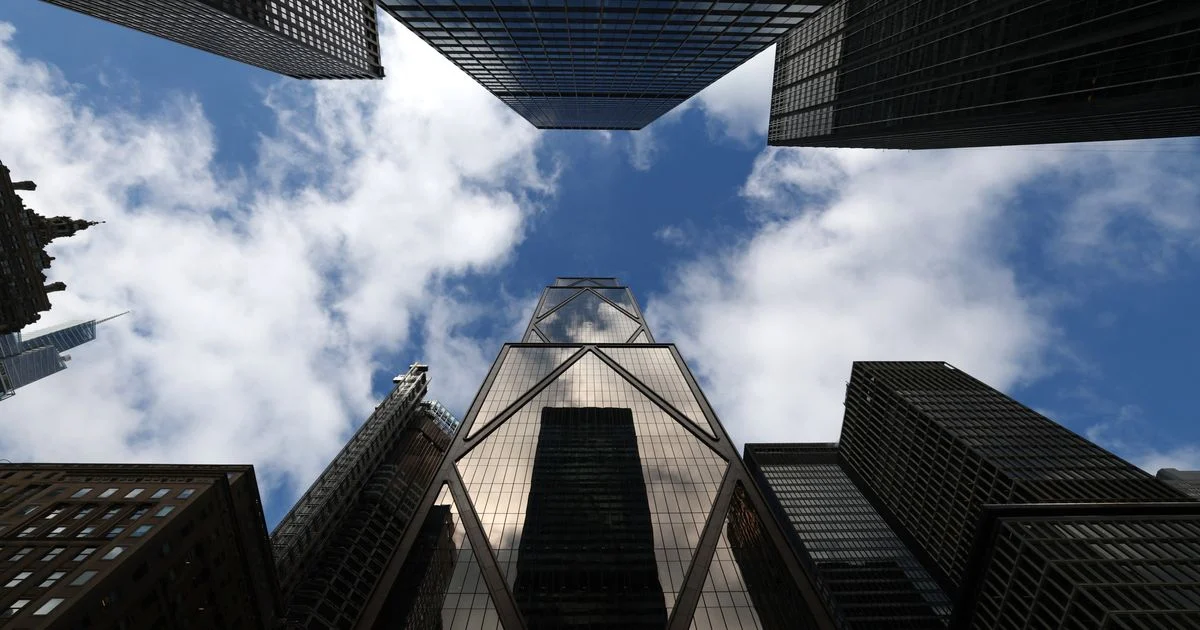
Since opening its doors in the autumn, JPMorgan Chase’s sweeping new global headquarters at 270 Park Avenue has garnered widespread attention not only for its architectural presence, but also for its astronomical financial footprint. Designed by renowned architect Lord Norman Foster, the towering, 2.5-million-square-foot skyscraper has been celebrated by bank executives as a physical manifestation of corporate prestige and modern workplace values. However, recent reports from financial and real estate tracking publications indicate that the state-of-the-art tower carried a staggering price tag of approximately $6 billion. This figure firmly establishes 270 Park Avenue as the most expensive office tower ever constructed in New York City, surpassing all previous real estate benchmarks and setting a potentially intimidating precedent for future commercial development in Midtown Manhattan.
For years, JPMorgan Chase leadership maintained a degree of public vagueness regarding the exact financial outlay required to replace its aging, demolished headquarters on the same site. Initial estimates floated by corporate representatives frequently ranged between $3 billion and $4 billion. Despite the reticence surrounding the true budget, the financial institution has been remarkably transparent—and eager—to showcase the building’s ultra-luxury amenities. The skyscraper is outfitted with museum-grade artwork by celebrated creators such as Gerhard Richter and Maya Lin, a specialized indoor flagpole designed to mirror prevailing wind patterns outside, an authentic Irish pub featuring Guinness on tap, a comprehensive wellness center providing physical therapy and preventative healthcare services, and a fitness suite complete with a row of Peloton bicycles overlooking Central Park. Furthermore, rather than utilizing traditional architectural lighting to mark civic holidays, JPMorgan commissioned artist Leo Villareal to program an expansive, dynamic light installation that ripples across the building’s exterior façade.
A Breakdown of Record-Breaking Construction Costs
The $6 billion expenditure, compiled by the bank’s internal real estate division, encompasses a comprehensive suite of development outlays. This total accounts for expensive Midtown air rights acquisitions, structural engineering, specialized interior architecture, bespoke furnishings, and high-value fine art collections. Spread across the 2.5-million-square-foot tower, the cost equates to roughly $2,500 per square foot.
While this metric is undeniably high, real estate analysts note that it is not entirely unprecedented within the context of post-pandemic inflation, supply chain pressures, and soaring material costs in the construction sector. Nevertheless, 270 Park dwarfs previous heavyweights in the New York commercial property market. For comparison, 50 Hudson Yards—a massive 2.9-million-square-foot tower developed by Related Companies and anchored by major tenants such as BlackRock and Meta—cost an estimated $4 billion, or approximately $1,400 per square foot, upon its completion in 2017. At the time, 50 Hudson Yards was hailed as the city’s most expensive office building. Similarly, the development of One Vanderbilt a decade ago with a $3.14 billion price tag was viewed by industry observers as an extraordinary financial gamble. The sheer scale of the investment at 270 Park Avenue resets the financial ceiling for ultra-prime commercial real estate.
Chronology and Redevelopment Background
The path to creating New York City’s most expensive office tower spans nearly a decade of strategic planning, municipal rezoning, and intensive demolition work.
The project’s origins trace back to the implementation of the Midtown East Rezoning initiative, a landmark city planning effort enacted in 2017 under the administration of Mayor Bill de Blasio. Designed to revitalize the aging Midtown business district, the rezoning allowed developers to construct modern, high-density towers by purchasing air rights and upgrading surrounding public infrastructure. JPMorgan Chase quickly seized upon the legislative framework to announce its intention to demolish its original, obsolete 52-story headquarters at 270 Park Avenue—a building completed in 1960 and previously known as the Union Carbide Building.
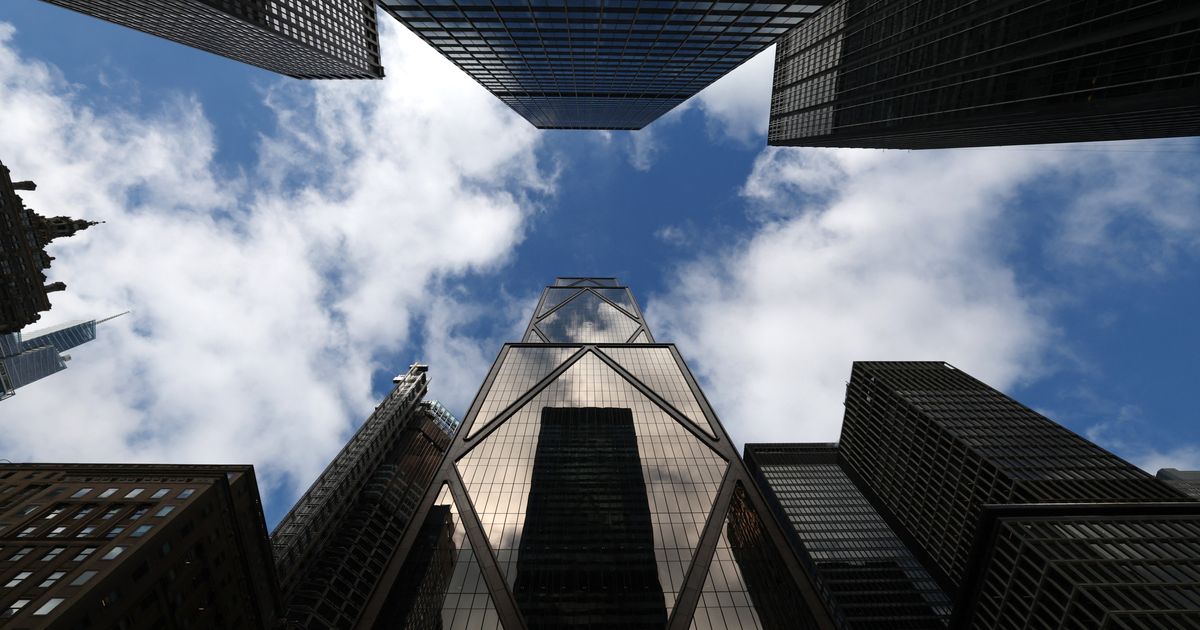
Demolition of the original structure began in 2018 and set its own historic milestone, as it became the largest voluntarily demolished building in the world. Rather than utilizing traditional explosive methods, contractors systematically dismantled the tower piece by piece to minimize disruption to the dense urban core and recycle a vast majority of the building materials. Construction on the new Norman Foster-designed skyscraper commenced shortly thereafter, navigating the disruptions of the COVID-19 pandemic before culminating in its grand opening in the fall. The tower now anchors a broader, six-million-square-foot Midtown campus strategy spearheaded by JPMorgan Chief Executive Officer Jamie Dimon.
A Shift in Corporate Strategy and Financial Performance
The construction of a $6 billion monument to corporate real estate represents a remarkable philosophical evolution for Jamie Dimon, whose leadership style has historically been characterized by stringent fiscal conservatism and a pragmatic skepticism toward unnecessary corporate luxuries.
Decades prior, in 2004, Dimon famously closed the executive gym and fitness facilities inherited from previous leadership at the bank’s former headquarters, arguing at the time that employees could readily find and pay for fitness spaces independently. Furthermore, as recently as 2018, Dimon publicly cautioned public market investors to exercise caution and short the stocks of corporations that announced grand plans to construct extravagant new headquarters, warning that such endeavors frequently represented misallocated capital and hubris.
The willingness to break from past frugality is underwritten by an unprecedented era of profitability for JPMorgan Chase. In 2024, the financial giant posted a historic net profit of $59 billion, setting an all-time record for any lending institution in the history of American finance. Although earnings saw a slight retraction in the subsequent year—dipping to $57 billion—bank leadership has remained aggressively optimistic. Executives have openly cited anticipated regulatory tailwinds and the prospective benefits of financial deregulation as catalysts for continued economic strength, providing the necessary liquidity to absorb the monumental costs of a $6 billion headquarters without straining corporate balance sheets.
Broader Market Implications and Future Outlook
The financial benchmark established by 270 Park Avenue may quickly become the baseline for top-tier corporate real estate in Manhattan rather than an isolated outlier.
Market indicators suggest that other financial institutions and ultra-wealthy corporations are prepared to match these extraordinary capital outlays to secure premier talent and cement their physical dominance in core business districts. Notably, hedge fund giant Citadel and real estate developer Vornado Realty Trust are advancing plans for a massive two-million-square-foot tower at 350 Park Avenue. Financial projections for the Citadel tower indicate that it is also expected to reach a total development cost of approximately $6 billion, signaling that nine-figure skyscraper budgets are entering a new phase of commercial reality.
Real estate analysts point out that these mega-projects reflect a profound bifurcation in the post-pandemic office market. While older, Class B and Class C office buildings face surging vacancy rates, structural obsolescence, and declining valuations, newly constructed trophy towers equipped with state-of-the-art sustainability systems, wellness infrastructure, and high-end cultural amenities are experiencing robust demand. By investing heavily in the physical workplace, firms like JPMorgan Chase are doubling down on the premise that a premier, centralized office environment is an essential tool for corporate recruitment, brand prestige, and collaborative culture—even if the initial price tag reaches historic heights.