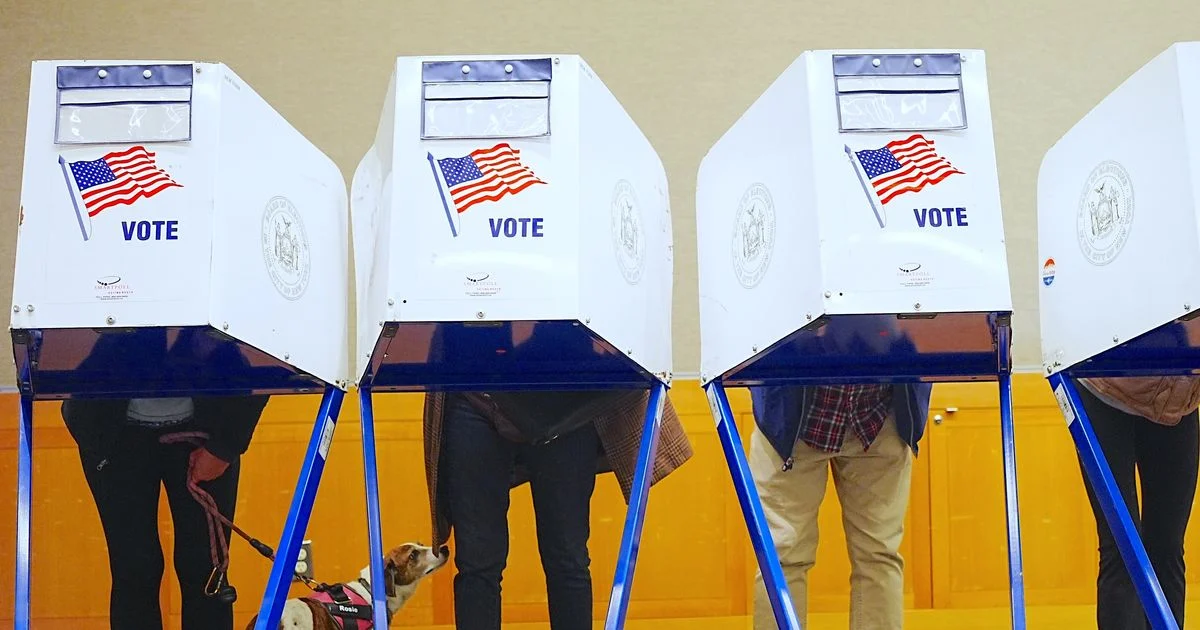
New York City voters heading to the polls are facing a pivotal series of decisions regarding the structural governance of the nation’s largest municipality. At the center of this election cycle are five specific ballot propositions designed to reshape how the city handles public infrastructure, small business permitting, real estate transactions, and bureaucratic oversight. Spearheaded by Mayor Zohran Mamdani and formulated by his newly established Commission on Government Efficiency (COGE), these proposed amendments to the New York City Charter represent a concerted effort to dismantle administrative bottlenecks. However, they have also ignited a robust public debate over the balance of power between executive agencies, community boards, preservationist watchdogs, and the City Council.
The Origins of the Commission on Government Efficiency
When Mayor Zohran Mamdani assumed office, he did so on a sweeping mandate focused on economic affordability and municipal modernization. Throughout his campaign and the early months of his tenure, the mayor identified chronic bureaucratic delays as a primary impediment to progress. Whether a small business trying to secure an outdoor dining license or the Department of Transportation attempting to expand safe-streets infrastructure, city agencies have historically been bogged down by overlapping jurisdictions, mandatory public comment periods, and exhaustive multi-agency reviews.
To tackle this systemic friction, Mayor Mamdani established the Commission on Government Efficiency earlier this year. COGE was tasked with conducting extensive outreach, gathering feedback from ordinary citizens, urban planners, and municipal workers alike. The commission’s mandate was simple yet ambitious: identify where red tape stifles economic activity and public safety, and formulate structural recommendations to streamline city operations.
The culmination of COGE’s research is the current slate of five ballot propositions. While Propositions 2 and 5 focus primarily on municipal contracting processes and adjustments to the city’s rainy-day fund contribution targets, Propositions 1, 3, and 4 directly target infrastructure, zoning, public space, and real estate management.
Breaking Down Propositions 1, 3, and 4
The infrastructure-related ballot measures represent the most direct effort in decades to recalibrate New York City’s administrative workflow. Each proposal targets a distinct sector of city administration, aiming to dramatically reduce the timeframe required to execute public and private projects.
Proposition 1 focuses explicitly on small businesses and public space utilization. In the wake of recent city legislation reviving year-round outdoor dining (streeteries) and sidewalk cafes, restaurant owners previously faced an arduous permitting process. According to joint investigations by COGE and the New York City Comptroller’s Office, obtaining a permanent sidewalk cafe permit routinely took upward of eight months, with some establishments waiting over a year and a half. Proposition 1 aims to slash this timeline to just two months. It achieves this primarily by making mandatory public hearings optional and eliminating the City Council’s authority to veto a permit once the Department of Transportation (DOT) has granted approval. Additionally, the proposal repeals an antiquated requirement forcing businesses to purchase costly newspaper advertisements announcing their intentions prior to hearings.
Proposition 3 tackles a multifaceted combination of transportation infrastructure and municipal property management. On the transportation front, the city aims to accelerate the deployment of vital bike-lane and bus-lane networks by roughly 33 percent. This will be accomplished by curtailing redundant inter-agency sign-offs and allowing the DOT to initiate physical construction simultaneously with notifying local community boards and elected officials, rather than waiting for formal advisory resolutions to run their course. Beyond transit, the second prong of Proposition 3 drastically accelerates real estate actions: the timeline for selling city-owned lots under 10,000 square feet and transferring landmark development rights is compressed from seven months to 90 days. Furthermore, undevelopable land parcels can be sold directly to adjacent property owners without requiring a public auction. The third prong eliminates the mandatory requirements for City Council and City Planning Commission hearings when the city leases administrative office space for municipal employees.
Proposition 4 addresses the notoriously fragmented construction-permitting apparatus. Currently, applicants seeking to build or renovate face a labyrinth of disparate agencies, resulting in prolonged waiting periods and conflicting guidance. Proposition 4 establishes a single, centralized construction-permitting hub housed entirely within the Department of Buildings (DOB). Furthermore, the measure shifts jurisdiction over permitting for projects on city-owned waterfront properties from the Department of Small Business Services to the DOB, while simultaneously empowering a broader cohort of Buildings officials to approve certificates of occupancy.
The Political Divide: Efficiency Versus Public Input
While proponents argue that these measures are essential to modernizing a sluggish municipal apparatus, the proposals have drawn sharp criticism from a coalition of preservationists, good-government advocates, and community leaders.
Local neighborhood organizations have been among the most vocal opponents. Groups such as the Columbia Street Waterfront District association have mobilized opposition campaigns, characterizing the ballot measures as a coordinated executive power grab designed to bypass local representation, neutralize community boards, and strip power away from the City Council.
Land-use and historical preservation groups have trained their heaviest fire on Proposition 3. Organizations like the Municipal Art Society of New York and the New York Landmarks Conservancy argue that bundling safe-streets infrastructure with accelerated real estate sales and the transfer of landmark development rights creates a dangerous vehicle for unvetted development. They contend that removing public review mechanisms prior to the sale or transfer of city-owned landmarked properties deprives citizens of vital oversight and leaves lasting public assets vulnerable to rushed transactions without guaranteed community benefits.
Meanwhile, good-government watchdogs have expressed mixed views. Common Cause has criticized Proposition 1 for degrading legislative oversight and public participation in the management of shared public spaces, arguing that administrative streamlining should never come at the expense of meaningful civic engagement. Conversely, organizations like Reinvent Albany and Citizens Union have thrown their support behind the bulk of the package—particularly Propositions 1, 3, and 4—while criticizing the structural bundling of unrelated changes into a single question, such as the varied components housed within Proposition 3.

Institutional and Industry Reactions
The political fallout within municipal government itself has been notably muted compared to previous legislative battles. Last year, proposals advanced by the Adams administration regarding city development sparked intense turf wars and multimillion-dollar ad campaigns by the City Council. In contrast, while individual council members from both sides of the aisle have expressed generalized concerns regarding the steady erosion of council oversight, City Council Speaker Julie Menin adopted a measured stance. Menin announced that the council would not expend public resources or initiate advertising blitzes opposing the ballot measures, noting that while members hold diverse personal opinions, institutional funds would remain uncommitted to the debate.
On the industry side, economic stakeholders have rallied strongly in favor of the reforms. The New York City Hospitality Alliance has strongly endorsed Proposition 1, emphasizing the critical economic relief expedited outdoor dining permits will provide to struggling restaurants.
Similarly, pro-housing and urbanist organizations—including Open New York and Abundance New York—have championed the ballot measures as a triumph of pragmatic governance. Annemarie Gray, executive director of Open New York, noted that the city’s severe housing and infrastructure needs require treating bureaucratic inefficiency as a solvable management problem rather than an immutable feature of municipal life.
Broader Implications for New York City Governance
As voters cast their ballots, the implications of these measures extend far beyond individual permits or bike lanes. If passed, Propositions 1, 3, and 4 will fundamentally alter the operational DNA of New York City government, shifting the equilibrium of power away from decentralized community reviews and legislative deliberation toward centralized executive execution.
For the Mamdani administration, successful passage of these charter revisions will validate a governance strategy that prioritizes rapid implementation and administrative agility over exhaustive public consensus-building. Conversely, a rejection or partial defeat at the ballot box would signal that New Yorkers remain deeply protective of their traditional oversight mechanisms, even when confronted with the promise of a faster, more streamlined city. Regardless of the outcome, the 2026 ballot proposals have established a defining precedent for how modern urban centers attempt to balance the competing demands of democratic participation and administrative efficiency in the 21st century.