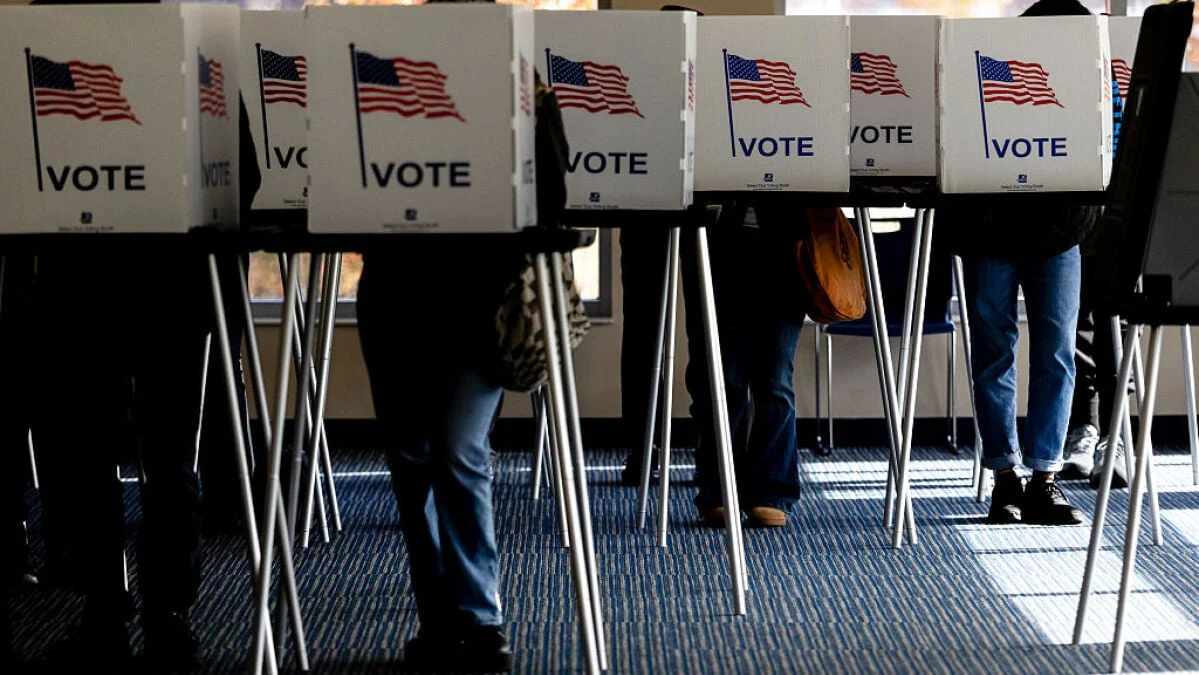
The high-stakes November 3 midterm elections are rapidly approaching, setting the stage for a monumental shift in the political landscape of the United States. With control of both chambers of Congress hanging in the balance, the final outcome of these races will directly dictate the legislative trajectory for the remainder of President Donald Trump’s term in office. Millions of Americans have already made their voices heard through early voting initiatives, but for those who have yet to cast a ballot, mail in their votes, or navigate the complex web of local regulations, time is rapidly running out.
Understanding the mechanics of voting in a modern federal election requires careful attention to detail. Deadlines, identification laws, and ballot submission procedures vary wildly depending on the state, county, and even municipality. To ensure that every eligible citizen can successfully participate in the democratic process without administrative hurdles, this comprehensive guide covers everything from mail-in ballot timelines and secure drop-box rules to in-person polling protocols, voter rights, and the legal realities surrounding election integrity.
The Evolution and Rules of Voting by Mail
Over the past decade, voting by mail and absentee voting have transformed from alternative methods into mainstream pillars of American democracy. Following a massive surge in mail-in voting during the 2020 election cycle, states across the country have permanently expanded access. Currently, more than 51 million Americans have already participated in the 2026 midterms, with a significant portion of those votes coming through postal systems and secure drop boxes. Eight states now conduct entirely all-mail elections or offer universal mail-in voting to all registered residents, institutionalizing a trend toward maximum voter convenience.
Despite the widespread adoption of mail-in voting, the process demands strict adherence to deadlines to avoid disqualification. Most states issue mail-in ballots weeks ahead of November 3, giving voters ample time to review candidates and amendments. However, getting the ballot back to election officials on time is critical. For voters sending their completed ballots through the United States Postal Service, the envelope must be postmarked on or before Election Day. Ballots arriving with late postmarks are routinely voided under state law. Voters who applied for a mail-in ballot but never received it should immediately contact their local county election office to secure an in-person alternative or emergency replacement.
For those preferring to bypass the postal service, designated ballot drop boxes offer a secure, direct alternative. Approximately 15 states legally mandate drop-box options, typically placing them in heavily monitored public facilities such as libraries, municipal parks, and county clerk offices. For example, systems like the Los Angeles County Registrar-Recorder maintain extensive locator tools to help residents find secure drop sites. Conversely, roughly 11 states strictly prohibit drop boxes altogether, requiring voters in those jurisdictions to either mail their ballots with valid postmarks or deliver them directly inside an election office or polling place. Voters should consult official state registrar websites or the state-by-state database provided by Vote.org to verify their local drop-box laws.
Navigating In-Person Voting and Polling Locations
While mail-in voting continues to capture a substantial share of the electorate, millions of Americans still prefer the traditional experience of casting their ballots in person. In-person voters are assigned specific polling locations determined by the residential address provided on their voter registration forms. While many jurisdictions reserve in-person voting exclusively for Election Day, a vast majority of states now offer early in-person voting windows that can begin up to a month before November 3, alleviating long lines and accommodating busy work schedules.
Voters with disabilities or specific accessibility needs are encouraged to verify their assigned polling places early, as specialized accommodations sometimes require visiting designated accessible voting centers equipped with audio-tactile interfaces and specialized seating. When heading to the polls, voters do not need complex equipment, but they must remember to bring any required state-mandated identification documents. Furthermore, federal and state guidelines explicitly permit voters to bring personal notes, non-partisan voter guides, and marked sample ballots directly into the voting booth to streamline their decision-making process.
Locating a nearby polling place is straightforward for prepared citizens. Voters can verify their registration status and find their precise polling location by checking their local registrar of voters website, reviewing their voter registration card, or utilizing trusted online lookups such as Vote.org and the National Association of Secretaries of State (NASS) polling place locator tool.
Essential Voting FAQ: Rights, Regulations, and Security
Navigating the labyrinth of election laws naturally gives rise to numerous questions regarding voter rights, ballot security, and administrative oversight. Addressing these common concerns with factual, legally grounded information is essential for maintaining public confidence in the electoral system.
Do I need an ID to vote?
Voter identification requirements vary dramatically across the United States. While some states mandate strict photo identification, others accept non-photo IDs or permit voters to cast a ballot by signing an identity verification affidavit if they lack standard documentation. Voters should review their specific state election board guidelines well in advance of November 3 to avoid last-minute complications at the precinct.
Can I track my mail-in ballot?
Yes. The vast majority of states now provide sophisticated ballot-tracking tools that allow voters to monitor their ballot’s journey from the moment it leaves the election office to when it is officially processed and counted. Voters can access these tracking tools through their state’s registrar website or by utilizing national voter assistance hotlines such as 866-OUR-VOTE (866-687-8683).
Can my ballot be challenged?
Under the National Voter Registration Act, individual ballots cannot be arbitrarily challenged without a legitimate, verifiable legal basis. Furthermore, federal law strictly prohibits voter purges—the practice of cleaning up voter registration databases by removing names—within 90 days of a federal election. If a voter’s registration was active as of August and their mail-in or in-person ballot is filled out correctly and submitted on time, their vote is protected by federal statute. While political groups may attempt broad registration challenges up until Election Day, any voter whose registration is contested at the polls retains the legal right to cast a provisional ballot, which is later counted once eligibility is verified.
Are electronic voting machines safe?
Electronic voting systems and tabulation machines are subject to rigorous federal oversight by the U.S. Election Assistance Commission (EAC) alongside bipartisan local election officials. While cybersecurity researchers routinely identify theoretical vulnerabilities in hardware and software, independent election security experts emphasize that these flaws have never translated into actual election interference or altered outcomes. Instead, security professionals warn that the most pervasive threat to modern election integrity is the rapid spread of artificial intelligence-generated misinformation designed to erode public trust.
Can the president intervene in the election?
The Trump administration and various political actors have repeatedly raised questions regarding the legitimacy of the midterm results, frequently highlighting unverified claims concerning noncitizen voting. Comprehensive studies by nonpartisan election watchdogs and the Department of Justice demonstrate that the vast majority of noncitizens flagged or charged with voting irregularities are actually lawful permanent residents who inadvertently registered or misunderstood eligibility criteria. Despite persistent political rhetoric, the president possesses no legal authority under the Constitution or federal statute to issue executive orders or invoke emergency powers to nationalize, take over, or unilaterally alter the administration of state-run elections. Federal courts have consistently blocked past attempts to alter electoral procedures via executive fiat, and established congressional safeguards ensure that newly elected officials will be seated according to constitutional mandate.
Preparing for the Final Countdown
As the final hours before the November 3 midterm elections tick away, election officials across the country are urging citizens to finalize their voting plans. Whether opting for the convenience of mail-in ballots, utilizing secure drop boxes, or heading to neighborhood polling booths for early or election-day voting, preparation remains the single most effective tool for every eligible voter. By consulting official resources such as Vote.org and USA.gov, voters can cut through misinformation, verify their registration, secure their ballots, and ensure that their voices are accurately represented in the shaping of the future Congress.