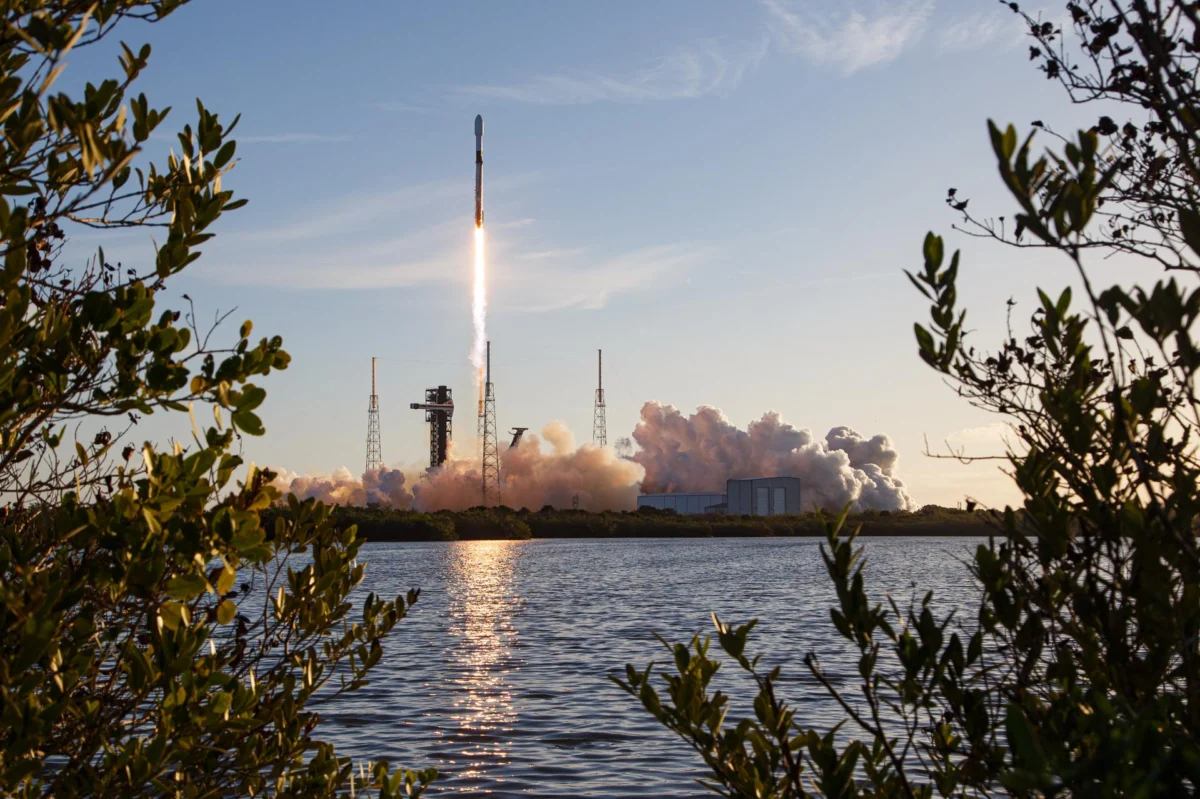
In a significant collaborative effort to maintain the continuous scientific output of the International Space Station (ISS), NASA, in partnership with Northrop Grumman and SpaceX, has finalized preparations for the Commercial Resupply Services 25 (CRS-25) mission. The mission is currently slated to launch no earlier than 10:47 a.m. EST on Sunday, Nov. 29. The operation will see a SpaceX Falcon 9 rocket carry the Northrop Grumman Cygnus XL spacecraft, dubbed the S.S. James “Jim” A. Lovell, into orbit from Space Launch Complex 40 at Cape Canaveral Space Force Station in Florida. This mission represents a critical logistics link, delivering approximately 11,000 pounds of vital supplies, hardware, and advanced research equipment to the orbiting laboratory.
Mission Overview and Strategic Importance
The CRS-25 mission serves as a linchpin for the ongoing operations of the ISS. Since the retirement of the Space Shuttle fleet, NASA has relied on commercial partners to maintain the flow of cargo to the station. The Cygnus XL spacecraft is designed to provide substantial pressurized volume for both scientific payloads and essential crew supplies.
The naming of the vehicle, the S.S. James “Jim” A. Lovell, serves as a tribute to one of the most storied figures in American spaceflight. Captain Jim Lovell, a veteran of the Gemini and Apollo programs, is best remembered for his command of the Apollo 13 mission, where his leadership was instrumental in the safe return of his crew following a catastrophic oxygen tank explosion. By naming the vehicle after Lovell, Northrop Grumman acknowledges the legacy of resilience and ingenuity that continues to define the spirit of modern space exploration.
Scientific Payloads and Research Objectives
The primary objective of the CRS-25 mission is the delivery of diverse scientific experiments that leverage the unique microgravity environment of the ISS. Among the most anticipated research initiatives arriving on the S.S. James “Jim” A. Lovell are several high-impact medical and technological investigations:
- Oncology Research: New experiments are aimed at improving drug delivery mechanisms for cancer treatment. Researchers are studying how microgravity influences the behavior of cancer cells, which could lead to breakthroughs in targeted therapies that are less toxic and more effective than current standards.
- Osteoarthritis Studies: Building on previous findings, this mission includes research into the mechanisms of osteoarthritis, particularly how bone and cartilage cells degrade in space—a process that mirrors accelerated aging on Earth.
- Muscle Loss Mitigation: Long-duration spaceflight is known to induce muscle atrophy in astronauts. The data gathered from these experiments will assist in developing countermeasures for muscle loss, which will be essential for future human missions to Mars and beyond.
- Radiation Sensing and Food Production: As NASA sets its sights on deep-space exploration, the ability to monitor radiation levels and sustain crews through on-orbit food production becomes paramount. The technology demonstrations on this flight will test advanced radiation sensors and sustainable hydroponic/aeroponic systems, providing a blueprint for long-term crew autonomy.
Operational Chronology
The mission follows a tightly orchestrated timeline, requiring precision from both ground control teams and the astronauts stationed on the ISS.
- Monday, Nov. 23: NASA will host a prelaunch media teleconference at 12 p.m. EST to discuss mission readiness, scientific goals, and technical parameters. Participation is limited to credentialed media, with the session being broadcast live via NASA’s official YouTube channel.
- Sunday, Nov. 29: Launch operations commence at 10:25 a.m. EST, culminating in the liftoff of the Falcon 9 at 10:47 a.m. EST.
- Tuesday, Dec. 1: Following a period of orbital maneuvers, the Cygnus XL will approach the ISS. NASA astronauts Jessica Watkins and Luke Delaney are scheduled to perform the capture of the spacecraft using the station’s Canadarm2 robotic arm at 2:35 a.m. EST. Once secured, ground controllers will proceed with the installation of the cargo vessel onto the Unity module’s Earth-facing port.
The spacecraft is scheduled to remain attached to the ISS for an extended period, serving as an additional storage facility and a disposal platform. It is slated to depart in May 2027, when it will be loaded with refuse and unneeded equipment before conducting a controlled, destructive re-entry into Earth’s atmosphere, burning up harmlessly over the Pacific Ocean.
Collaborative Logistics and Infrastructure
The use of a SpaceX Falcon 9 rocket to launch a Northrop Grumman Cygnus spacecraft highlights the modern era of "interoperability" within the aerospace industry. While Northrop Grumman manages the Cygnus vehicle, the utilization of the SpaceX launch vehicle demonstrates the efficiency of using established, high-cadence launch providers to meet the logistical demands of the ISS program.
For the public and members of the media, NASA has emphasized transparency and accessibility. The agency is offering a virtual guest program, allowing individuals to register for curated resources, mission updates, and a commemorative digital passport stamp. This outreach effort is designed to foster public engagement with the complexities of orbital mechanics and the value of low-Earth orbit (LEO) research.
Analytical Perspective: The Future of LEO
The CRS-25 mission occurs at a pivotal moment for the International Space Station. As the facility ages, the reliability of commercial resupply missions has become even more essential. The integration of advanced research—specifically in the realms of biotechnology and radiation protection—demonstrates that the ISS remains a premiere site for innovation that cannot be replicated on Earth.
Industry analysts note that the consistency of these resupply missions is vital for maintaining the "science pipeline." Without the constant influx of new reagents, hardware, and biological samples, the station would lose its status as a world-class laboratory. By delivering over five tons of cargo, the CRS-25 mission ensures that the current crew can continue their work without interruption, further validating the commercial model NASA pioneered over a decade ago.
How to Follow the Mission
NASA provides multiple avenues for the public to observe the mission, reflecting the agency’s commitment to disseminating information regarding taxpayer-funded research. Live coverage will be available on the official NASA website, and the agency’s social media channels—including X, Facebook, and Instagram—will provide real-time updates from the Kennedy Space Center and the Johnson Space Center.
For those interested in the technical aspects of the mission, the NASA Space Station blog serves as the primary repository for mission updates, launch milestones, and post-docking reports. Media representatives seeking further details or interviews with program managers are directed to contact the newsrooms at the Johnson Space Center or Kennedy Space Center.
Conclusion
As the countdown to the Nov. 29 launch proceeds, the focus remains on the seamless integration of the S.S. James “Jim” A. Lovell into the ISS architecture. With an ambitious slate of research experiments and a commitment to maintaining the station’s operational viability, the CRS-25 mission stands as a testament to the ongoing collaboration between government agencies and the private sector. The insights gained from the cargo housed within the Cygnus XL will not only benefit the current occupants of the space station but will also lay the necessary groundwork for the next generation of explorers tasked with pushing the boundaries of human presence in the solar system.