The 12th annual SFFILM Doc Stories festival concluded its weekend run in San Francisco, reaffirming its status as a premier crucible for non-fiction cinema and a crucial stop on the Academy Awards campaign trail. Held at the historic Vogue Theatre, the four-day event drew an impressive roster of high-profile cinematic talent, Academy Award winners, and engaged regional cinephiles. Amid shifting media landscapes and the corporate consolidation of major studios, this year’s festival successfully spotlighted the vitality of independent storytelling, foregrounding films that grapple with martial law in Europe, domestic civil rights, and state-sanctioned crackdowns on American soil.
The festival’s unique positioning on the autumnal calendar—sandwiched between the Toronto International Film Festival and the critical winter voting deadlines for the Academy of Motion Picture Arts and Sciences (AMPAS)—makes it an indispensable platform. With the San Francisco Bay Area housing a robust concentration of AMPAS Documentary Branch and guild members, Doc Stories functions simultaneously as a community gathering space, a critical exhibition platform, and a high-stakes networking hub for the documentary industry.
A Global Lens on Conflict: Sean Penn Introduces Black Sunflowers
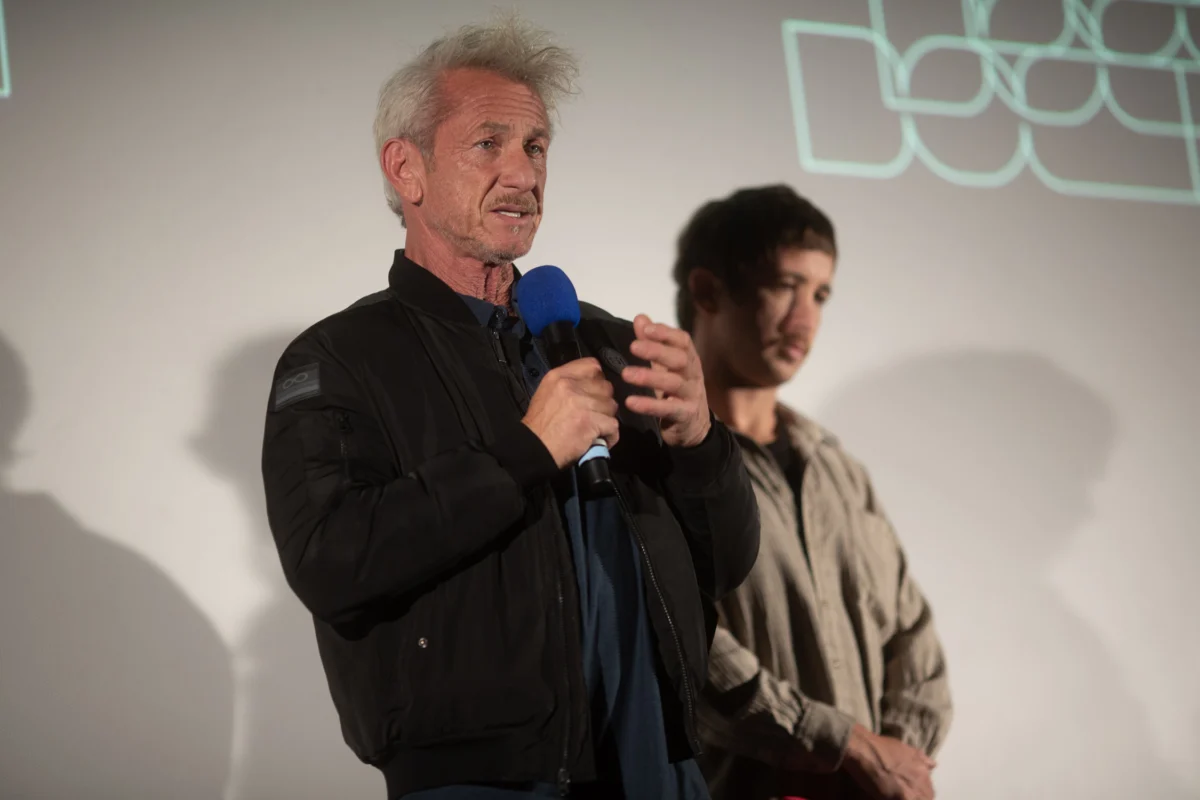
Among the most high-profile moments of the weekend occurred on Saturday when actor and activist Sean Penn took the stage at the Vogue Theatre. Known just as much for his outspoken geopolitical advocacy as his storied acting career, Penn introduced James Marcus Haney’s compelling documentary, "Black Sunflowers."
The film explores a generation of young Ukrainians coming of age under the immense pressures of martial law and the ongoing war against Russian aggression. Penn, who has developed close ties with Ukrainian leadership and President Volodymyr Zelenskyy, signed on as the project’s executive producer ahead of its international premiere at the Toronto International Film Festival in September. Addressing a packed and receptive San Francisco audience, Penn articulated the profound emotional resonance of the project.
"Who do you imagine yourself singing like if you could sing like somebody?" Penn asked the crowd, reflecting on the power of the documentary medium. "This movie is the song I dreamed I could sing."
Penn’s involvement underscores a broader trend of Hollywood heavyweights utilizing their platform and capital to elevate urgent international stories. "Black Sunflowers" joins a wave of post-2022 Ukrainian documentaries striving to ensure that the human cost of the conflict remains visible to global audiences amidst shifting geopolitical news cycles.
Domestic Upheaval and the Rise of the Horror Documentary
While international conflicts found a powerful voice in Ukrainian cinema, domestic political and social tensions loomed equally large in the festival’s programming. Academy Award-winner Laura Poitras attended the event alongside co-director Rachel Lauren Mueller to screen their searing short documentary, "They’re Here."
The film chronicles the aggressive descent of Immigration and Customs Enforcement (ICE) agents into Minneapolis, capturing a tense period in January and February 2026 when local residents actively evaded and resisted what creators described as a paramilitary occupation of their city. During the festival’s specialized "Doc Talks" series, Mueller provided a harrowing firsthand account of shooting the project amidst tear gas and community mobilization.
"We describe the film as a horror documentary," Mueller stated, detailing the psychological toll of the ordeal. "Being in the occupation just as a human being and not even as a filmmaker was one of the most difficult experiences of my life. There were tanks rolling down my street. It was not the first time. That also happened after the murder of George Floyd, but this was different because the streets were filled with tear gas. They were kidnapping people from street corners right around my house."
Poitras, whose illustrious career includes feature-length masterpieces such as the Academy Award-winning Edward Snowden documentary "Citizenfour," as well as "All the Beauty and the Bloodshed" and "Cover-Up," explained the deliberate artistic choice to keep the project in a short-form mold. Pointing to the structural realities of the industry, Poitras emphasized that feature-length documentaries frequently require years of sustained production, a timeline that can compromise the immediate urgency required by rapidly developing socio-political crises.
"I’ve worked in short form and long form, and the truth is feature-length documentaries often take longer, and I think we both felt a sense of urgency of making something that could be released in a more contemporaneous moment," Poitras explained.
Navigating Systemic Injustice and Civil Rights
"They’re Here" was only one of several prominent, Oscar-qualified short and feature documentaries presented at the festival. Other notable titles included Sam Pollard’s "Tutu," J.M. Harper’s "Soul Patrol," and Ava DuVernay’s thought-provoking exploration of belonging and birthright citizenship, "14th."
Participating in panel discussions surrounding her film, DuVernay addressed the contemporary political climate, noting that recent electoral shifts could imbue "14th" with renewed urgency. However, the acclaimed director cautioned audiences against viewing cinematic engagement as a mere substitute for structural political comprehension.
"The film goes far beyond this moment," DuVernay asserted. "This film is about the structural challenges that we have had as a country, and until you know the machinery of elections, they are not going to get us to where we need to be. So, this is the right time for people to get past the vote, vote, vote of it all and into the OK, this is how we actually make systemic change."
SFFILM Leadership and the Defense of Marginalized Voices
At the heart of the festival’s operations is SFFILM Executive Director Anne Lai, who utilized the platform to articulate the organization’s core mission: keeping independent voices alive in an increasingly corporate media ecosystem. As major studios continue to merge and mainstream entertainment gravitates toward risk-averse intellectual property, Lai argued that nonprofits like SFFILM must actively champion work that exists on the cultural margins.
"That means not only supporting films and filmmakers who are trying to put distinctive work out into the world, but also growing and sharing that work with audiences," Lai remarked during the festival. "So as we talk about consolidations of studios and what happens on the margins, I think a lot about us as an organization is trying to look at what is in the margins because a lot of the most interesting things do not come through the mainstream."
This curatorial philosophy has yielded tangible results over the festival’s twelve-year history. Doc Stories has established an enviable track record with the Academy of Motion Picture Arts and Sciences, serving as an incubator for non-fiction excellence. More than two dozen selections featured at the festival have gone on to secure Academy Award nominations, with several claiming the ultimate prize, including celebrated features like "No Other Land" and "Summer of Soul."
Jessie Fairbanks, SFFILM’s director of programming, emphasized that the enthusiasm of the local Bay Area film community is central to the festival’s sustained success and growing prestige.
"The doc community here is very engaged, committed, and vibrant, and they show up for each other," Fairbanks noted. "They want to see each other’s work and talk about what they are working on. There is usually some synergy just because of where we sit in the calendar year and the types of films that are campaigning, which is wonderful because it means we get a heightened profile for the festival."
The Industry Hub: Balancing Access, Advocacy, and Independence
Beyond the public screenings, Doc Stories functions as a vital networking bazaar for the documentary industry. Much like DOC NYC’s high-profile annual Visionaries Luncheon, the SFFILM event hosts an exclusive annual brunch designed to connect directors, producers, cinematographers, editors, and publicists with voting members of the Academy’s Documentary Branch.
High-ranking industry figures made the cross-country trek to San Francisco for the occasion, including Ava DuVernay, Netflix Vice President of Documentaries Adam Del Deo, and Frontline’s Raney Aronson-Rath, who was actively campaigning for the acclaimed project "One in a Million." Filmmakers behind contending shorts like "To Hold a Mountain" also utilized the space to generate momentum ahead of the critical Oscar short-list voting deadlines.
However, unlike commercial industry events, SFFILM maintains a distinct structural model as a nonprofit organization. Fairbanks highlighted how the festival preserves its curatorial integrity by rejecting transactional gatekeeping in favor of community-supported sponsorship.
"Different organizations engage with the awards campaign in different ways," Fairbanks explained. "We don’t charge people a fee to be a part of our events. If you want access to the brunch, you can sponsor us, a nonprofit organization, and get access to the room; otherwise, you have to be a filmmaker who is a part of our organization, or you are an AMPAS voter. Monetizing that allows us to retain our independence when it comes to what we curate and what we put in front of audiences."
Broader Implications for the Non-Fiction Landscape
As the 12th edition of Doc Stories came to a close on Sunday, the event left a clear imprint on the trajectory of the current awards season. By offering a sanctuary for uncompromising political cinema—ranging from the frontlines of Ukraine to the domestic battlegrounds of immigration enforcement—the festival demonstrated that documentary filmmakers remain uniquely positioned to interrogate contemporary power structures in real time.
In an era defined by media contraction and algorithm-driven distribution, gatherings like Doc Stories prove indispensable. By maintaining a symbiotic relationship between rigorous regional audiences, dedicated institutional leadership, and world-class creators, the festival ensures that vital, non-mainstream stories continue to find the visibility, discourse, and accolades they demand.