This scientific breakthrough, detailed in the journal Nature Biotechnology, represents a fundamental shift in the landscape of immunotherapy. By bypassing the traditional, labor-intensive ex vivo (outside the body) manufacturing process, researchers at the Massachusetts Institute of Technology have demonstrated that "in vivo" cellular reprogramming is not only possible but highly effective in preclinical models. The study, led by senior author Daniel Anderson and colleagues, including Yuang Chen, Julia Monkovic, and Haseeb Mughal, introduces a methodology that could effectively democratize access to CAR-based immune therapies.
The Evolution of Immunotherapy: From Bench to Bedside
To understand the magnitude of this innovation, one must look at the historical trajectory of chimeric antigen receptor (CAR) T cell therapy. Over the past decade, the FDA has approved seven distinct CAR-T cell products. These therapies have been nothing short of transformative for patients with refractory blood cancers, particularly B-cell leukemias and lymphomas.
The process, however, is notoriously cumbersome. It begins with leukapheresis, where a patient’s T cells are harvested. These cells are then shipped to a high-tech facility, genetically engineered using viral vectors to express receptors that recognize tumor antigens, and expanded in controlled bioreactors. Finally, the cells are cryopreserved and shipped back to the clinic for infusion. This "vein-to-vein" process can take several weeks, costs upwards of $400,000 per patient, and requires specialized medical infrastructure that is often unavailable in rural or resource-limited settings.
The Limitation of Current CAR-T Approaches
While CAR-T cell therapy has achieved remarkable clinical success, it faces a significant biological hurdle when addressing T cell malignancies or autoimmune disorders. Because both the therapeutic agent (the CAR-T cell) and the target (the diseased T cell) share the same lineage, the modified cells frequently undergo "fratricide," where they mistakenly recognize and eliminate one another. This unintended self-destruction severely limits the efficacy of T cell-based therapies for a wide range of conditions, including T cell lymphoma and autoimmune hepatitis.
By shifting the focus to natural killer (NK) cells, the MIT team has circumvented this roadblock. NK cells are a distinct class of lymphocytes that function as the "first responders" of the innate immune system. Unlike T cells, they do not require prior sensitization to identify targets, and because they are not T cells, the risk of fratricide is significantly mitigated. The challenge, historically, has been that NK cells are more difficult to engineer and expand in the laboratory than their T cell counterparts.
The Mechanics of In Vivo Reprogramming
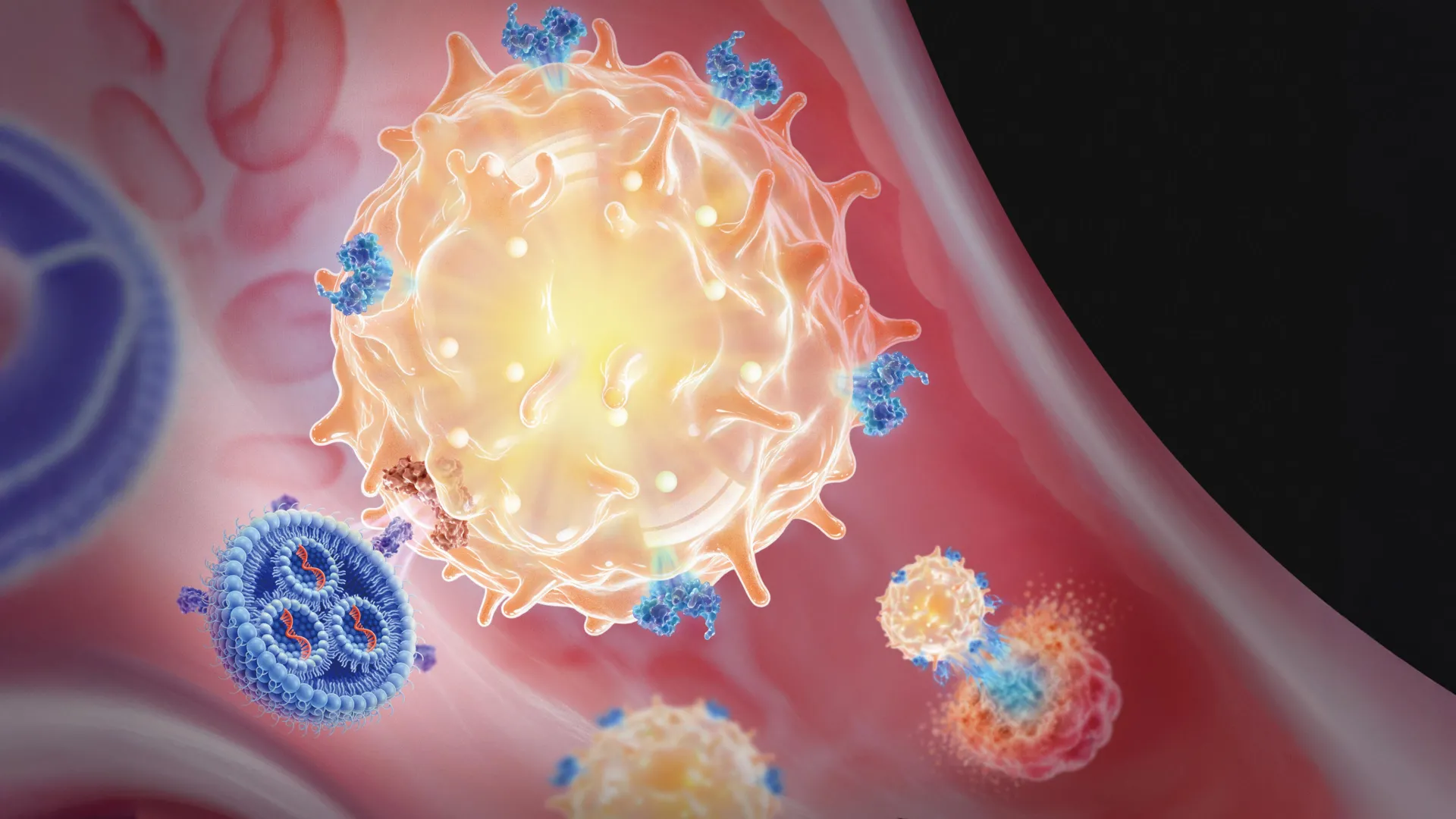
The MIT research team, led by Professor Daniel Anderson and supported by the pioneering work of Professor Robert Langer, has developed a proprietary lipid nanoparticle (LNP) delivery system to solve this manufacturing bottleneck. These LNPs act as microscopic delivery vehicles that carry messenger RNA (mRNA) instructions directly to the patient’s NK cells.
The process is elegant in its efficiency:
- Targeting: The surface of the LNPs is functionalized with specific antibody fragments that serve as a "homing signal." These fragments lock onto surface receptors unique to NK cells, ensuring the cargo is delivered to the intended immune population while sparing other cells.
- Genetic Instruction: Once the LNP enters the NK cell via endocytosis, the mRNA is released into the cytoplasm. This mRNA contains the genetic blueprint for a specialized chimeric antigen receptor.
- Protein Synthesis: The NK cell’s own machinery translates this mRNA into the CAR protein. The protein then migrates to the cell surface, effectively "arming" the NK cell with a search-and-destroy capability tailored to a specific antigen.
Chronology of the Preclinical Success
The study provides a clear timeline of the validation of this technique, moving from cellular validation to complex animal models:
- Phase 1 (In Vitro Validation): The team confirmed that LNP-delivered mRNA could effectively reprogram human NK cells in a laboratory setting, achieving high transfection efficiency without compromising cell viability.
- Phase 2 (In Vivo Efficacy – Melanoma): Using mice models with aggressive melanoma, the researchers administered the nanoparticles. The results were striking: 80% of the target NK cells were successfully modified, and three out of five test subjects achieved complete tumor remission.
- Phase 3 (Humanized Mouse Models – T Cell Lymphoma): To replicate human-like immune responses, the team utilized "humanized" mice. After five consecutive injections of the LNP-mRNA complex, the mice exhibited total eradication of T cell lymphoma tumors.
- Phase 4 (Autoimmune Reversal): The researchers applied the technique to autoimmune hepatitis. By targeting the autoreactive T cells that destroy liver hepatocytes, the team achieved not only the clearance of the harmful cells but also the successful regeneration and healing of liver tissue after just a single injection.
Implications for Clinical Practice
The implications of this research for the pharmaceutical industry and public health are profound. By removing the need for external cell manufacturing, this "off-the-shelf" approach could theoretically reduce the cost of CAR therapies by orders of magnitude.
"The manufacturing challenges with CAR NK cells are significant," noted Professor Daniel Anderson. "The idea here is you can deliver a nanoparticle that will modify your own NK cells with a CAR construct and teach them to attack tumor cells."
Beyond the economic advantages, the clinical benefits include:
- Reduced Patient Wait Times: Elimination of the weeks-long manufacturing cycle means patients with aggressive diseases can begin treatment almost immediately.
- Improved Safety Profiles: By keeping the engineering process inside the body, the risks associated with ex vivo expansion—such as contamination or cellular exhaustion—are minimized.
- Expanded Indications: The ability to reprogram NK cells to target specific proteins opens the door to treating diseases that were previously considered "undruggable" with current immunotherapy, including multiple sclerosis, rheumatoid arthritis, and a broader array of hematological malignancies.
Analysis and Future Outlook
While the results are undeniably promising, the scientific community remains cautious, noting that the leap from mouse models to human clinical trials is fraught with complexity. Human immune systems are significantly more intricate and variable than those of mice. Regulatory bodies, including the FDA, will require extensive toxicological data to ensure that the LNP delivery system does not trigger unintended systemic immune responses or off-target effects.
However, the foundation laid by the MIT team—combining the power of synthetic biology with the precision of nanotechnology—signals a new era. The research was supported by key institutions including the Marble Center for Cancer Nanomedicine and the National Cancer Institute, reflecting a high level of institutional confidence in the scalability of this platform.
As the research progresses toward potential clinical translation, the focus will likely shift to optimizing the LNP shelf-life and refining the targeting fragments to ensure maximum specificity. If this technology survives the rigors of human testing, it could fundamentally restructure the oncology and immunology departments of hospitals worldwide, transforming complex cell therapies into routine, injectable interventions. For millions of patients suffering from autoimmune conditions or cancer, the prospect of an "in-body" immune upgrade represents a beacon of hope for a more accessible and effective future in medicine.