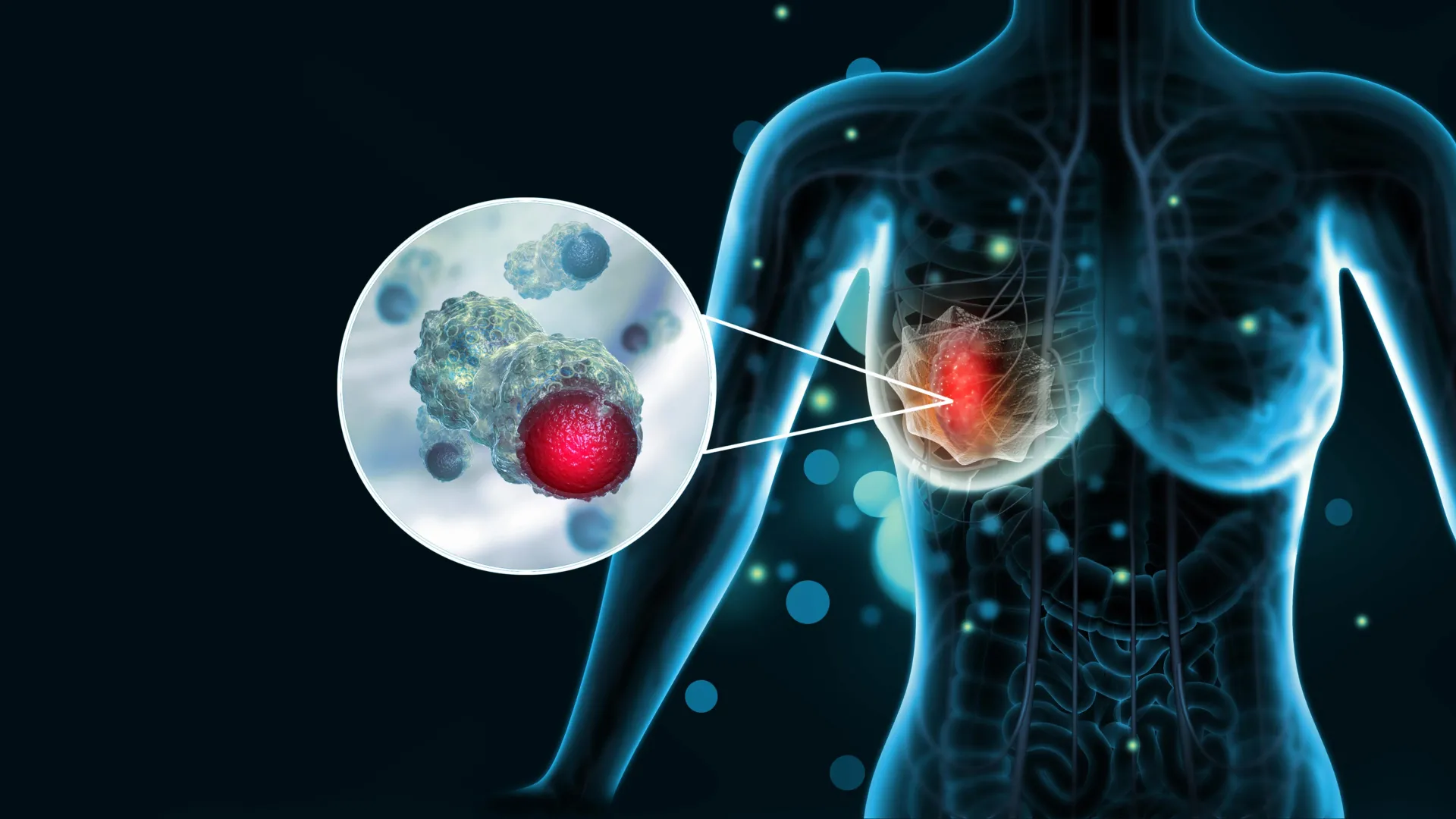
A groundbreaking study conducted by researchers at the National Institutes of Health (NIH) has identified a significant correlation between elevated blood concentrations of two legacy per- and polyfluoroalkyl substances (PFAS)—perfluorooctanoic acid (PFOA) and perfluorooctanesulfonic acid (PFOS)—and the development of estrogen receptor-negative (ER-negative) breast cancer. Published in the Journal of Clinical Oncology, this research marks a critical development in understanding the environmental drivers of one of the most aggressive and difficult-to-treat forms of breast cancer.
While the study does not definitively establish a direct causal link, the statistical association between these "forever chemicals" and tumor development suggests that environmental exposures may play a more substantial role in cancer pathogenesis than previously understood.
Understanding the Mechanism of ER-Negative Breast Cancer
To grasp the significance of these findings, one must distinguish between the various types of breast cancer. Most breast cancers are hormone-receptor-positive, meaning their growth is fueled by estrogen or progesterone. Treatments for these cancers, such as tamoxifen or aromatase inhibitors, work by blocking or reducing the hormones that feed the tumors.
ER-negative breast cancer, by contrast, lacks these receptors. Because these tumors do not rely on estrogen for growth, they are immune to traditional endocrine therapies. Consequently, they are classified as more aggressive, often requiring more intensive chemotherapy and carrying a higher risk of recurrence and mortality. Historically, the medical community has struggled to identify specific environmental or lifestyle triggers for this subtype, leaving a significant gap in preventative medicine. This new NIH study suggests that persistent synthetic chemicals may be an overlooked piece of that puzzle.
The Science of Forever Chemicals
PFAS are a vast family of synthetic compounds characterized by an extremely strong carbon-fluorine bond. This chemical structure makes them resistant to heat, water, grease, and degradation, which is why they have been used extensively since the 1940s in non-stick cookware, firefighting foams, food packaging, and water-repellent clothing.
The term "forever chemicals" is derived from their inability to break down in the environment or the human body. Over decades, these substances have migrated into groundwater, soil, and the food chain. Because they bioaccumulate, humans often carry a "body burden" of these chemicals that remains stable for years, even if direct exposure is eliminated. Although PFOA and PFOS have been largely phased out of industrial production in many countries—including the United States—under voluntary agreements, their extreme environmental persistence ensures that they remain present in the blood of nearly every person tested in modern biomonitoring programs.
Data Analysis: The Sister Study
The research team, led by NIH Stadtman Investigator Alexandra White, Ph.D., utilized data from the prestigious Sister Study, a long-term cohort study managed by the National Institute of Environmental Health Sciences (NIEHS). Between 2003 and 2009, the study recruited 50,884 women across the U.S. and Puerto Rico who had a sister diagnosed with breast cancer, identifying them as a high-risk group.
For this specific analysis, researchers examined 1,609 women who developed breast cancer after enrolling in the study and compared their profiles with 2,269 control participants who did not develop the disease. By analyzing blood samples collected prior to the cancer diagnosis, the team was able to measure concentrations of 17 different PFAS compounds.
The results were striking:
- Women in the highest quartile of PFOA exposure faced a 67% higher risk of developing ER-negative breast cancer compared to those in the lowest quartile.
- The risk was even more pronounced for PFOS, where the highest exposure group showed a 93% increased risk—nearly double that of the lowest group.
Notably, the study found no clear link between these chemicals and breast cancer risk overall, suggesting that the impact of PFAS may be highly specific to the biological pathways that lead to ER-negative tumor growth.
Official Responses and Policy Implications
The findings have drawn immediate attention from federal health officials. HHS Secretary Robert F. Kennedy, Jr. emphasized the government’s commitment to addressing these environmental hazards. "Women deserve clear answers about how chemicals in their environment may affect their health," Kennedy stated. "This NIH study links two forever chemicals to a higher risk of ER-negative breast cancer and demands further investigation. Under President Trump’s leadership, we will pursue the evidence, confront environmental health risks, and give women the information they need to protect their health."
The policy implications are significant. While legacy PFAS are being phased out, the "replacement" chemicals introduced by industry have not been fully vetted for long-term health impacts. The study serves as a call to action for regulatory bodies to expedite research into these newer compounds to ensure that history does not repeat itself with currently used alternatives.
Biological Hypotheses
While the study was observational, researchers have proposed several biological mechanisms that could explain how PFAS contribute to cancer development. Because the association was strongest in tumors that do not respond to estrogen, the scientists hypothesize that PFAS may bypass hormonal signaling pathways entirely.
One possibility is that these chemicals interfere with gene expression or disrupt the body’s immune surveillance systems. The immune system is responsible for identifying and destroying nascent cancer cells; if PFAS chemicals suppress or modulate this response, it could allow a small cluster of mutated cells to evade the body’s natural defenses and progress into a clinical tumor. Further research, likely involving molecular biology and animal models, will be required to confirm these pathways.
The Path Forward: Mitigation and Future Research
The researchers, including lead author Che-Jung Chang, Ph.D., currently of the scientific research firm DLH, are careful to point out that these findings are not a cause for panic, but rather a foundation for informed prevention. "Although PFAS are persistent in the environment and in our bodies, exposure to them is still potentially modifiable," Chang noted.
Public health experts suggest several steps to limit exposure, such as utilizing high-quality water filtration systems (specifically those certified to remove PFAS), avoiding stain-resistant treatments on carpets and furniture, and choosing cookware that is free of PTFE (polytetrafluoroethylene).
However, the burden of reducing exposure cannot fall on the individual alone. The scientific community is now calling for:
- Expanded Biomonitoring: Assessing the chemical profiles of populations with the highest rates of ER-negative breast cancer to see if their environmental exposure patterns differ from the general population.
- Toxicological Review of Replacements: Conducting rigorous health assessments on the newer generations of PFAS that have replaced PFOA and PFOS in the manufacturing sector.
- Cross-Disciplinary Research: Encouraging collaboration between toxicologists, oncologists, and environmental scientists to map the precise molecular interaction between persistent chemicals and human cell mutation.
As the scientific community continues to peel back the layers of environmental health risks, the NIH study stands as a sentinel, highlighting that the products we use today may have long-term consequences that reach far beyond their intended utility. The evidence is now mounting that the persistence of these chemicals is a public health crisis that requires sustained federal attention, rigorous regulation, and ongoing investment in longitudinal health research to protect future generations from preventable cancer risks.