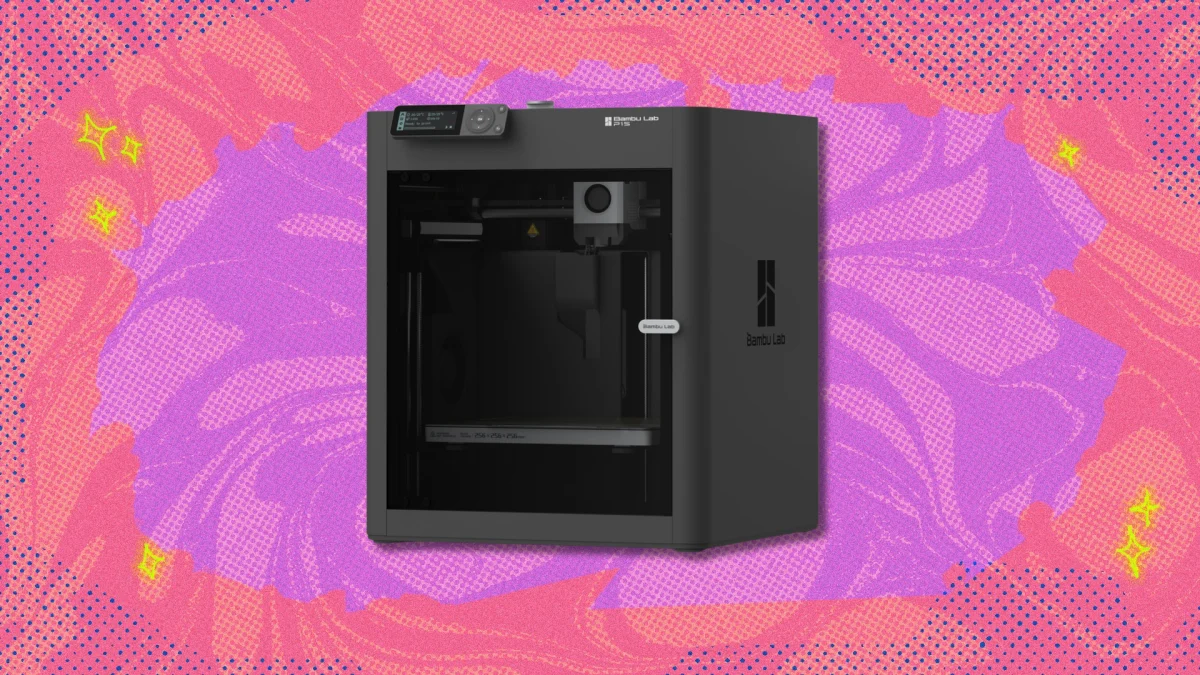
The holiday shopping season has officially begun ahead of schedule, with major retailers rolling out aggressive price cuts on high-demand consumer electronics well before the traditional post-Thanksgiving rush. Among the standout offers leading the early retail wave is a notable discount on the Bambu Lab P1S 3D printer, which is currently available on Amazon for $349, representing a 13 percent reduction from its standard manufacturer’s suggested retail price of $399.
This unexpected price drop highlights a broader shifting trend in retail, where companies increasingly utilize early-bird promotions to capture consumer spending earlier in the fourth quarter. For hobbyists, creators, and professionals eyeing desktop manufacturing equipment, the current market environment offers a rare window to acquire advanced hardware without enduring the hyper-competitive chaos of Black Friday and Cyber Monday.
Main Facts and Current Marketplace Dynamics
The Bambu Lab P1S has captured significant market share in the consumer and prosumer 3D printing landscape due to its balance of speed, reliability, and enclosed architecture. Retailing normally at $399, the current $50 price reduction brings the machine down to $349, matching some of the lowest recorded pricing for the standalone unit since its introduction.
Unlike traditional open-frame entry-level printers that often require extensive calibration, manual bed leveling, and troubleshooting, the P1S is engineered as a plug-and-play appliance. It features an enclosed chassis that stabilizes ambient temperatures—a critical factor when printing with temperature-sensitive materials that are prone to warping.
The device boasts maximum printing speeds of up to 500 millimeters per second and an acceleration rate of 20,000 millimeters per second squared. These performance metrics allow users to produce functional prototypes and intricate decorative items in a fraction of the time required by older-generation machines. Furthermore, the unit supports multi-color and multi-material printing capabilities of up to 16 distinct colors when integrated with Bambu Lab’s proprietary Automatic Material System (AMS), offering advanced creative potential for complex projects.
Chronology and the Evolution of Early Holiday Sales
The emergence of November price cuts on technical hardware reflects a structural shift in retail logistics that has evolved over the past decade. Historically, holiday shopping was tightly bound to the final weekend of November, with Black Friday serving as the definitive starting gun for gift purchases. However, supply chain disruptions, inventory management strategies, and changing consumer habits have fundamentally altered this timeline.
By the early 2020s, major e-commerce platforms began spreading promotions across October and early November to smooth out logistical bottlenecks and prevent website traffic overloads. In 2026, this trend has matured into a prolonged promotional season. Early-bird events like Amazon’s October sales and subsequent early November rollouts have trained consumers to expect competitive pricing weeks before Thanksgiving.
The discounting of the Bambu Lab P1S in mid-November follows this exact industry playbook. Rather than holding inventory until late November, manufacturers and distributors are partnering with major online retailers to stimulate demand early, secure market share against competing brands, and clear warehouse space for upcoming product iterations.
Technical Specifications and Material Versatility
A primary factor driving the popularity of the Bambu Lab P1S is its broad material compatibility, which bridges the gap between consumer-grade hobby machines and professional industrial equipment.
The printer’s fully enclosed housing allows it to process a wide variety of thermoplastic filaments safely and effectively. According to official manufacturer guidelines, compatible materials include standard filaments such as PLA, PETG, TPU, and PVA, as well as more demanding engineering polymers like ABS, ASA, PA, and PC. However, the manufacturer explicitly advises against using carbon-fiber-reinforced or glass-fiber-reinforced polymers on the standard stock configuration, as these abrasive composites can cause accelerated wear on untreated components.
Setup efficiency has also become a major selling point in the modern desktop manufacturing market. The P1S features automated bed leveling and system calibration protocols that reduce initial setup times to approximately 15 minutes out of the box. This low barrier to entry has expanded the demographic of 3D printer owners, attracting educators, small business owners, and casual creators who require precision outputs without the steep technical learning curve that historically characterized the hobby.
Industry Implications and Market Analysis
The aggressive discounting of high-end consumer technology products in early November carries significant implications for the broader retail and tech manufacturing sectors. Analysts note that price competition within the desktop 3D printing market has intensified significantly over the past two years, driven by new market entrants utilizing high-speed core-XY motion systems.
By lowering the price barrier of the P1S to $349, manufacturers are placing direct pressure on legacy brands that previously dominated the sub-$400 price tier with slower, open-frame devices. This competitive pressure ultimately benefits the consumer, forcing rapid technological trickle-down where advanced features—once restricted to expensive commercial machines—are now standard in consumer appliances.
Furthermore, the expansion of multi-color printing ecosystems via hardware accessories like the AMS indicates a shift in what users expect from desktop manufacturing. 3D printing is transitioning from a utilitarian tool used primarily for mechanical prototyping into a personalized production method capable of consumer-facing artistry and bespoke manufacturing.
Broader Consumer Impact
As the holiday shopping season accelerates toward its peak, deals on specialized hardware such as the Bambu Lab P1S provide an early indicator of consumer electronics pricing trends. While traditional gift categories like apparel, toys, and standard home goods often see their deepest discounts on Black Friday itself, high-value technical gear frequently experiences fluctuating availability. Consequently, industry observers suggest that timely promotions in early November may offer the most reliable combination of discounted pricing and guaranteed stock availability before holiday shipping networks reach maximum capacity.
Shoppers seeking to invest in custom fabrication tools or personalized gift-making equipment can expect similar early promotional waves to persist across the consumer technology sector throughout the remainder of the month.