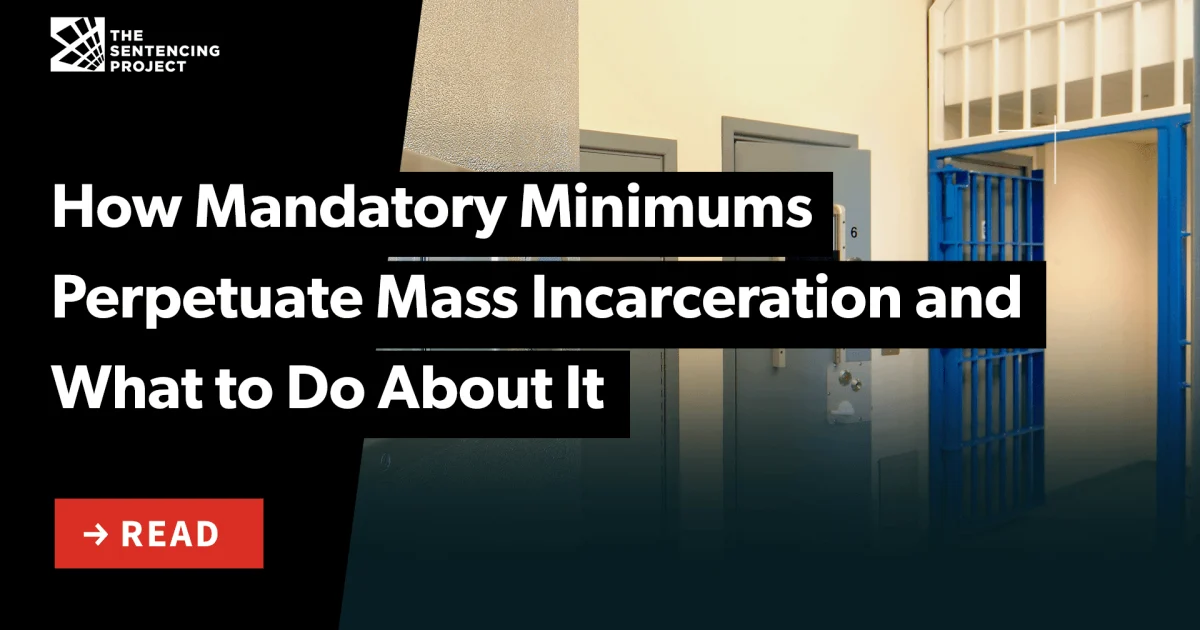
The American criminal justice landscape is currently undergoing a critical re-examination as policymakers, legal experts, and civil rights advocates confront the long-term ramifications of mandatory minimum sentencing laws. For over three decades, these rigid legal provisions have stripped judges of their discretionary power, shifting the center of gravity in the courtroom from the bench to the prosecutor’s office. By requiring fixed prison terms for specific offenses—regardless of an individual’s background, role in the crime, or potential for rehabilitation—these laws have fueled the engine of mass incarceration, exacerbated racial disparities, and strained the fiscal and social resources of states and the federal government alike.
The Historical Genesis of Mandatory Sentencing
To understand the current state of the penal system, one must look back to the political climate of the 1980s and early 1990s. During this era, rising crime rates triggered a profound public anxiety, prompting legislators to adopt a “get tough on crime” posture. The objective was clear: to move away from indeterminate sentencing, which allowed for parole board discretion, toward a system of determinate, high-stakes punishment.
By 1995, the transformation was complete, with all 50 states and the federal government having codified mandatory minimums for a vast array of offenses. The underlying rationale was rooted in the theory of deterrence—the belief that the certainty of long, harsh prison sentences would dissuade individuals from criminal behavior. However, longitudinal data has consistently suggested that the promise of lower crime rates through mandatory sentencing failed to materialize as anticipated, while the secondary effects on the prison population became undeniable.
The Shift in Power: From Judges to Prosecutors
A central critique of the mandatory minimum regime is the unintended transfer of power. In a traditional sentencing model, a judge serves as the neutral arbiter, weighing the facts of the case, the defendant’s history, and the nuances of the crime to arrive at a proportionate sentence. Mandatory minimums effectively bypass this judicial oversight.
Under the current framework, the power to determine the ultimate sentence has migrated to the prosecutor. Because the prosecutor holds the authority to decide which charges to file, they effectively dictate the minimum sentence the defendant will face if convicted. This reality forces many defendants into a corner: they are often compelled to accept plea deals for lesser charges—even when they might otherwise contest the evidence—to avoid the catastrophic risk of a mandatory minimum sentence. This dynamic creates an environment where the goal of efficiency in the courts often eclipses the pursuit of individual justice.
Disproportionate Racial Impacts
The demographic data surrounding the application of mandatory minimums reveals a persistent and troubling racial divide. Statistics from the United States Sentencing Commission and other criminal justice research bodies consistently indicate that Black and Hispanic individuals are disproportionately impacted by these laws.
A stark historical example is the 1986 Anti-Drug Abuse Act, which established a 100:1 sentencing disparity between crack cocaine and powder cocaine. This policy, which penalized the possession of crack cocaine far more severely than powder cocaine, resulted in mass incarcerations that fell heavily on Black communities. Even following the 2010 Fair Sentencing Act, which narrowed this gap to 18:1, the residual effects of these decades-long policies remain embedded in the current prison population. Recent studies in states like New York have shown that in certain jurisdictions, people of color account for over 90% of arrests for crimes carrying mandatory minimums, a statistic that stands in sharp contrast to their share of the general population.
The Burden of Overcrowded Facilities
The mechanical application of long-term sentences has created a systemic crisis of prison overcrowding. As prisons reach and exceed their designed capacity, the quality of life within these facilities deteriorates rapidly. Overcrowding places an immense strain on resources that are vital for the humane operation of a facility, including medical care, mental health services, and educational programming.
From a public policy perspective, the cost of this model is significant. Funds that are diverted to maintain high-security prison beds for nonviolent offenders are, by definition, not being invested in community-based crime prevention, substance abuse treatment, or early intervention programs. Experts argue that this misallocation of state and federal budgets weakens the overall safety of the public by failing to address the root causes of criminal recidivism.
Recent Legislative Trends and Contradictory Policies
The current political landscape is marked by a tension between reform-minded legislation and reactionary “tough on crime” measures. In recent years, several states have begun to roll back certain mandatory minimums, particularly for nonviolent drug offenses, recognizing that the policy has failed to produce a safer society.
However, this trend is not uniform. In 2022, the Tennessee legislature enacted a strict "truth-in-sentencing" law requiring individuals to serve 100% of their sentence for eight specific felonies. Such moves suggest that when public anxiety over crime spikes, the default political response remains the expansion of mandatory prison time. Similarly, the 2025 federal HALT Fentanyl Act illustrates the persistence of the old paradigm. By classifying fentanyl-related substances under Schedule I—a category reserved for drugs with high abuse potential and no medical use—the act triggers mandatory minimums for a wide range of distribution offenses, potentially repeating the policy errors of the 1980s drug war.
The Case for Reform: A Path Forward
The consensus among a diverse array of legal scholars, law enforcement officials, and human rights advocates is that the mandatory minimum experiment has reached its limit. The primary recommendation for reform is the restoration of judicial discretion, allowing judges to evaluate the specific facts and circumstances of each case.
Moving forward, the focus is shifting toward three core strategies:
- Prosecutorial Discretion: Encouraging prosecutors to move away from filing charges that trigger mandatory minimums, especially for nonviolent, low-level drug offenses.
- Legislative Repeal: Actively dismantling existing mandatory minimum statutes at both the state and federal levels.
- Retroactivity: Implementing policies that allow for the re-sentencing of individuals who are currently serving excessively long terms based on laws that have since been deemed ineffective or unjust.
Implications for the Future
The legacy of mandatory minimum sentencing is a cautionary tale regarding the dangers of legislative overreach in the criminal justice system. While the intent to reduce crime is legitimate, the methodology of imposing rigid, inflexible penalties has proved to be an inefficient and inequitable tool. As the United States continues to grapple with the consequences of mass incarceration, the debate over mandatory minimums will likely serve as the litmus test for the country’s commitment to a more balanced and effective justice system.
The evidence suggests that the most effective way to enhance public safety is not through the lengthening of prison terms, but through a multi-faceted approach that emphasizes prevention, rehabilitation, and the equitable administration of law. Until the systemic reliance on mandatory minimums is addressed, the cycle of incarceration is likely to persist, maintaining the significant social and economic costs that have defined the American criminal justice system for the past half-century. Whether through legislative reform or judicial action, the movement to re-evaluate these policies remains one of the most significant challenges in modern American governance.