Emergency preparedness has shifted from a niche preoccupation among survivalist subcultures to a mainstream priority for households across the globe. Driven by an observable increase in the frequency and severity of natural disasters—ranging from catastrophic wildfires and historic hurricanes to devastating earthquakes—alongside lingering concerns regarding public health crises and civil disruptions, individuals and families are increasingly taking proactive measures to safeguard their daily well-being. Central to this modern preparedness movement is the "bug-out bag," also known as a 72-hour survival kit. Designed to sustain individuals when basic municipal services, power grids, and supply chains fail, these portable kits have become an essential household investment for weathering both literal and metaphorical storms.
Historical Evolution of the Bug-Out Bag
The terminology and concept of the bug-out bag trace their origins back to mid-20th-century military strategy. Originally referred to as a "bail-out bag," the concept was developed for military pilots and aircrews who were instructed to pack a specialized parachute-compatible pack containing essential survival gear in the event that they were forced to eject behind enemy lines or abandon a disabled aircraft in hostile territory. The primary objective was straightforward: provide the occupant with enough tactical tools, medical supplies, and sustenance to survive independently for a minimum of 72 hours until extraction or rescue could be achieved.
Over the decades, this military doctrine transitioned into civilian emergency management. Civil defense agencies, including the American Red Cross and the Federal Emergency Management Agency (FEMA), adopted the 72-hour benchmark as the gold standard for civilian emergency readiness. Government and humanitarian guidelines emphasize that following a major disaster, first responders and municipal infrastructure may take up to three days to reach affected areas, restore critical utilities, and establish secure supply lines. Consequently, the civilian bug-out bag evolved into a comprehensive, self-contained kit intended to bridge the critical gap between the onset of a crisis and the arrival of organized relief.

Core Components of a Modern Survival Kit
While specific contents vary depending on the manufacturer, intended capacity, and target environment, standard emergency preparedness guidelines dictate that an effective bug-out bag must address several fundamental human survival needs. According to emergency management authorities, a well-stocked kit prioritizes three foundational pillars: hydration, nutrition, and thermal regulation.
Water acquisition and purification represent the single most critical element of any survival kit. Because carrying three full days of liquid water for multiple individuals adds prohibitive weight, modern bug-out bags frequently combine pre-packaged water pouches with advanced filtration technology. High-end kits often integrate portable filtration straws, mechanical pump filters, or chemical purification tablets, allowing users to safely harvest water from natural sources such as streams, lakes, or rainwater catchment systems.
Nutritional sustenance typically takes the form of high-calorie, long-shelf-life food bars or compact ration packs designed to endure extreme thermal fluctuations—ranging from freezing sub-zero temperatures to intense summer heat—without degrading in nutritional value or palatability. These rations are calculated to provide sufficient caloric intake to maintain baseline metabolic function during high-stress situations.
Thermal regulation and shelter components are equally vital to prevent hypothermia or heat-related illnesses. Standard inclusions generally feature lightweight, windproof, and waterproof emergency Mylar blankets, chemical heat packs, and occasionally compact roll-up tents or emergency ponchos.

Beyond these core survival necessities, comprehensive kits integrate trauma-informed first-aid supplies, personal hygiene products, basic hand tools, illumination devices, and signaling equipment. First-aid modules typically contain antiseptic wipes, medical gauze, pressure bandages, burn creams, and over-the-counter medications. Meanwhile, hardware components often feature multi-tools, fixed-blade knives, waterproof matches, emergency whistles, and hand-cranked or solar-powered radios capable of receiving emergency broadcast frequencies.
Evaluating the Leading 72-Hour Emergency Kits on the Market
As consumer demand for reliable emergency equipment has expanded, the market has responded with a wide spectrum of pre-assembled bug-out bags tailored to different household sizes, risk profiles, and budgetary considerations. Industry analyses highlight several standout options currently available to consumers.
The Quad 72-Hour Survival Bug Out Bag: Positioned as one of the most comprehensive emergency systems available, this heavy-duty kit is engineered specifically to sustain a family of four for a mandatory 72-hour period. Weighing in as a robust all-in-one solution, the kit features ample packaged rations, multi-tier water purification assets—including bottles, filtration straws, and purification powders—alongside two reflective sleeping bags, a roll-up emergency tent, and chemical hand warmers. The medical inventory features an extensive assortment of bandages, gauze wraps, and antiseptic treatments, complemented by a family-sized personal hygiene kit containing sanitation and personal care essentials. The host backpack utilizes rugged, tear-resistant fabrics supported by reinforced shoulder straps and a wrap-around chest harness to optimize load distribution. Despite housing supplies for four individuals, the bag retains sufficient internal capacity for users to stow critical personal items such as identification documents, financial cards, communication devices, and electronics.
Uncharted Supply Co. The Seventy2 Survival System: Widely recognized as an elite option for confronting severe natural disasters such as hurricanes, earthquakes, and wildfires, the Seventy2 Pro System is meticulously engineered for two-person utilization over a 72-hour window. Constructed from high-durability 600D dual-coated tarpaulin, the pack is exceptionally weatherproof while maintaining a lightweight profile. What distinguishes this system is its integration of heavy-duty survival hardware alongside standard consumables. In addition to medical supplies, food bars, and advanced water filtration units, the kit incorporates specialized tools including a combined shovel and pickax, weatherproof work gloves, RZ M2 air filtration masks for smoke and particulate hazards, chem lights, an emergency shelter tent, and a multi-functional hand-crank radio equipped with an integrated flashlight and device charger.

Ready America 72-Hour Emergency Kit: For consumers seeking a highly portable, cost-effective, and streamlined solution, the Ready America kit offers a dependable baseline of emergency rations and safety gear designed for two individuals. The system includes high-calorie food bars capable of withstanding extreme thermal environments ranging from -22 degrees Fahrenheit to 149 degrees Fahrenheit, accompanied by long-shelf-life emergency water packets. The internal inventory features a 33-piece first-aid kit, emergency thermal blankets, protective face masks, chemical glow sticks, ponchos, and sanitary tissues. Enclosed in a high-visibility red nylon backpack that enhances rescue visibility, the kit is optimized for rapid deployment. Emergency preparedness experts frequently recommend distributing multiple units of this particular model across different strategic locations—such as a primary residence, workplace locker, and personal vehicle—to ensure constant readiness regardless of where a disaster strikes.
Supplementary Medical Preparedness
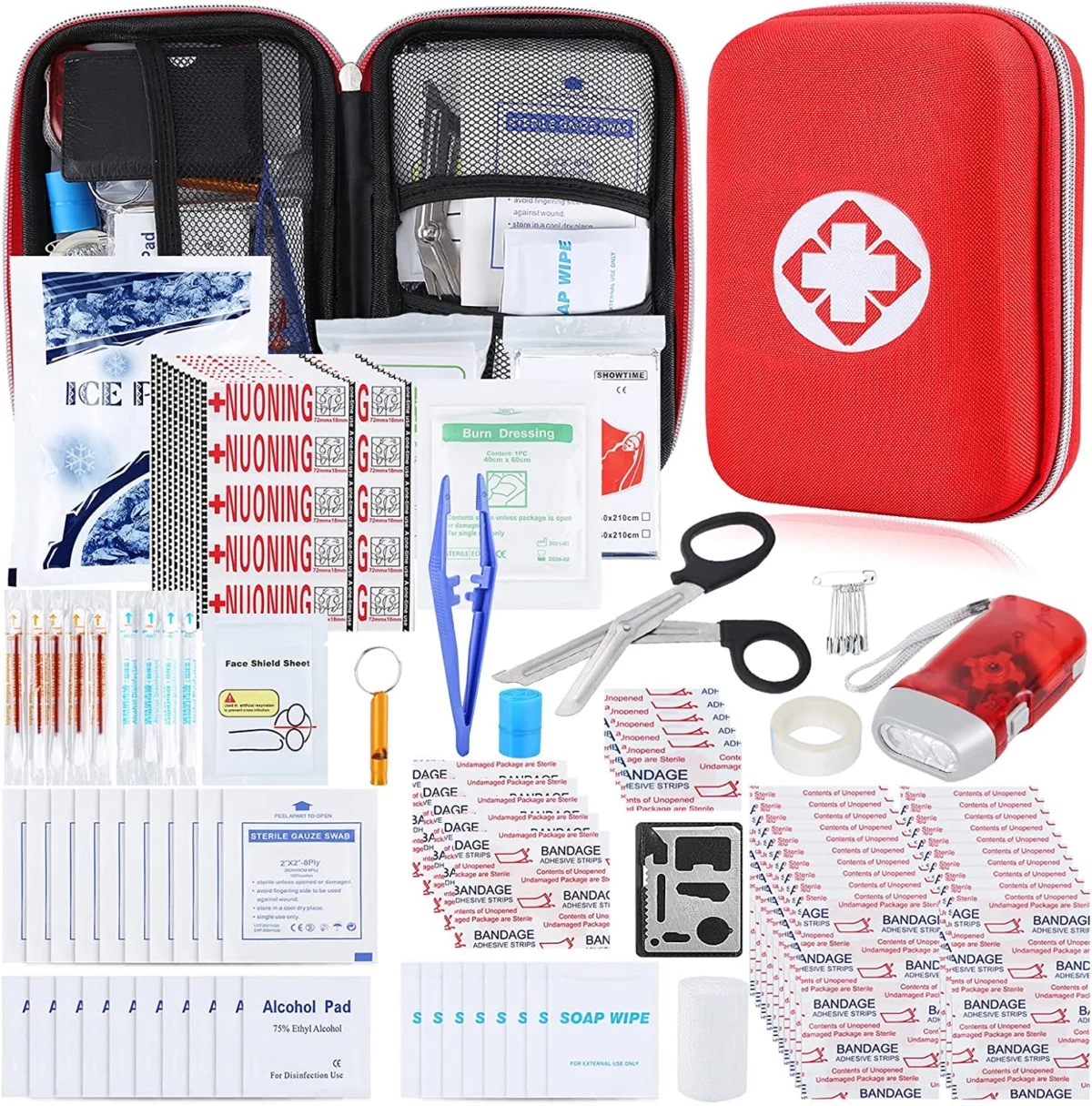
While pre-assembled bug-out bags offer comprehensive coverage, emergency medical professionals frequently emphasize the value of augmenting standard kits with dedicated, specialized first-aid systems. Products such as the Yiderbo 274-Piece First Aid Kit provide an illustrative benchmark for supplementary medical preparedness. Weighing under two pounds, such compact, ruggedized, and waterproof cases supply an extensive array of clinical-grade components—including specialized bandages, instant cold packs, medical shears, and antiseptic cleansing agents—that can be easily integrated into any primary bug-out bag or maintained independently in a home or vehicle environment.
Strategic Deployment and Practical Implications
Possessing a high-quality bug-out bag is merely the first step in comprehensive emergency readiness; strategic placement and ongoing maintenance are equally critical factors in determining its real-world efficacy. Emergency management specialists advise storing kits in designated, easily accessible locations where they can be retrieved instantly without obstruction—such as a front hall closet, an easily accessible garage shelf, or a dedicated vehicle trunk.

Furthermore, bug-out bags are not static investments. Experts recommend establishing a recurring semi-annual maintenance schedule to inspect the contents of each kit. Over time, perishable elements such as food rations, water purification tablets, and medications can degrade or surpass their expiration dates, while batteries in flashlights and radios may lose their charge. Regularly rotating consumables and testing electronic devices ensures that the equipment will perform reliably when deployed in an actual crisis.
Beyond immediate natural disasters, the psychological and practical benefits of maintaining a well-organized bug-out bag extend to broader scenarios involving infrastructural failures, severe winter storms, or unexpected evacuations. By consolidating vital survival tools, medical supplies, and sustenance into a single, highly portable, and durable unit, households can significantly enhance their resilience, minimize panic during high-stress events, and secure a greater degree of self-reliance when community infrastructure is temporarily compromised.