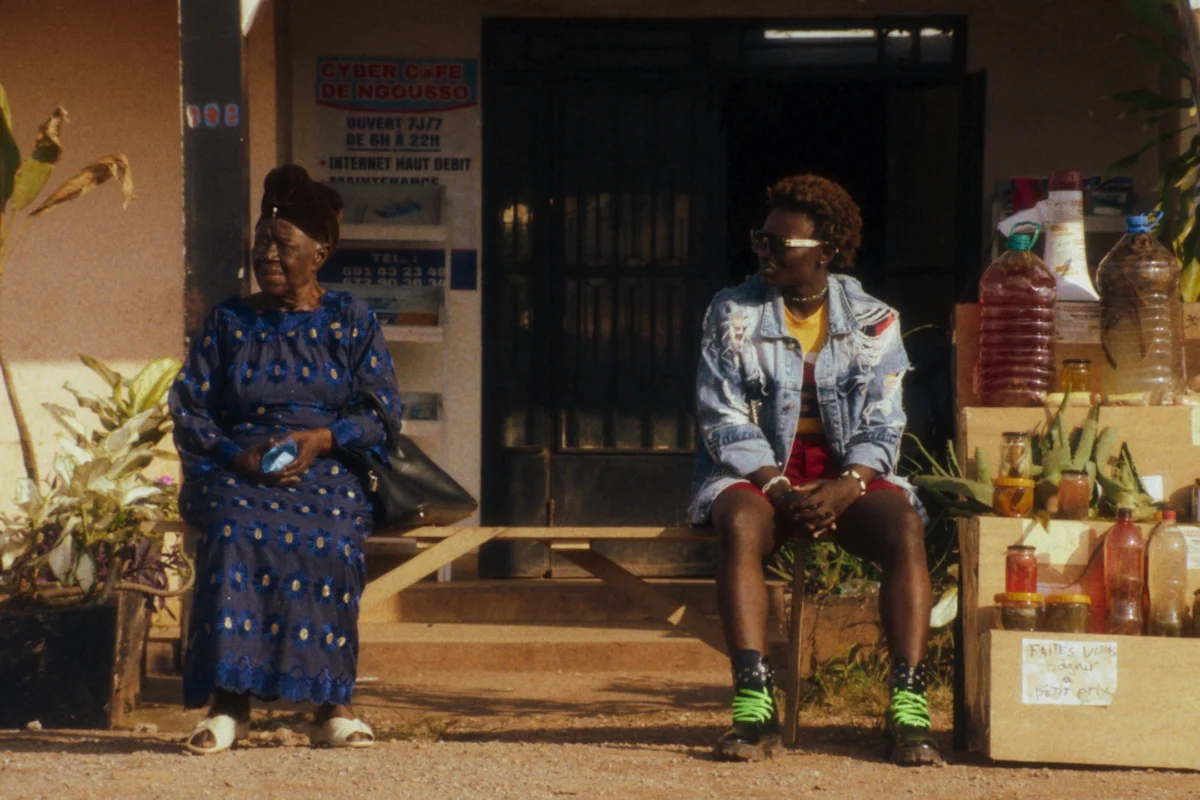
The 23rd edition of the Marrakech International Film Festival concluded on Saturday with a resounding celebration of global cinema, highlighted by a historic sweep for emerging African and international voices. Cameroonian filmmaker Auguste Bernard Kouemo Yanghu’s poignant feature debut, House of the Wind, claimed the festival’s most prestigious honor, the Étoile d’Or. The victory caps a remarkable festival circuit run for the film, which addresses themes of aging, solitude, and intergenerational solidarity, further solidifying Marrakech’s reputation as a premier destination for discovering groundbreaking international cinema.
Judged by a distinguished, nine-member international jury presided over by Oscar-winning French actress Marion Cotillard, the festival showcased a diverse array of cinematic achievements. Alongside Cotillard, the jury included prominent global talents such as Emma Mackey, Vicky Krieps, Claes Bang, Gilles Lellouche, Kaouther Ben Hania, Andrew Haigh, Ramata-Toulaye Sy, and Saïd Hamich Benlarbi. Their unanimous decision to award the Étoile d’Or to Yanghu underscored the emotional resonance and artistic maturity of House of the Wind.
A Triumphant Climax for House of the Wind
House of the Wind tells the deeply moving story of an elderly woman, vividly brought to life by lead actress Josette Kwanya, who constructs a house in a hopeful bid to lure her children away from their lives in Europe and back to Cameroon. However, the narrative takes an unexpected turn when she forms a profound companionship with a young neighborhood woman, fundamentally altering her long-held perceptions of family and obligation.
The film’s journey to the Étoile d’Or has been nothing short of extraordinary. It first captured international attention in the Horizons section of the Venice Film Festival, where it secured both the prestigious Lion of the Future award for the best debut across all festival sections and a Special Jury Prize within the Horizons competition.
In her glowing appraisal of the film, jury president Marion Cotillard emphasized its emotional depth and stylistic grace. "Some films move you deeply and stay with you long after the screening ends. That is what happened to us with this one," Cotillard remarked during the awards ceremony. "It is a film that overwhelmed us with its gentleness, the beauty of its direction and the audacity of its performance. It speaks of exile but chooses to look at those who stay rather than those who leave."
Cotillard further praised the film’s universal message of human connection. "It introduces us to an absolutely wonderful lead character, funny and moving, with whom we fall in love instantly and whom, deep down, we find hard to leave," she added. "Because it is also a film that reminds us of the importance of connection, of encounters, of those small acts of kindness that bring us closer together and give so much meaning to our lives, and it does it all with such grace, such simplicity."
Celebrating Global Excellence Across Categories
While House of the Wind captured the top prize, the rest of the Marrakech palmarès reflected a rich tapestry of international storytelling, honoring works that explored trauma, reconciliation, resilience, and societal struggle.
The Festival Jury Prize was awarded to Mexican filmmaker Fernanda Tovar for Sad Girlz. Premiering in the Generation strand of the Berlin International Film Festival, the film unfolds over the course of a sun-drenched summer in Mexico, following two teenage best friends as they navigate the complex emotional landscape and aftermath of a deeply traumatic event.
In a nod to historical reconciliation and cinematic excellence, a special mention was presented to Marie-Clémentine Dusabejambo’s Ben’Imana. The film, which previously claimed the Camera d’Or for best debut at the Cannes Film Festival, is a delicate and moving exploration of forgiveness and healing in post-genocide Rwanda.
The Best Director accolade went to Rafiki Fariala for Congo Boy. A compelling coming-of-age drama, the film follows a young Congolese refugee striving to achieve his dream of becoming a singer amidst the chaos of a war-torn country. Drawing heavily from the director’s personal life experiences, Congo Boy premiered in the Un Certain Regard section at Cannes, where its young lead actor, Bradley Fiomona, earned the best actor prize. Described by critics as a stirring musical drama that pulses with the rhythms of resilience, the sophomore feature follows Fariala’s critically acclaimed 2002 documentary debut, We, Students!, which premiered in Berlin.
In the acting categories, the competition was fiercely contested. The Best Actress prize was shared by Maria Nakouzi and Rym Mroue for their gripping performances in the Lebanese heist thriller Furies, directed by Rami Kodeih. Premiering in the Spotlight section of the Venice Film Festival, Furies has also been selected as Lebanon’s official submission for the upcoming Academy Awards. The film centers on two women who, unjustly barred from accessing their personal bank savings, orchestrate a daring overnight heist to reclaim their own money.
Meanwhile, the Best Actor award was bestowed upon Béonard Monteau for his magnetic performance in Marie Madeleine. Directed by Haitian filmmaker Gessica Généus, the film offers a vibrant and revisionist reimagining of the biblical narrative of Mary Magdalene. Bowing in the Cannes Première section, the film features Monteau as a young evangelist who forms an unexpected and powerful alliance with a free-spirited sex worker, portrayed by Généus herself.
Record-Breaking Attendance and Local Ownership
Beyond the glittering red carpets and critical accolades, the 23rd edition of the Marrakech International Film Festival achieved significant milestones in audience engagement and cultural impact. Festival coordinator Ali Hajji, speaking in the wake of the event, characterized this year’s gathering as a defining moment of organizational and artistic maturity.
Last year, the festival shattered previous benchmarks by drawing 45,000 attendees. Defying expectations, the 2023 edition pushed that envelope even further, welcoming close to 50,000 moviegoers. However, festival organizers were quick to emphasize that quantitative growth is secondary to the qualitative nature of audience engagement.
"There is a growing coherence between our artistic choices, our work with the emerging filmmakers and the relationship we have built with the Moroccan audiences," Hajji stated in an interview. "These are no longer separate dimensions of the festival. They increasingly fit into one another."
Hajji pointed out that the steady influx of young Moroccan cinemagoers is indicative of a long-term strategy bearing fruit. Over the years, the festival has worked tirelessly to cultivate trust and curiosity within the domestic population, transforming the event into a space where everyday citizens are eager to embrace unfamiliar stories by emerging global auteurs.
"Over the years we have built a genuine relationship of trust with our audiences, so people are increasingly willing to discover films they know very little about by filmmakers they may have never heard of," Hajji explained. "And for a festival like Marrakech, that is one of the most meaningful measures of success."
Broader Implications for the Festival Circuit
As the Marrakech International Film Festival looks toward the future, its leadership is deliberately shifting its strategic focus. Rather than pursuing unchecked expansion or prioritizing sheer attendee volume, the festival aims to deepen its cultural resonance within the global and regional cinematic landscapes.
Hajji noted that the primary question facing the institution is no longer about scale, but about depth of impact. "Growth is important, but so are continuity, artistic consistency and the ability to build lasting relationships with filmmakers and audiences," he noted.
The successful convergence of high-profile international acclaim and enthusiastic local participation highlights Marrakech’s unique positioning. It functions simultaneously as an essential nexus for the global film industry—bringing together elite creators, producers, and critics—and as a beloved cultural festival thoroughly embraced by Moroccan society.
By celebrating diverse narratives ranging from Cameroonian domestic dynamics and Rwandan reconciliation to Lebanese financial crises and Haitian biblical retellings, the Marrakech International Film Festival has reaffirmed its commitment to cross-cultural dialogue. As the curtains close on its record-setting 23rd year, the event leaves an indelible mark on the international film calendar, proving that authentic storytelling combined with deep community engagement remains a winning formula for the future of cinema.