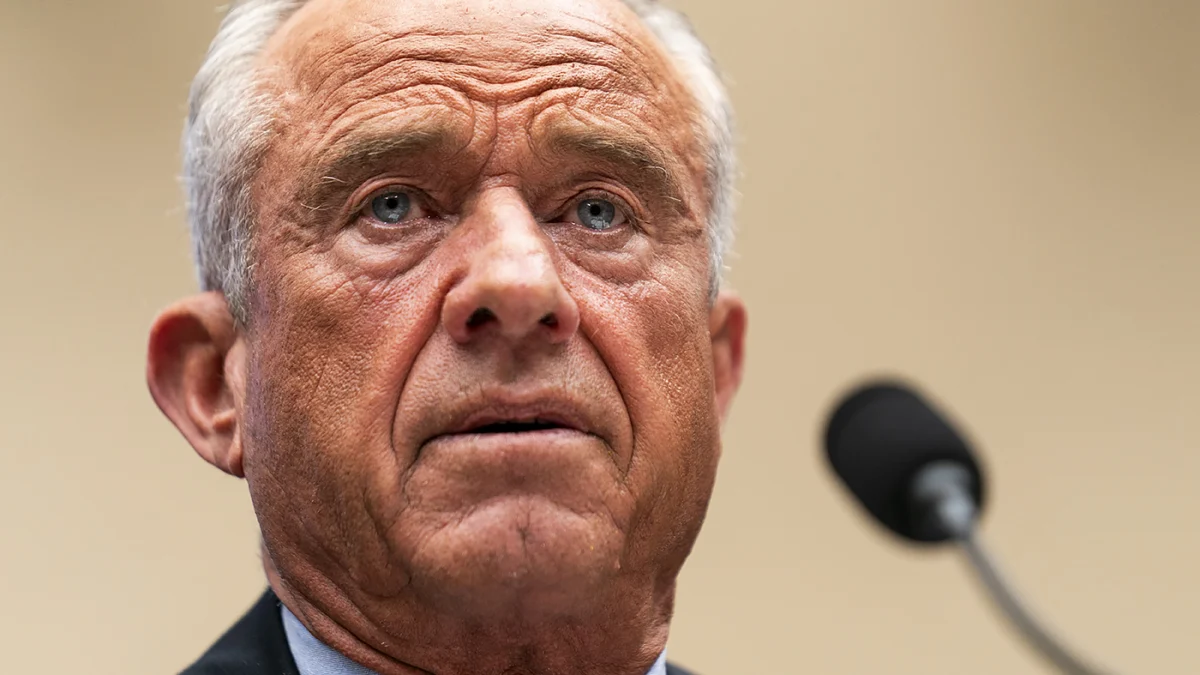
California Gov. Gavin Newsom (D) has vehemently condemned recent comments made by Robert F. Kennedy Jr., whom Newsom referred to as the Health and Human Services (HHS) Secretary, demanding immediate answers regarding remarks made in a 2024 interview. Kennedy’s statements, which suggested that Black children on certain Attention-Deficit/Hyperactivity Disorder (ADHD) medications might need to be "re-parented," have ignited a firestorm of criticism, prompting accusations of racism and deep insensitivity. The controversy underscores the volatile intersection of public health discourse, racial equity, and political rhetoric, drawing sharp rebukes from high-profile political figures and civil rights advocates.
Governor Newsom’s unequivocal condemnation came in a forceful statement, articulating his profound dismay and calling for robust accountability. "We’ve known RFK Jr. has been unfit to serve as Secretary, but these resurfaced remarks reflect a racist mentality that is absolutely unacceptable for a leader charged with protecting the health of 341 million Americans," Newsom declared. He further emphasized the gravity of the situation, adding, "We cannot go numb to the insanity of this federal administration. The Secretary must be held accountable for his deeply disturbing comments." This strong language highlights the perceived severity of Kennedy’s statements and their potential implications for public trust in governmental health initiatives, particularly concerning vulnerable populations.
The Genesis of the Controversy: Kennedy’s 2024 Remarks
The contentious remarks originated during a 2024 interview on the online show "High Level Conversations" with wellness and productivity influencer 19Keys. The discussion, primarily centered on Black men and mental health, provided the platform for Kennedy’s now widely criticized assertions. At the time of the interview, Kennedy was an independent presidential candidate, having suspended his bid for the Democratic nomination less than two months prior. It is crucial to clarify that Robert F. Kennedy Jr. has never held the position of U.S. Health and Human Services Secretary. Governor Newsom’s statement, while forceful in its condemnation, contained a factual misidentification regarding Kennedy’s official capacity. This discrepancy, however, did not diminish the intensity of the reaction to Kennedy’s specific words.
During the interview, Kennedy made sweeping generalizations about the prescription of psychiatric medications within the Black community. He stated, "every Black kid is now, just as a standard, put on Adderall, [selective serotonin reuptake inhibitors], benzos, which are known to induce violence." Following this assertion, he proposed a controversial solution: "And those kids are going to have a chance to go somewhere and get re-parented, to live in a community where there’ll be no cell phones, no screens, you’ll actually have to talk to people."
Kennedy elaborated on his vision for such a community, drawing inspiration from a family member’s experience at San Patrignano, an addiction treatment program in Italy. He described the program as a place where individuals receive a "second chance at life," are "re-parented," and learn essential life skills such as forming relationships, fostering intimacy, honesty, and developing strong work ethics. "The people come out of there and they are extraordinarily productive workers," he claimed, suggesting this model could be applied to address the issues he perceived among Black children on medication.
Chronology of Escalation: From Interview to Congressional Hearing
The interview, initially conducted in 2024, resurfaced dramatically on Thursday, during a House Ways and Means Committee hearing where Kennedy was testifying. The spotlight shifted to his past comments when Rep. Terri Sewell (D-Ala.) directly confronted him, demanding an explanation for the "re-parenting" remarks.
Kennedy’s initial response to Sewell’s questioning was one of denial and deflection. "I don’t even know what that phrase means and I doubt that I said that phrase," he told Sewell, later adding, "I’m not going to answer something that I didn’t say… because it doesn’t even make sense." He went on to accuse Rep. Sewell of "making stuff up," a charge she vehemently denied.
Rep. Sewell’s rebuttal was powerful and historically informed. She reminded Kennedy of the deep-seated trauma inflicted upon Black families throughout American history, referencing practices like the separation of Black children from their parents during the pre-Civil War era and the ongoing harm caused by racist federal and state policies. "For you to suggest that Black families are not capable of raising their own children is deeply offensive," Sewell asserted. She further broadened her criticism, linking Kennedy’s "re-parenting" suggestion to his widely documented skepticism regarding vaccine safety and his promotion of unproven statements, arguing that such rhetoric "endanger the lives of everyone across this nation."
Background and Supporting Data: Dissecting Kennedy’s Claims
Kennedy’s assertion that "every Black kid is now, just as a standard, put on Adderall, [selective serotonin reuptake inhibitors], benzos" stands in stark contrast to established medical data and research on racial disparities in mental health diagnoses and treatment.
- ADHD Diagnosis and Treatment Disparities: Numerous studies have consistently shown that Black children and adolescents are less likely, not more likely, to be diagnosed with ADHD compared to their white counterparts, and often experience significant delays in receiving appropriate treatment. For instance, research published in academic journals like Pediatrics and the Journal of Clinical Child & Adolescent Psychology indicates that while ADHD prevalence is similar across racial groups, minority children, particularly Black children, are often under-diagnosed or misdiagnosed with conduct disorders, leading to disparities in access to effective interventions, including medication. This under-treatment can have long-term negative impacts on academic achievement and overall well-being. Kennedy’s claim not only lacks factual basis but also perpetuates a harmful misconception that could exacerbate existing disparities by fueling distrust in necessary medical interventions.
- Medication Efficacy and Safety: Adderall (an amphetamine) is a stimulant primarily prescribed for ADHD. Selective serotonin reuptake inhibitors (SSRIs) are antidepressants used for depression, anxiety disorders, and sometimes ADHD co-morbidities. Benzodiazepines ("benzos") are sedatives used for anxiety and insomnia. While all medications have potential side effects, including rare instances of agitation or behavioral changes, the blanket statement that these drugs are "known to induce violence" is a dangerous oversimplification and often unsubstantiated when applied broadly. Responsible prescribing practices involve careful assessment and monitoring by medical professionals.
- The Concept of "Re-parenting": In a clinical context, "re-parenting" is a therapeutic technique, often used with adults who experienced childhood trauma, where a therapist adopts a parental role to help the individual address unmet needs. Applying this concept to children, especially Black children, in the context of medication use and without clinical justification, carries profound historical and racial implications. As Rep. Sewell highlighted, the forced separation and "re-parenting" of Black children has a dark and painful history intertwined with slavery, Jim Crow laws, and discriminatory child welfare practices. Suggesting that Black children, as a group, require "re-parenting" implies a fundamental deficit in Black families’ ability to raise their own children, an inherently racist trope that undermines family integrity and cultural competence.
- San Patrignano: Kennedy’s reference to San Patrignano, an Italian drug rehabilitation community, provides insight into his proposed alternative. Founded in 1978, San Patrignano is known for its strict, long-term, drug-free approach, often lasting several years, where residents live and work within the community. While it boasts high success rates for abstinence, its methods have also faced scrutiny over the years, particularly regarding the rights and autonomy of its residents, given its isolated and highly structured environment. Transplanting such a model, designed for adult addiction, to address the needs of children, particularly those grappling with ADHD, and framing it as "re-parenting" in the context of racialized medication use, is a significant leap that lacks medical and ethical justification.
Official Responses and Broader Implications
The Hill has reached out to HHS for comment regarding Newsom’s statement and Kennedy’s remarks, but no immediate response was available. However, the outcry from figures like Governor Newsom and Rep. Sewell signals a broader political and social reaction.
Newsom’s comparison of Kennedy’s remarks to those made by Dr. Mehmet Oz, whom Newsom also mistakenly identified as Centers for Medicare and Medicaid Services (CMS) Administrator (Oz ran for U.S. Senate), regarding the Armenian community in northern Los Angeles County, underscores a pattern of what the Governor perceives as prejudiced statements from public figures. Oz had claimed that the lettering outside Armenian hospice centers suggested they were run by a "Russian Armenian mafia," prompting Newsom to file a civil rights complaint against Oz in January. This linkage by Newsom suggests a concern about a broader trend of ethnic or racial stereotyping emanating from individuals in or seeking positions of influence.
The implications of Kennedy’s statements are far-reaching:
- Erosion of Trust in Healthcare: Comments from a public figure, particularly one with the Kennedy name recognition and a history of challenging mainstream health narratives (even if not in an official health role), can severely erode public trust in established medical science, especially concerning mental health treatment and prescribed medications. This distrust disproportionately harms minority communities who already face systemic barriers to quality healthcare.
- Reinforcement of Racial Stereotypes: The suggestion that Black children are universally over-medicated and require "re-parenting" reinforces harmful and historically resonant racial stereotypes about Black families, parenting capabilities, and mental health. Such rhetoric can contribute to stigma and discrimination.
- Impact on Policy Discourse: While Kennedy is not in an official health policy-making role, his public statements, particularly during a presidential campaign, can influence public opinion and contribute to a discourse that is misinformed and potentially detrimental to evidence-based policy discussions on mental health and racial equity.
- Call for Accountability in Public Discourse: The vigorous condemnation from Newsom and Sewell highlights an increasing demand for public figures to be held accountable for their rhetoric, especially when it touches on sensitive issues like race, health, and family. The expectation is that leaders, or those aspiring to lead, should base their statements on facts and demonstrate cultural competence and sensitivity.
As the political and public health landscape continues to grapple with issues of equity and access, the controversy surrounding Robert F. Kennedy Jr.’s "re-parenting" comments serves as a stark reminder of the ongoing challenges in fostering inclusive and informed dialogue. The demands for accountability from figures like Governor Newsom and Rep. Sewell underscore the critical need for public discourse to be grounded in factual accuracy, historical awareness, and a profound respect for all communities. The incident will likely prompt continued scrutiny of how public figures address complex social and health issues, particularly those intersecting with race and mental well-being, reinforcing the imperative for responsible and ethical communication.