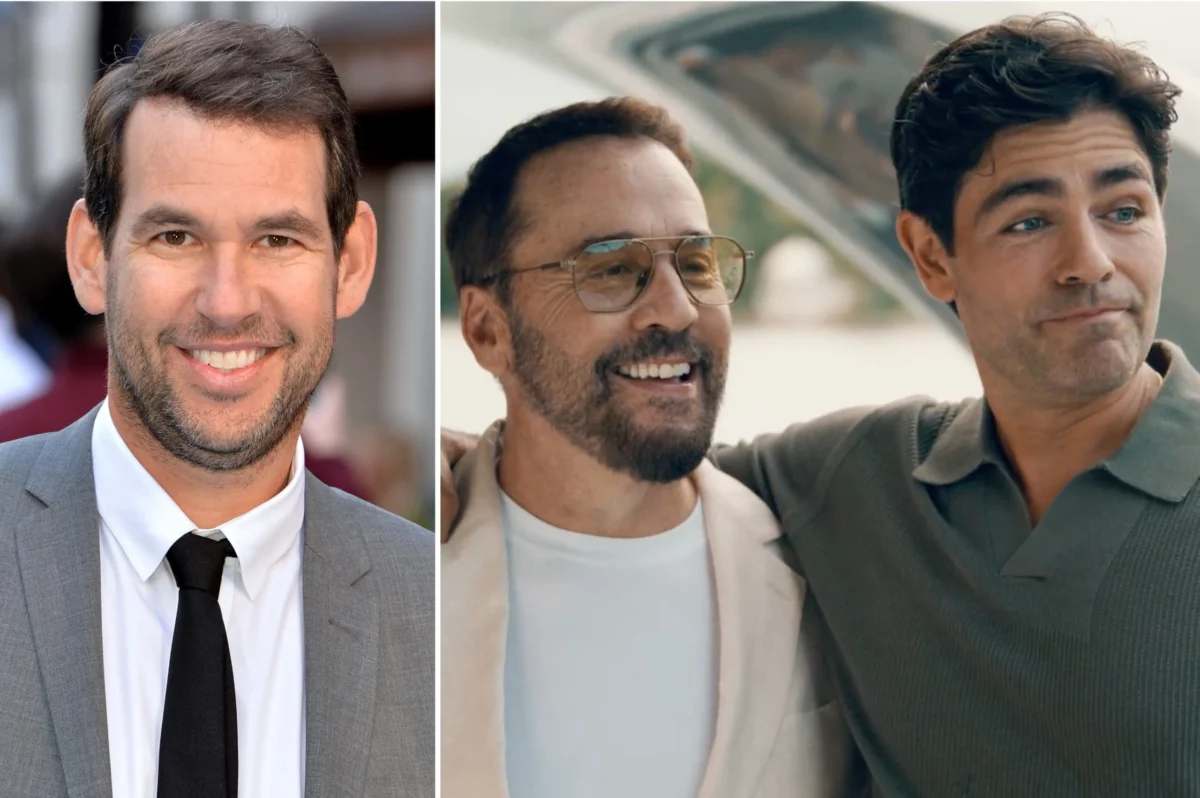
The landscape of modern television is heavily populated by revivals, reboots, and nostalgic reunions designed to capture the affection of legacy audiences. However, the creative forces behind these original properties do not always welcome such trips down memory lane. This tension was vividly brought to light following the release of a high-profile promotional advertisement featuring former Entourage stars Jeremy Piven and Adrian Grenier. The three-minute commercial, produced for Jake Paul’s sports betting and online casino application Betr, reunites the actors in a dynamic that heavily mirrors their famous roles from the hit HBO series.
While the actors are technically framed as playing exaggerated versions of themselves rather than super-agent Ari Gold and movie star Vincent Chase, the execution relies heavily on the cadence, chemistry, and plot devices that defined the award-winning comedy. The premise of the ad features Piven navigating a crowded luxury mansion party before tracking down Grenier aboard a yacht to pitch him an incoming cinematic project. Within hours of its digital debut, the video drew massive organic engagement across social media platforms, but it also triggered a swift and furious backlash from the show’s creator, Doug Ellin. Taking to social media, Ellin did not mince words, characterizing the commercial as an uninspired and exploitative knockoff that diminishes the rigorous writing process behind the original television program.
Chronology of the Controversy and Initial Reactions
The controversy erupted just days after trade publications broke the news regarding the surprise on-screen reunion of Piven and Grenier for the Betr 2.0 marketing campaign. According to public statements released by Ellin, his digital inbox was immediately flooded with hundreds of notifications from fans, peers, and industry insiders inquiring about the commercial and his level of involvement. Clarifying that he had zero participation in the conception, writing, or production of the advertisement, Ellin recorded and distributed video messages expressing his profound distaste for the project.
In his statements, Ellin emphasized the emotional and physical toll required to construct the original series, which aired on HBO from 2004 to 2011 across eight seasons, followed by a feature-length film adaptation in 2015. He detailed how the writing room spent countless hours laboring over every single syllable and plot development to ensure the characters felt authentic and compelling. Witnessing those narrative tropes and character dynamics distilled into a promotional vehicle for a modern gambling platform, according to Ellin, felt less like a harmless homage and more like an unauthorized emulation of creative labor.
The creator’s frustration extended beyond the mere existence of the ad to target the participation of Jeremy Piven, who earned widespread acclaim and three consecutive Primetime Emmy Awards for his portrayal of the volatile talent agent Ari Gold. Ellin claimed that in the years immediately following the conclusion of the series and its subsequent cinematic sequel, Piven actively distanced himself from the Entourage brand to pursue other professional endeavors. Ellin suggested that the actor’s willingness to step back into a facsimile of his iconic persona was driven purely by financial compensation rather than genuine creative affinity for the source material. Representatives for Piven declined to offer immediate comment to media inquiries regarding Ellin’s allegations.
Corporate Response from Betr and Massive Digital Reach
Despite the sharp condemnation from the show’s creator, the marketing strategy executed by Betr achieved its primary objective of generating immense digital visibility. A corporate spokesperson for the gambling platform defended the commercial, highlighting the undeniable cultural footprint and nostalgic appeal of bringing Piven and Grenier back together in front of the camera. The company emphasized that the concept was designed to create an unexpected cultural moment that would drive consumer awareness for the launch of Betr 2.0.
According to metrics provided by the company, the advertisement resonated powerfully with digital audiences, pulling in nearly 10 million organic social media views within the first twenty-four hours of its release. The Betr spokesperson expressed enthusiasm over the positive reception from the broader public, noting that both actors appeared to enjoy filming the segment. In a tongue-in-cheek nod to the unexpected publicity generated by the creator’s public tirade, the spokesperson jokingly thanked Ellin for helping to promote the commercial, thereby cementing the viral nature of the dispute.
Escalation on Digital Platforms and Broader Industry Implications
Ellin’s public commentary did not stop at his initial video posts; he continued his critique across multiple digital platforms, including X (formerly Twitter). Responding to followers and critics alike, the showrunner doubled down on his assertions that the commercial amounted to intellectual property exploitation. He argued that creators who spend years dedicating their professional lives to building original fictional universes deserve better than seeing their hard-earned creations repurposed as commercial filler. When queried by fans about the possibility of an official Entourage reboot or continuation, Ellin responded with heavy sarcasm, suggesting that if the audience desired more content, the participating actors should bear the responsibility of writing and directing it themselves.
This public dispute highlights a growing friction within the entertainment industry regarding the ownership, monetization, and nostalgic repurposing of classic television properties. As streaming services and modern brands increasingly leverage nostalgia to capture consumer attention, original creators often find themselves on the outside looking in, particularly when older contracts do not account for modern digital marketing campaigns or when intellectual property rights reside entirely with major studios. For HBO and Warner Bros., which hold the underlying rights to the Entourage library, utilizing legacy characters or their distinct stylistic equivalents in third-party advertising often involves complex legal negotiations and licensing agreements that do not necessarily require the direct sign-off of the original creative showrunner.
The State of the Entourage Franchise and Future Prospects
The friction surrounding the Betr advertisement also brings to the forefront the long-standing, complicated relationship between Ellin and the prospect of an official Entourage revival. Over the fifteen years since the series concluded its primary television run, fans have routinely clamored for a reboot, reunion special, or direct sequel series focusing on Vincent Chase, Eric Murphy, Turtle, and Johnny Drama. While individual cast members have periodically expressed openness to revisiting the characters, a cohesive revival has never progressed past preliminary conceptual discussions.
Earlier in the month, prior to the commercial’s release, Ellin addressed the constant inquiries regarding a potential franchise revival during an appearance on the Joe Vulpis Podcast. He firmly dismissed the likelihood of a formal reboot, stating candidly that he no longer spends time conceptualizing storylines for the universe unless financial backing is guaranteed from the outset. The closest Ellin came to recapturing the signature dynamic of his former hit was the 2002 independent pilot titled Ramble On. That dramedy project aimed to explore the lives of established Hollywood veterans attempting to reinvent their careers, featuring Entourage alumni Kevin Connolly and Kevin Dillon alongside veteran actor Charlie Sheen. Despite releasing a promotional trailer, the project ultimately failed to secure a formal distribution deal with a major network or streaming platform, leaving the creator to focus on other ventures, including his co-hosting duties on the Victory podcast alongside Kevin Dillon.
The clash between Doug Ellin and the Betr marketing team serves as a stark reminder of the emotional capital creators invest in their original television properties. While corporate entities and advertising agencies view nostalgic reunions as effective tools for audience engagement and brand awareness, creators often view them through the lens of artistic integrity and protection of intellectual labor. As the digital media landscape continues to evolve and brands increasingly rely on familiar faces and tropes to cut through the noise of modern advertising, the boundaries between original art, homage, and commercial exploitation will likely remain a contentious battleground for television writers and studio executives alike.