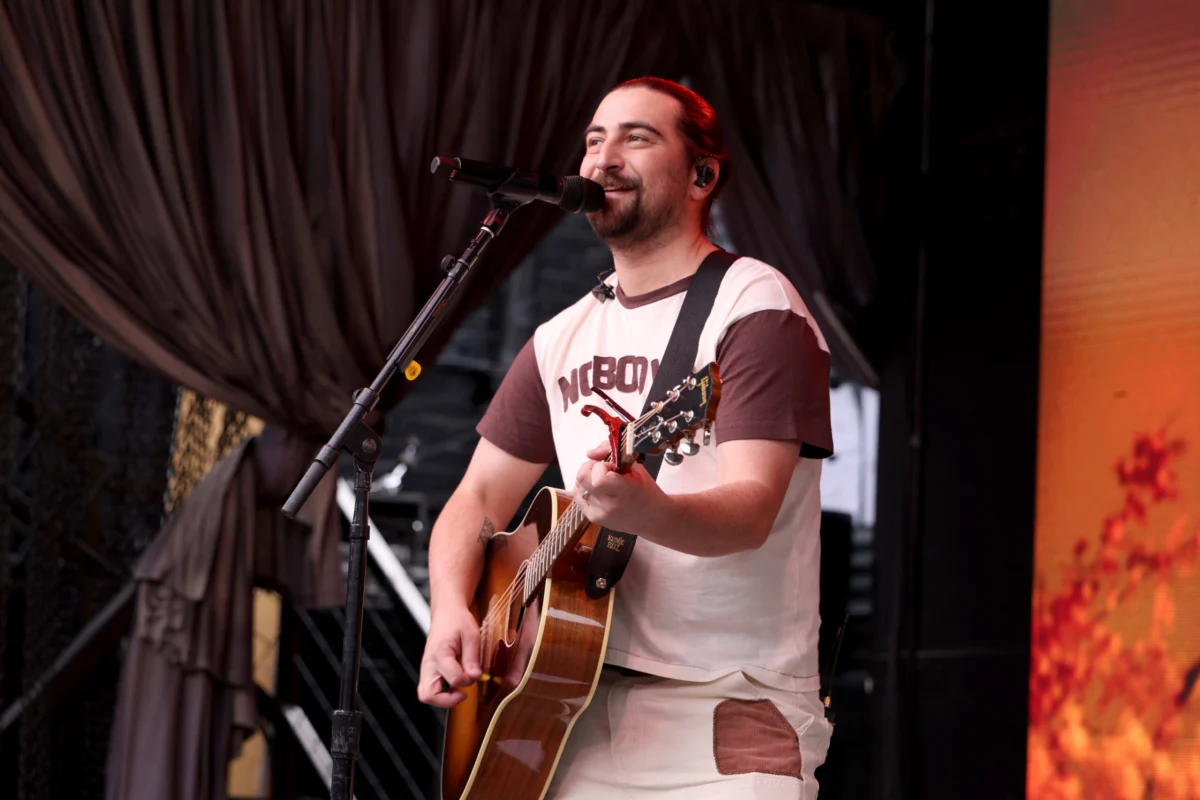
A prominent coalition of New England’s most influential musical acts, led by Grammy-nominated singer-songwriter Noah Kahan, has officially thrown its collective weight behind a transformative piece of legislation in Massachusetts aimed at dismantling the predatory practices of the secondary ticket market. In an open letter released on Wednesday, sixteen artists and industry entities, including legendary alternative rockers The Pixies, folk-pop star Aimee Mann, Celtic-punk staples the Dropkick Murphys, and jam-band Goose, urged state legislators to pass "The Great Divide Act." This bill seeks to impose a strict 110 percent cap on ticket resale prices, effectively ending the era of hyper-inflated markups that have made live entertainment increasingly inaccessible to the average consumer.
The collective statement emphasizes a growing sentiment within the creative community that the current ticketing ecosystem has transitioned from a service-oriented industry into a speculative commodity market. "Live performance should not be a luxury," the signatories stated, highlighting the disconnect between the artists who create the content and the third-party entities that profit from its distribution. The letter argues that individuals who contribute nothing to the actual production of a live show—such as the technical crews, venue staff, and the artists themselves—should not be reaping profits that far exceed those earned by the creators and workers who bring the events to fruition.
The Great Divide Act: A Legislative Overview
The proposed legislation, titled "The Great Divide Act," was formally introduced last week by Massachusetts Governor Maura Healey. The bill’s name is a direct homage to Noah Kahan’s latest album, reflecting the artist’s significant role as a vocal advocate for consumer rights in the music industry. At the heart of the act is a price ceiling designed to curb the "wild west" nature of the secondary market. Under the proposed rules, a ticket originally sold for $100 could only be legally resold for a maximum of $110. This 10 percent margin is intended to allow for minor administrative costs while removing the profit incentive for professional scalpers and "bot" operators.
Beyond price caps, the bill targets several other controversial practices that have plagued the ticketing industry for years. One of the most significant provisions is the outlawing of "speculative ticketing." This occurs when brokers list tickets for sale on secondary sites before they have actually secured them, essentially betting that they can acquire the tickets later at a lower price than what they have already charged the consumer. Additionally, the act aims to bring transparency and limits to the fees charged by secondary ticketing platforms, which often add a significant percentage to the final cost at the point of checkout.
Governor Healey’s administration has framed the bill as a necessary consumer protection measure. By capping prices and banning deceptive sales tactics, the administration hopes to ensure that Massachusetts remains a vibrant hub for culture and the arts without pricing out the local population. The bill also includes provisions for better disclosure of total ticket costs upfront, preventing "drip pricing" where fees are only revealed at the final stage of a transaction.
The Artist Perspective: Restoring Trust and Accessibility
For the artists involved, the motivation for signing the letter is as much emotional as it is economic. The signatories expressed a sense of helplessness when witnessing their fan bases being exploited. The letter notes that predatory resale practices do more than just cause financial strain; they erode the essential bond of trust between an artist and their audience. When fans are forced to pay five or ten times the face value of a ticket, the resentment often lingers, affecting the overall relationship and the sustainability of the artist’s career.
Noah Kahan has emerged as a central figure in this national conversation. A native of Vermont, Kahan has seen his profile rise meteorically over the last two years, particularly following the success of his album Stick Season. As his popularity grew, so did the prevalence of scalping at his shows. In response, Kahan has used his platform to advocate for legislative changes across New England. He recently supported a similar bill in Vermont, which was successfully signed into law, making Massachusetts the next logical step in his regional advocacy efforts.
The list of signatories reflects a broad cross-section of the New England music scene, spanning genres and generations. From the heavy metal of Killswitch Engage and All That Remains to the folk-rock of Mark Erelli and Melissa Ferrick, the consensus is clear: the current system is broken. The inclusion of the New England Metal and Hardcore Fest also demonstrates that the issue affects not just individual tours but also large-scale regional festivals that serve as economic engines for their host cities.
Chronology of the Ticketing Crisis
The push for "The Great Divide Act" in Massachusetts does not exist in a vacuum; it is part of a decade-long escalation of tensions within the live event industry.
- The Rise of the Bot (2010s): Throughout the 2010s, the use of automated software, or "bots," became the primary tool for professional scalpers. These bots could purchase thousands of tickets within seconds of a sale going live, bypassing human users and immediately relisting them on secondary sites at massive markups.
- The BOTS Act of 2016: At the federal level, the Better Online Ticket Sales (BOTS) Act was passed to prohibit the use of such software. However, enforcement has proven difficult, and the secondary market continued to flourish through other loopholes.
- The Post-Pandemic Surge (2022-2023): As live music returned following COVID-19 lockdowns, demand reached unprecedented levels. This "revenge spending" coincided with the high-profile technical failures of major ticketing platforms during the sale of Taylor Swift’s "Eras Tour," which brought the issue of ticketing monopolies and resale practices to the forefront of national political discourse.
- State-Level Intervention (2023-Present): Frustrated by a lack of comprehensive federal action, individual states began drafting their own protections. Maine introduced price caps on resale tickets in 2023, while California and New York moved toward stricter transparency laws.
- The Massachusetts Initiative (May 2024): Governor Healey announces "The Great Divide Act," signaling Massachusetts’ intent to lead the nation in aggressive resale regulation.
Supporting Data: The Economics of the Secondary Market
The necessity of the 110 percent cap is supported by data highlighting the extreme disparity between face-value prices and secondary market listings. According to various industry reports, tickets for high-demand concerts are frequently listed on secondary platforms for 400% to 1,000% of their original price within minutes of the general sale.
In a 2023 study of major concert tours, it was found that nearly 30% of tickets for "sold out" shows were immediately available on secondary sites. This suggests that a significant portion of the initial inventory is being siphoned off by professional resellers rather than reaching fans. Furthermore, "hidden fees" on secondary sites can account for an additional 20% to 50% of the total cost, often not disclosed until the final payment screen.
The implementation of a 110 percent cap is designed to kill the profit margin for these professional operations. If a reseller can only make a $10 profit on a $100 ticket, the financial risk of holding inventory—and the cost of running sophisticated bot operations—outweighs the potential reward. This, in theory, would return the "resale" market to its original purpose: a way for fans who truly cannot attend a show to recoup their costs from another fan.
Industry and Institutional Responses
The Great Divide Act has garnered significant support from national advocacy groups that represent independent artists and venues. Ron Gubitz, Executive Director of the Music Artists Coalition (MAC), praised the bill for drawing a clear line against "industrial-scale ticket flippers." The MAC, along with the National Independent Talent Organization (NITO) and the Future of Music Coalition, argues that the current system drains money out of the music ecosystem. When a fan spends $500 on a resold ticket that had a $100 face value, that "extra" $400 goes into the pocket of a broker rather than being spent on artist merchandise, concessions at the venue, or future concert tickets.
However, the bill is expected to face opposition from the multi-billion dollar secondary ticketing industry. Companies like StubHub and Vivid Seats have historically argued that price caps infringe on the rights of ticket holders to dispose of their property as they see fit. They often contend that such caps drive the market "underground" to unregulated social media platforms where the risk of fraud is higher. Proponents of the bill counter this by noting that the bill includes provisions for secure, verified transfers, ensuring that the safety of the transaction is maintained even with the price restrictions.
Broader Impact and Implications for the Future
If passed, Massachusetts would join a small but growing group of jurisdictions taking a hardline stance against scalping. Just last week, Washington, D.C. approved its own price cap legislation, signaling that the momentum is shifting toward heavy regulation.
The implications for the music industry are profound. For independent venues in Massachusetts—many of which are still recovering from the financial impact of the pandemic—the bill could lead to more consistent attendance and higher in-venue spending. For fans, it represents a potential end to the "lottery" system where attending a favorite artist’s show requires either extreme luck or extreme wealth.
The success of "The Great Divide Act" could also serve as a blueprint for federal legislation. Members of Congress have been monitoring state-level successes as they debate the "Fans First Act," a federal proposal that shares many of the same goals regarding transparency and bot prevention.
As the legislative process moves forward in the Massachusetts State House, the eyes of the music world will be on Boston. The unity shown by the region’s artists—from stadium-fillers like Kahan to indie stalwarts like Aimee Mann—suggests that the creative community is no longer willing to remain silent on the sidelines of the ticketing debate. As the letter concludes, the goal is simple: to ensure that the room "where the music happens" remains open to everyone, regardless of the size of their bank account.