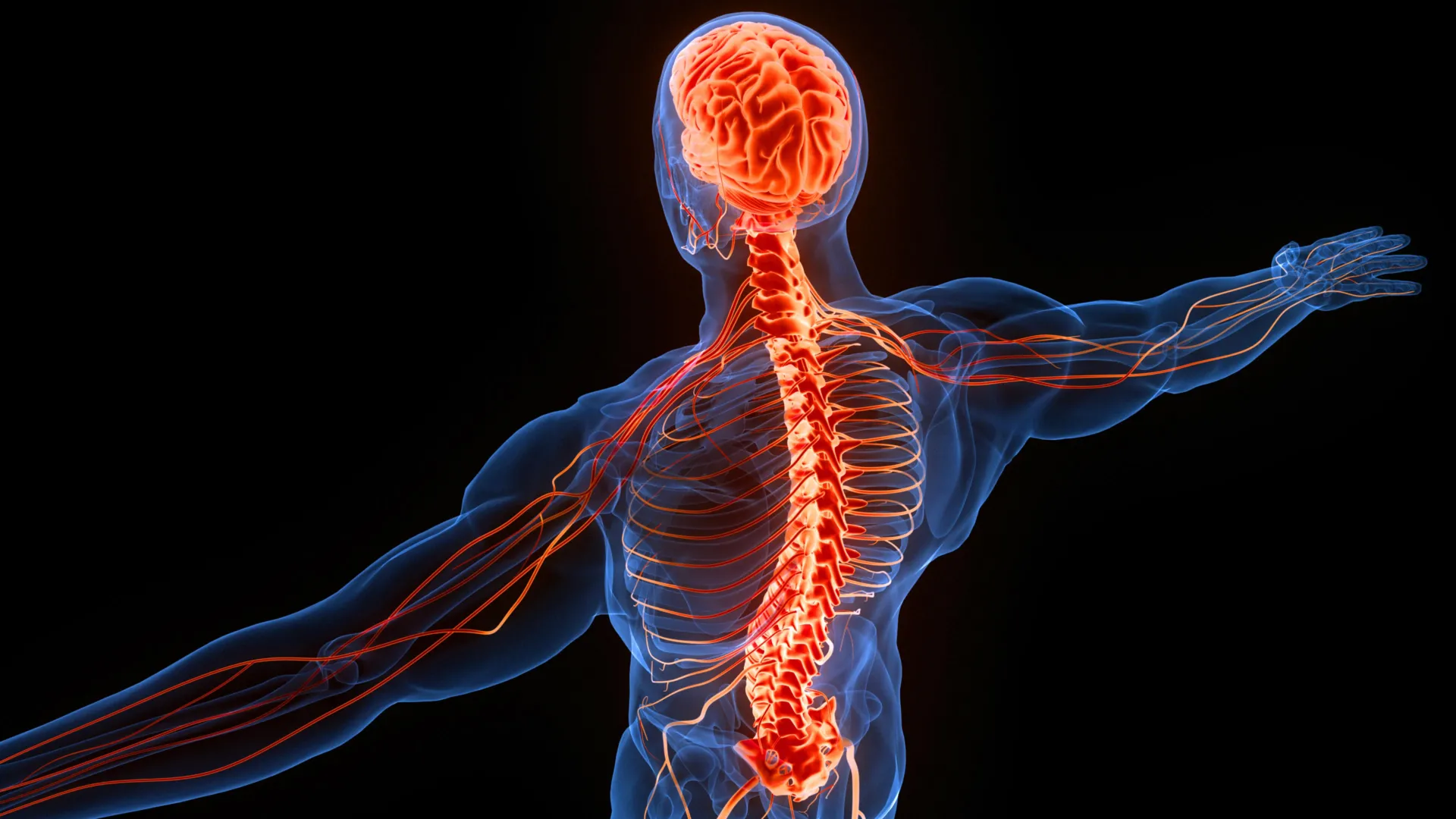
The human brain is a masterpiece of biological engineering, yet it possesses a peculiar architectural quirk: the left hemisphere governs the right side of the body, and the right hemisphere controls the left. This "contralateral" organization has long puzzled biologists, as it suggests a counterintuitive design that seems to complicate neural signaling. However, a new study published in Frontiers in Neuroanatomy by Dr. Martin Wessendorf and Daniel Wang posits that this crossed-wiring is not a design flaw, but a persistent evolutionary inheritance dating back over 500 million years. By tracing the development of neural circuits from early vertebrates to modern humans, the researchers argue that the brain’s geography was fundamentally shaped by the mechanics of ancient vision.
The Mechanism of Crossed Connections
To understand why our neural pathways cross the midline, one must first look at the eyes. When light enters the eye, the lens acts as a convex mirror, projecting an inverted image onto the retina. Consequently, visual stimuli from the right field of view land on the left side of the retina, and vice versa. This sensory information travels via the optic nerve to the optic chiasm, a structural crossroads where fibers are sorted so that each hemisphere receives information from the opposite visual field.
This system feeds into the optic tectum (known as the superior colliculus in mammals), an ancient midbrain structure present in every vertebrate species. Because the optic tectum is responsible for rapid, reflexive responses to environmental threats—such as an object looming suddenly in the periphery—it acts as a foundational template. The researchers suggest that as evolution added new sensory and motor systems to the vertebrate body plan, these systems were "wired" to follow the established roadmap created by the optic tectum. If the vision center was already organized contralaterally, subsequent neural pathways for touch, pain, and limb movement simply adopted the same structural logic.
A Chronology of Neural Architecture
The evolutionary timeline proposed by Wessendorf and Wang suggests that this arrangement originated during the Cambrian Period, between 538 and 486 million years ago. During this epoch, the first jawless fish developed rudimentary optic chiasms and tectums to navigate their environments.
By the time tetrapods (four-limbed animals) emerged, this crossed-wiring had become deeply embedded in the nervous system. The researchers identified two major sensory pathways that reinforce this:
- The Dorsal Column Pathway: Emerging in amphibians, this system carries information regarding touch and body position. It travels up the spinal cord before crossing to the opposite side of the brainstem.
- The Spinothalamic Tract: Present in sharks, rays, and most tetrapods, this pathway processes pain and temperature, crossing the midline within the spinal cord itself before ascending to the thalamus.
These circuits have remained remarkably stable across hundreds of millions of years. The fact that these pathways appear in diverse species ranging from cartilaginous fish to humans indicates that the contralateral organization was not merely a convenient adaptation, but a foundational requirement for the evolution of more complex, mobile animals.
Movement and the Motor Cortex
The study extends its analysis to the motor systems, identifying three primary pathways that bridge the brain and spinal cord: the tectospinal, the rubrospinal, and the corticospinal tracts. The tectospinal pathway facilitates the rapid, subconscious turning of the head and body toward a visual or auditory stimulus—a survival mechanism that likely preceded the emergence of complex voluntary motor control.
The rubrospinal pathway, originating in the red nucleus, further supports this pattern by coordinating limb movement through contralateral signals. However, it is the corticospinal tract that represents the most significant evolutionary leap. In humans, this tract facilitates fine motor skills, such as the dexterous manipulation of fingers.
The researchers note that the corticospinal tract’s role has shifted over time. In primitive mammals, it primarily served to regulate incoming sensory information. In primates and humans, it was co-opted to control skeletal muscles directly. This suggests a theme of "evolutionary recycling": rather than inventing a new, non-crossed pathway to control the hands, evolution repurposed an existing, crossed sensory pathway to manage motor function. This efficiency explains why the architecture of our nervous system feels "strange"—it is a cumulative history of biological upgrades built upon a base layer established in the Cambrian seas.
Implications for Evolutionary Biology
The findings of Wessendorf and Wang offer a critical correction to the "adaptationist" view of evolution, which assumes that every biological feature provides a specific survival advantage. In this case, the crossed-wiring of the brain does not necessarily provide a superior tactical edge; rather, it is a byproduct of phylogenetic constraint.
"Once the ancient visual pathways established a crossed organization, that arrangement likely provided the scaffolding upon which later pathways were built," the study explains. This hypothesis suggests that our brain structure is less like a modern computer designed from scratch and more like a historical city where new infrastructure must follow the layout of ancient, winding roads.
The implications for neurobiology are significant. If the crossed nature of the nervous system is indeed a historical inheritance rather than an optimized adaptation, it changes how researchers approach neurological recovery and plasticity. Understanding that certain neural pathways were never "meant" to handle their current tasks—but were instead adapted from older, simpler systems—might inform future therapies for nerve damage and spinal cord injuries.
Testing the Hypothesis
The researchers acknowledge that this theory is currently a robust hypothesis that awaits further empirical verification. A primary method for testing this involves the paleoneurology of early vertebrate fossils. By using high-resolution imaging on fossilized skulls of ancient jawless fish, researchers may be able to identify endocasts—internal molds of the cranial cavity—that reveal the presence and orientation of the optic tectum. If the fossil record confirms that these early organisms possessed the crossed visual architecture predicted by the model, it would provide compelling evidence for the "evolutionary inheritance" theory.
Broader Impact on Cognitive Science
The work of Wessendorf and Wang challenges the scientific community to look beyond the immediate utility of biological structures and consider the "deep time" constraints of evolution. In the context of cognitive neuroscience, this perspective encourages a shift in how we view brain lateralization. For decades, the focus has been on the functional differences between the left and right hemispheres. This new research pivots the conversation toward the physical connectivity of those hemispheres, grounding the mystery of brain-body asymmetry in the primitive visual systems of our distant ancestors.
As neuroscientists continue to map the human connectome, the realization that our most sophisticated cognitive processes are tethered to 500-million-year-old sensory pathways serves as a humbling reminder of our evolutionary lineage. Whether this arrangement will continue to evolve or remains a fixed constraint of vertebrate life is a question for the next several million years of natural selection. For now, the "crossed-brain" remains one of the most enduring, if peculiar, artifacts of the evolutionary process, a testament to the fact that biology is as much about the past as it is about the present.
The study concludes that the peculiar architecture of the human nervous system is neither a mystery to be solved as a modern glitch nor a secret advantage of human intelligence. It is, quite simply, a persistent signature of life’s slow, additive journey from the primitive, light-sensing creatures of the Cambrian era to the complex, sentient beings of today. Through this lens, the act of reaching out with one’s right hand—governed by the left side of the brain—is a physical echo of a world that existed long before the emergence of the first mammals, birds, or reptiles.