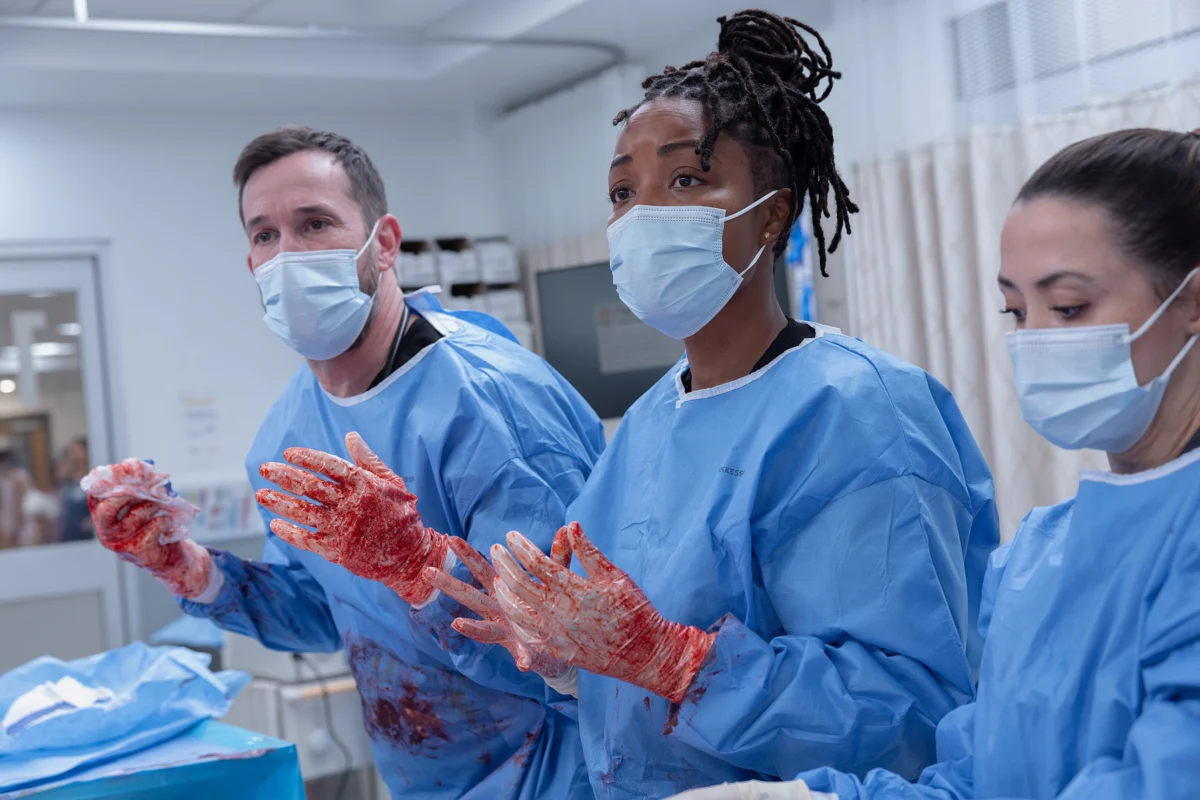
The second season of the HBO Max medical drama The Pitt concluded its high-stakes run this week, solidifying its position as a successor to the legacy of prestige medical procedurals while serving as a stark microcosm of contemporary American society. Set entirely during a grueling 15-hour shift on July 4th, the season utilized the high-pressure environment of the Pittsburgh Trauma Medical Center to explore a litany of modern crises, ranging from the ethical quagmires of artificial intelligence to the harrowing realities of immigration enforcement. By blending the traditional "Dr. Zaddy" energy of stars Noah Wyle and Shawn Hatosy with a relentless social consciousness, the series has moved beyond simple entertainment to offer a televised state-of-the-union address, punctuated by both systemic failure and a flickering sense of national hope.
The Evolution of the Medical Procedural as Social Commentary
The concept of the hospital as a societal mirror is not a new phenomenon in American television, though The Pitt represents its most modern and aggressive iteration. In the late 1960s, Academy Award-winning screenwriter Paddy Chayefsky famously pitched CBS on a series titled The Hospital. Chayefsky envisioned the setting as a microcosm for society, where every medical case served as a satirical commentary on the American condition. While CBS ultimately passed on the project—leading Chayefsky to produce the critically acclaimed 1971 film starring George C. Scott—the DNA of his vision survived.
Television eventually embraced this model through landmark series such as St. Elsewhere, E.R., and Grey’s Anatomy. The Pitt, however, benefits from a direct lineage to the genre’s golden age. The production is led by a trifecta of E.R. alumni: creator R. Scott Gemmill, executive producer John Wells, and producer-star Noah Wyle. This pedigree allows the show to masterfully balance the "seen-it-all" veteran dynamics with the idealism of inexperienced residents, all while navigating the complexities of a "streamer-age" prestige budget. The second season’s decision to frame its entire narrative within the symbolic confines of Independence Day further emphasizes its intent to dissect the current state of the American experiment.
Chronology of a Crisis: The 15-Hour Shift
Season 2 of The Pitt departs from the traditional episodic structure of its predecessor, opting for a condensed, real-time-adjacent chronology that tracks a single 15-hour shift. This narrative choice heightens the tension, mirroring the burnout and systemic strain currently plaguing the American healthcare workforce.
The season opens with the discovery of an abandoned infant, a narrative thread that serves as the emotional anchor for the finale. While the first season’s primary catalyst was a mass shooting event, Season 2 focuses on a structural disaster: the collapse of a local water park. This event sends a wave of trauma patients into the Pittsburgh Trauma Medical Center, straining an already depleted staff. Throughout the shift, the show weaves personal interpersonal dynamics—including employee hook-ups and long-standing professional grudges—into a tapestry of institutional failure.

The chronology concludes on the rooftop of the hospital as the night shift transitions. The final moments provide a rare reprieve from the season’s grim realism, showing the diverse staff watching a July 4th fireworks display. This sequence serves as a bookend to 15 hours of chaos, transitioning from a portrait of a country on the brink of disintegration to a brief glimpse of the American ideal of unity.
Supporting Data: Real-World Parallels in Healthcare
The Pitt’s narrative is heavily informed by real-world data and recent historical events in the medical field. One of the most prominent plot points involves a ransomware attack on neighboring hospitals, forcing the Pittsburgh facility to absorb an unsustainable influx of patients while simultaneously shutting down its own computer systems. This storyline mirrors the 2024 cyberattack on Ascension, one of the largest private healthcare systems in the United States, which disrupted clinical operations across multiple states and highlighted the vulnerability of digital medical records.
Furthermore, the show addresses the following systemic issues with data-driven precision:
- Medical Debt and Labor: The series highlights the phenomenon of "patient flight," where individuals avoid necessary care due to the threat of medical debt or the inability to miss shifts at secondary jobs. According to 2023 data from the Kaiser Family Foundation (KFF), approximately 41% of American adults carry some form of health care debt, a statistic reflected in the show’s more tragic patient outcomes.
- AI and Algorithmic Bias: The introduction of an AI diagnostic program in the show, intended to streamline triage, results in exacerbated errors. This reflects ongoing concerns regarding "algorithmic bias" in healthcare, where AI systems have been found to under-diagnose or mismanage care for minority populations due to biased training data.
- The EMTALA Mandate: The show explicitly references the Emergency Medical Treatment and Labor Act (EMTALA), a 1986 federal law that requires anyone coming to an emergency department to be stabilized and treated, regardless of their insurance status or ability to pay. The Pitt uses this legal framework to challenge the presence of federal agents within the hospital walls.
Official Responses and Production Controversies
The production of Season 2 was not without external pressures, particularly regarding its portrayal of Immigration and Customs Enforcement (ICE). In a move that mirrors the current climate of corporate media consolidation, reports surfaced that the show’s producers were asked by corporate leadership to "balance" the depiction of ICE agents.
Noah Wyle, in various industry interviews, noted that the presence of "masked men" in the trauma center was intended to create a sense of paranoia and panic among both patients and staff. The scripted inclusion of ICE agents led to internal debates at the network level, resulting in edits designed to temper the show’s perceived political stance. This interference occurred amidst the backdrop of potential sales and mergers involving Warner Bros. Discovery and Paramount, illustrating the intersection of corporate interests and creative storytelling in the 2026 media landscape.
The controversy extended to the characterization of Dr. "Robby" Robinavich (Wyle). Critics have noted his transition from a noble father figure to a "Difficult Man" antihero—a trope common in prestige dramas like House or The Sopranos. While some viewers found this shift alienating, the producers have defended the arc as a realistic portrayal of "physician burnout," a condition that the American Medical Association (AMA) reports affects over 50% of U.S. doctors.

Broader Impact and Implications for the Genre
The Pitt’s second season represents a significant shift in how medical procedurals engage with the public. By eschewing the "case-of-the-week" format in favor of a sustained, thematic exploration of American decline, the show challenges its audience to view healthcare not as an isolated service, but as the front line of social and political conflict.
The inclusion of modern cultural touchstones—such as TikTok-obsessed patients, wellness-culture misinformation, and the disappearance of funding for racial inequity research—positions the show as a historical document of the mid-2020s. It suggests that the "trauma" in a trauma center is as much psychological and systemic as it is physical.
As the television industry continues to pivot toward streaming platforms that demand "bingeable" yet high-quality content, The Pitt serves as a blueprint for the "prestige procedural." It retains the addictive qualities of network television—the "weapons-grade Dr. Zaddy energy" and the high-stakes medical puzzles—while refusing to shy away from the didactic, often uncomfortable conversations required by its social consciousness.
In its final analysis, the show posits that while the American healthcare system—and by extension, the country itself—may be understaffed, overworked, and teetering on the edge of implosion, the individuals within the system remain its greatest strength. The finale’s rooftop scene, featuring a multiracial, multi-class assembly of professionals standing in silence, suggests that unity is still possible, even when the structures designed to support it are failing. For 15 hours, The Pitt shows us the country we are stuck with; for its final five minutes, it dares to show us the country we still desire.