The landscape of the true wireless stereo (TWS) market has undergone a significant transformation over the last decade, shifting its primary focus from mere music playback to high-fidelity communication. As remote work and mobile conferencing become permanent fixtures of the global professional environment, the demand for earbuds that can isolate a human voice from the chaos of urban environments has never been higher. While nearly every wireless earbud on the market includes a built-in microphone, the disparity in performance between entry-level models and flagship devices remains vast. Evaluating these devices requires a rigorous methodology that accounts for acoustic variables, including wind resistance, ambient traffic noise, and the digital processing of sibilance.
The Evolution of Voice Isolation Technology
The quest for the perfect call-focused earbud has led to a divergence in hardware design and software implementation. Historically, "pod-shaped" earbuds struggled with call quality due to the physical distance between the microphone and the user’s mouth. This led to the rise of the "stem" design, popularized by Apple’s AirPods, which utilizes the extension to house beamforming microphones closer to the source of the voice. In 2026, this design remains the gold standard for clarity, though advancements in bone conduction sensors and artificial intelligence (AI) are beginning to close the gap for more compact, stemless designs.

Modern voice isolation relies on a combination of Micro-Electro-Mechanical Systems (MEMS) microphones and Digital Signal Processing (DSP). These systems work in tandem to identify the specific frequency range of human speech—typically between 300 Hz and 3,400 Hz—while suppressing frequencies associated with wind (low-frequency rumble) and urban environments (high-frequency screeching). The following analysis details the top-performing models currently dominating the market, categorized by their specific strengths in communication and audio engineering.
Leading Contenders for Communication Excellence
Anker Soundcore Liberty 5 Pro: The Benchmark for Noise Suppression
The Anker Soundcore Liberty 5 Pro has emerged as the industry leader for users who frequently take calls in high-decibel environments. During comparative field tests on busy metropolitan streets, the Liberty 5 Pro demonstrated an unprecedented ability to reduce background noise to a near-silent whisper. Even in conditions with sustained wind speeds, the earbuds utilized a multi-mic array to maintain voice prominence.
Beyond its acoustic performance, the Liberty 5 Pro introduces a novel touchscreen display on the charging case. This allows users to manage active noise canceling (ANC) settings and monitor battery levels without interacting with a smartphone—a feature particularly useful for professionals juggling multiple devices. While some audiophiles note that the sound profile for music lacks the clinical precision of high-end Sony or Technics models, the Liberty 5 Pro’s specialized focus on "clear call" technology makes it the premier choice for telecommunications.

Apple AirPods Pro 3: The Integrated Choice for iOS Users
Apple continues to dominate the premium segment with the AirPods Pro 3, a device that serves as a cornerstone of the iOS ecosystem. The third-generation Pro model features a refined Adaptive ANC system that samples environmental noise at a rate of 48,000 times per second. For phone calls, the "Voice Isolation" feature uses computational audio to strip away background noise, ensuring that the user’s voice remains natural and resonant rather than robotic.
The AirPods Pro 3 also marks a significant shift in Apple’s hardware strategy by integrating health-centric sensors. The inclusion of a heart-rate monitor for fitness tracking and the device’s certification as a clinical-grade hearing aid for those with mild to moderate hearing loss broaden its utility. For the professional user, the eight-hour battery life per charge provides ample headroom for back-to-back meetings, although the charging case’s total capacity has seen a slight reduction compared to previous iterations.
Samsung Galaxy Buds4 Pro: Android’s Answer to the Stem Design
Samsung’s Galaxy Buds4 Pro represents a departure from the company’s previous "bean" and pod shapes, adopting a stemmed architecture that mirrors the ergonomics of the AirPods Pro. This shift was driven by the technical necessity of placing microphones closer to the jawline to improve voice pickup. The Galaxy Buds4 Pro excels in quiet environments, delivering a voice profile that is virtually indistinguishable from a direct smartphone recording.

However, technical analysis shows that while the voice clarity is top-tier, the ANC performance slightly lags behind Apple and Sony in extremely loud settings. The device tends to allow more ambient street noise to bleed through during calls. Conversely, for music enthusiasts, the Galaxy Buds4 Pro offers a superior frequency response, with authoritative bass and clear treble, making it a versatile "all-rounder" for the Samsung user.
Specialized Designs and Splurge Options
Sony WF-1000XM6: The Power of AI and Bone Conduction
Sony’s flagship WF-1000XM6 remains the preferred choice for those who dislike the stemmed aesthetic but refuse to compromise on technology. The XM6 utilizes a dual beamforming microphone array supplemented by a bone conduction sensor. This sensor detects vibrations in the wearer’s jawbone, allowing the AI processor to distinguish between the user’s voice and external sounds with high accuracy.
The XM6 is particularly noted for its "Speak-to-Chat" feature and adaptive sound control, which adjusts the noise-canceling intensity based on the wearer’s activity. While the use of stiff foam eartips provides excellent passive isolation, some users find the fit more challenging than traditional silicone tips. Nevertheless, the XM6’s ability to deliver clear vocals in a windy environment without a physical stem is a testament to Sony’s engineering prowess.

Nothing Ear: Design-Forward Performance
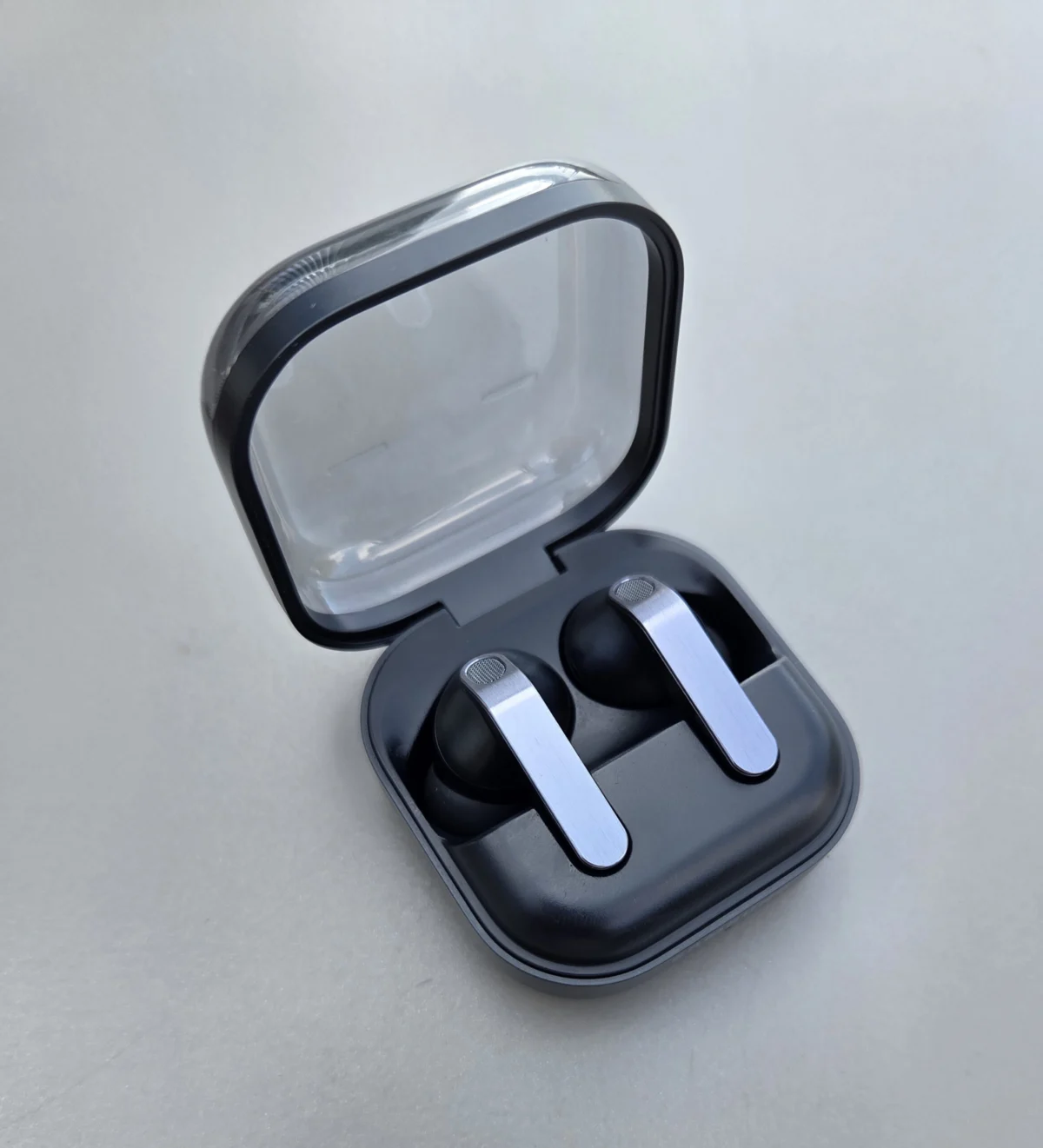
The Nothing Ear earbuds have carved out a niche by offering a striking transparent aesthetic combined with competitive performance. While Nothing is often viewed as a "lifestyle" brand, the 2026 iteration of the Ear model holds its own against established giants. The device features intuitive pinch controls and a robust EQ customization suite. In call tests, the Nothing Ear provided reliable background suppression, outperforming several more expensive models in its price bracket. Its support for Google Fast Pair and multipoint connectivity makes it an ideal tool for users who switch frequently between laptops and mobile devices.
Technics EAH-AZ100: The Audiophile’s Communicator
Technics, a brand synonymous with high-end audio, has successfully translated its hi-fi heritage into the TWS market with the EAH-AZ100. These earbuds prioritize voice naturalism, avoiding the aggressive digital processing that can sometimes make voices sound thin or "tinny." The EAH-AZ100 utilizes Voice Focus AI technology, which is designed to highlight the speaker’s vocals while attenuating peripheral noise. While the ANC is not as aggressive as the Anker or Apple models, the comfort and low-profile design make it suitable for long-duration wear during extended conference calls.
Technical Data and Comparative Metrics
When selecting earbuds for professional use, several technical specifications serve as key performance indicators:

- Microphone Count: Flagship models now typically feature 3 to 4 microphones per earbud. One is dedicated to voice pickup, while the others monitor internal and external noise for cancellation.
- Bluetooth Standards: The adoption of Bluetooth 5.4 and LE Audio has reduced latency and improved the stability of connections, which is critical for avoiding "dropped" audio during calls.
- Battery Depletion Rates: Voice calls are significantly more power-intensive than music playback because the earbuds must simultaneously run the microphone array, the ANC processor, and the wireless transmitter. The current industry average is 5 to 7 hours of talk time.
Market Analysis and Future Implications
The integration of AI into the microphone path is the most significant trend of 2026. Rather than relying on simple volume thresholds to gate noise, modern earbuds use machine learning models trained on millions of hours of speech and noise samples. These models can "reconstruct" a user’s voice even when it is partially obscured by a passing siren or a gust of wind.
Furthermore, the "medicalization" of earbuds is a growing trend. As seen with the AirPods Pro 3, the line between a consumer audio product and a hearing assistive device is blurring. This has profound implications for the workplace, where "transparent" communication modes allow users to stay connected to their digital environments while remaining present in physical office spaces.
In conclusion, while the Anker Soundcore Liberty 5 Pro currently holds the title for the best overall call quality due to its superior noise suppression, the "best" choice remains highly dependent on the user’s existing ecosystem. iOS users find unparalleled utility in the AirPods Pro 3, while Android users are better served by the Samsung Galaxy Buds4 Pro or the Sony WF-1000XM6. As microphone technology continues to advance, the "tunnel sound" that once plagued wireless calls is rapidly becoming a relic of the past, replaced by a new era of crystalline mobile communication.