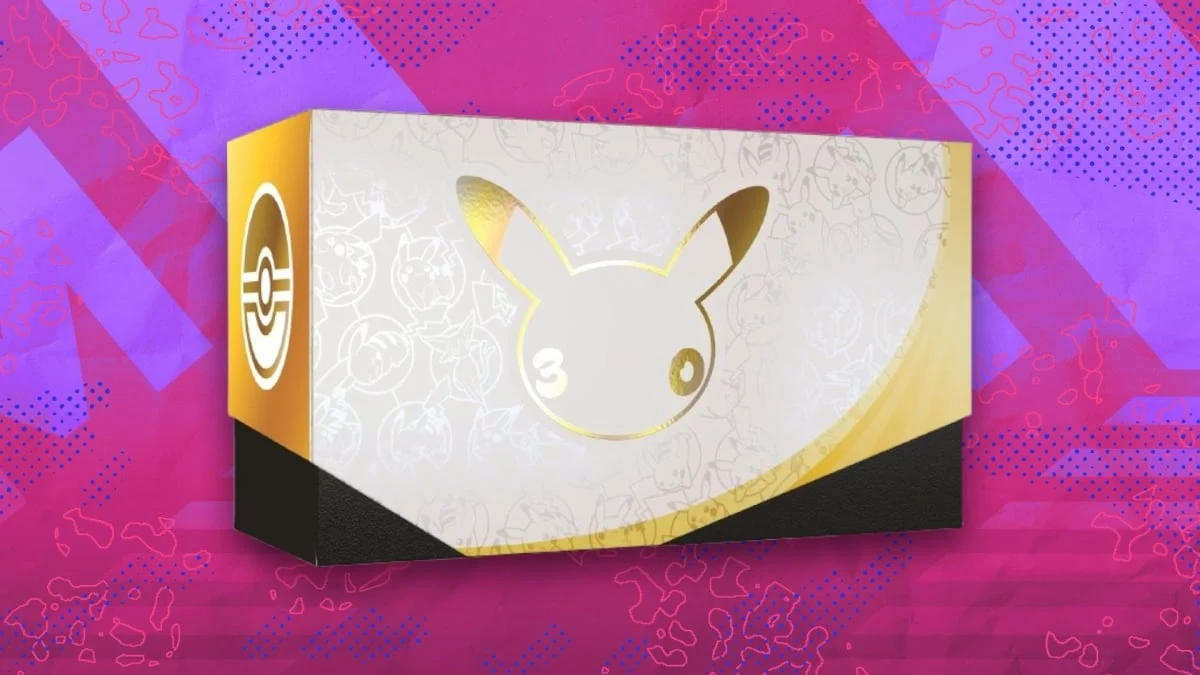
The global trading card community has turned its attention to a significant retail pricing development involving one of the franchise’s most anticipated upcoming physical releases. As of late September, Amazon has listed the heavily sought-after Pokémon 30th Celebration Elite Trainer Box at a retail price of $89.99. This figure stands in sharp contrast to current secondary market valuations, offering prospective buyers a potential saving of roughly $88.64 compared to prevailing TCG Player market averages, which sit at approximately $178.63.
However, acquiring this anniversary-edition product at the discounted retail price requires navigating a tightly controlled distribution mechanism. Due to unprecedented demand and persistent supply chain bottlenecks that have historically plagued the collectible card game (CCG) industry, Amazon has implemented an invitation-only purchasing model for the item, mirroring strategies used to manage scarcity during high-profile hardware and luxury releases.
Understanding the Invitation-Only Purchase Model
Rather than allowing immediate add-to-cart functionality or operating on a traditional first-come, first-served flash sale basis—methods that frequently leave genuine collectors empty-handed against automated scalper bots—Amazon requires potential buyers to submit an explicit request for an invitation.
Interested consumers must navigate to the product page and select the "request invite" option. This action enters the user into a randomized selection pool managed by Amazon’s internal inventory algorithms. Those who are fortunate enough to be selected receive a notification email containing a secure, personalized purchase link.
According to platform guidelines, this invitation window is strictly time-sensitive; successful applicants are granted a 72-hour window to complete the transaction before the right to purchase expires and is reassigned to another candidate. Consumers who are not selected during the initial automated drawing are not immediately discarded; instead, their requests remain on file, positioning them for potential inclusion in subsequent waves as Amazon secures additional inventory restocks from authorized distributors.
Comprehensive Contents of the Anniversary Box
For collectors and competitive players alike, the value proposition of the Pokémon 30th Celebration Elite Trainer Box extends far beyond the steep discount. The commemorative collection is packed with a robust assortment of physical and digital assets designed to honor three decades of the Pokémon franchise.
The core of the box comprises nine Pokémon 30th Celebration booster packs, giving players and collectors multiple opportunities to pull rare and valuable cards from the specialized set. In addition to the randomized booster packs, the package includes a guaranteed collectible: a full-art foil Nidorina promotional card, which serves as a centerpiece for the set’s artistic curation.
To support gameplay, the Elite Trainer Box supplies 16 foil Basic Energy cards, providing an essential foundation for deck-building. Protection and organization are addressed through a set of 65 themed card sleeves, four division card dividers, and a comprehensive player’s guide detailing the mechanics and card lists of the 30th-anniversary expansion. Furthermore, the box includes tournament-standard accessories: a set of damage-counter dice, a competition-legal coin-flip die, and a code card redeemable for the digital ecosystem via Pokémon Trading Card Game Live.
Background Context and the Evolution of the Pokémon TCG
To fully grasp the significance of the $89.99 price point and the intense scarcity surrounding the 30th Celebration line, it is necessary to examine the broader historical context of the Pokémon Trading Card Game. Launched in Japan in October 1996 by Media Factory and introduced to North America in 1999 by Wizards of the Coast, the franchise has evolved from a niche trading card hobby into a multi-billion-dollar global cultural phenomenon.
Over the past three decades, milestone anniversaries have consistently driven spikes in consumer interest, speculative investment, and retail traffic. The 20th anniversary in 2016 introduced the Generations expansion, which sparked a massive resurgence in public interest. Similarly, the 25th anniversary in 2021 featured the wildly popular Celebrations subset, characterized by classic card reprints featuring the iconic 25th-anniversary stamp.
As the franchise approaches its formal 30th-tier milestone, The Pokémon Company International has steadily ramped up production capacity while simultaneously facing unprecedented global demand. The intersection of nostalgic millennial collectors with disposable income, teenage and adult competitive players, and high-stakes financial investors has created an ecosystem where specialized products routinely sell out within seconds of going live on primary retail channels.
Chronology of the Release and Retail Dynamics
The rollout of the Pokémon 30th Celebration series has followed a carefully choreographed timeline orchestrated by official distributors and major retail partners.
Initial announcements regarding the 30th-anniversary product line began circulating through official Pokémon channels earlier in the year, generating immediate speculation across online hobbyist forums and social media networks. As pre-order windows opened and closed rapidly across specialized hobby shops and mass-market retailers, secondary market prices began to climb well above the manufacturer’s suggested retail price (MSRP).
By late September, secondary market aggregators such as TCG Player recorded average transaction and listing prices soaring near the $178 threshold, driven by early scarcity and high collector enthusiasm. Amazon’s intervention via a direct-to-consumer retail listing at $89.99 represents a deliberate effort to combat exorbitant reseller markups, albeit constrained by the realities of limited physical stock. Industry analysts note that utilizing ballot systems for high-profile TCG releases has become an industry standard for major e-commerce platforms seeking to protect genuine enthusiasts from automated scalper networks.
Economic Implications and Market Analysis
The pricing discrepancy between secondary market valuations and primary retail caps highlights ongoing structural challenges within the physical trading card sector. When major retailers like Amazon offer premier products at nearly 50 percent off prevailing market rates, it underscores the degree to which secondary pricing is driven by speculative inflation rather than fundamental manufacturing costs.
Economic analysts specializing in the collectibles market point out several key implications of this retail dynamic:
- Mitigation of Scalper Influence: By implementing randomized invitation systems, retailers can effectively disrupt automated purchasing scripts ("bots") that typically monopolize limited inventory within milliseconds of a product going live.
- Market Price Correction Pressures: Large-scale allocations distributed directly to consumers at standard retail pricing exert downward pressure on secondary market values, temporarily cooling speculative bubbles.
- Supply Chain Vulnerabilities: The persistent need for allocation models demonstrates that global manufacturing output for specialty paper products, foil treatments, and specialized packaging continues to lag behind hyper-accelerated consumer demand.
- Consumer Sentiment and Brand Loyalty: Direct retail accessibility at fair market value strengthens consumer trust in primary distributors, contrasting sharply with the frustration often experienced when dealing with unregulated secondary markets.
Broader Impact on the Collectibles Industry
The launch of the Pokémon 30th Celebration Elite Trainer Box and the subsequent retail strategies employed by platforms like Amazon serve as a bellwether for the broader collectible card game industry, which also includes franchises like Magic: The Gathering and Yu-Gi-Oh!.
As collectibles increasingly blur the line between traditional hobby items and alternative financial assets, publishers and major retail intermediaries are forced to adapt their distribution frameworks. The balancing act between satisfying massive casual audiences, supporting local game stores, and deterring predatory market manipulation remains one of the central operational challenges for the sector moving forward.
For now, collectors participating in Amazon’s invitation ballot remain focused on the immediate prospect of acquiring a foundational piece of the 30th-anniversary lineup at a price point that respects traditional retail economics. Whether subsequent production waves will fully satisfy global demand or whether secondary market premiums will persist remains one of the most closely watched storylines in the modern tabletop gaming landscape.