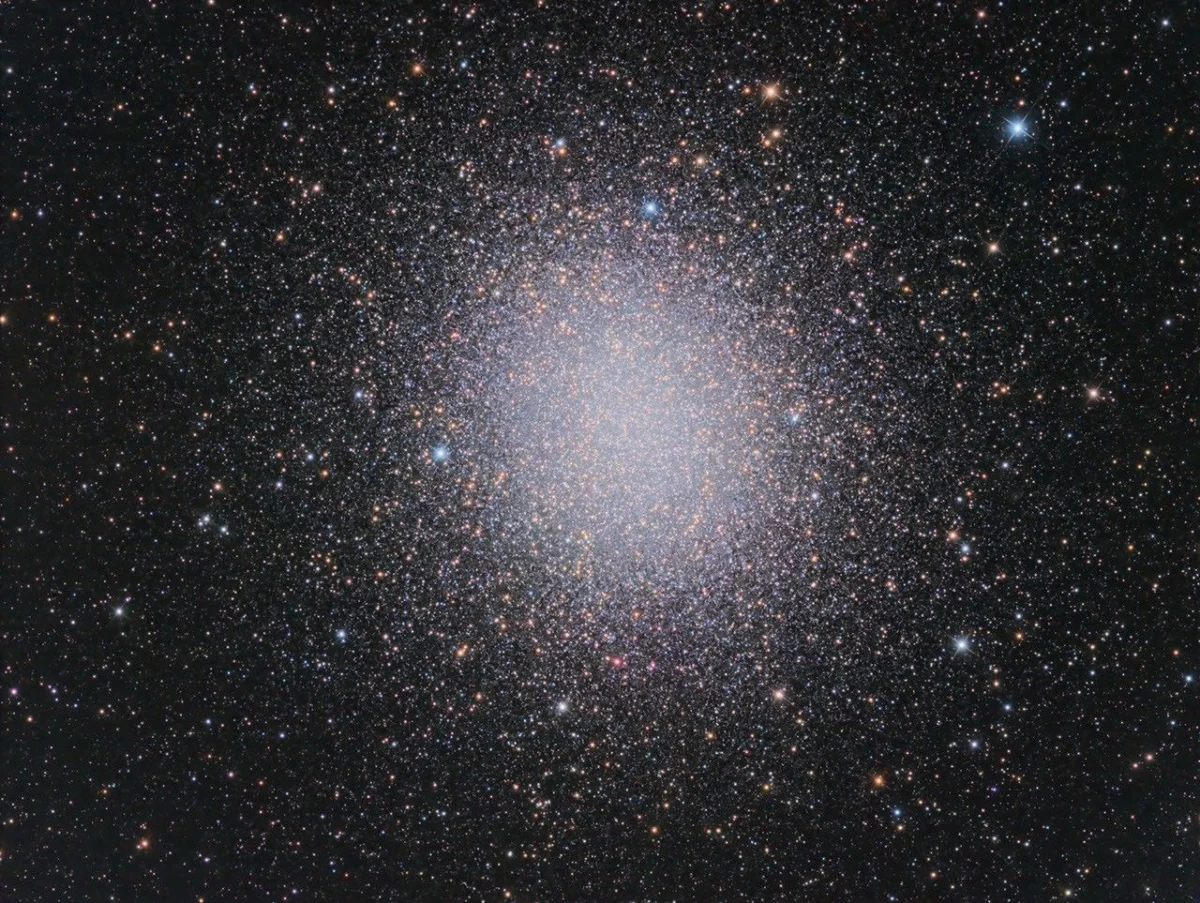
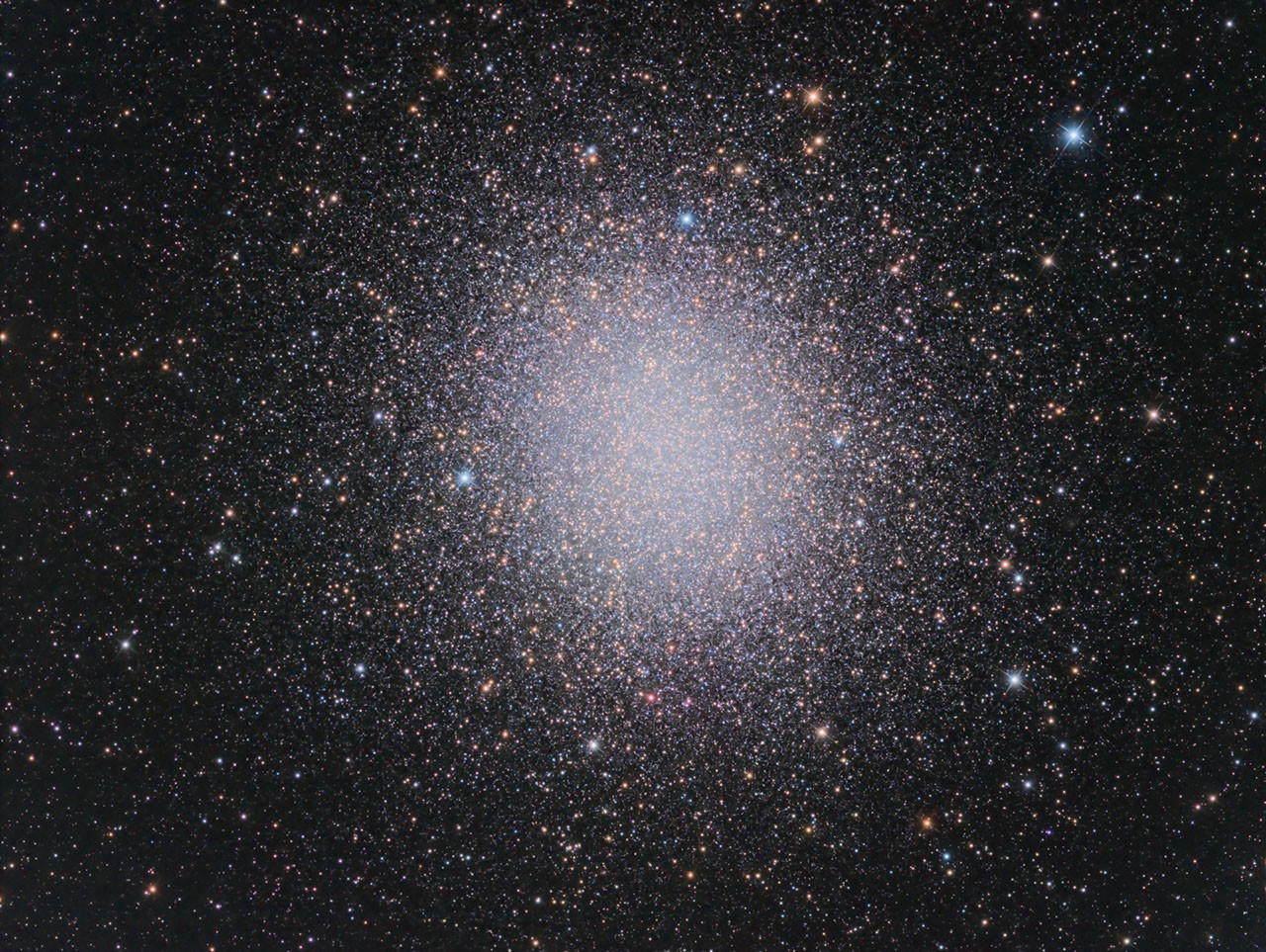
Omega Centauri, cataloged officially as NGC 5139, stands as the most magnificent and massive globular cluster orbiting the Milky Way galaxy. Located approximately 15,000 light-years from Earth, this celestial titan is a densely packed swarm of roughly 10 million stars contained within a sphere spanning 150 light-years in diameter. Recent high-resolution telescopic observations, including ongoing data analysis from the Hubble Space Telescope, have reignited scientific interest in this cluster, which continues to challenge our fundamental understanding of how star clusters evolve and how galaxies assemble over cosmic time.
The Anatomy of a Galactic Titan
Globular clusters are typically defined by their uniformity. They are usually composed of stars that formed simultaneously from the same cloud of gas and dust, resulting in a homogenous population of stars with nearly identical chemical compositions and ages. Omega Centauri, however, is a glaring exception to this rule. Astronomers have identified multiple distinct stellar populations within the cluster, characterized by varying ages and chemical abundances. This complexity suggests that Omega Centauri is not a standard star cluster but rather an anomaly with a much more violent and interesting origin story.
The visual brilliance of the cluster is dominated by its aging red giant stars, which impart a distinct yellowish hue to the region. These stars are in the twilight of their lifespans, having exhausted the hydrogen fuel in their cores and expanded significantly. Their presence provides a roadmap for astronomers to date the cluster, as their evolutionary stages are well-understood through stellar modeling.
A Chronology of Discovery and Scientific Analysis
The study of Omega Centauri has spanned centuries, evolving from early telescopic surveys to modern, multi-wavelength space-based observations.
In the 17th century, the object was first identified as a singular, star-like entity—hence its name, which follows the Bayer designation system. It was not until the 19th century that astronomers, utilizing increasingly powerful optics, began to resolve the individual stars within the cluster, confirming its status as a globular aggregate rather than a single star or a nebula.
The 20th century brought about the era of modern astrophysics, where spectroscopy allowed researchers to analyze the chemical fingerprints of the cluster’s stars. This led to the discovery of the "metallicity spread"—the finding that some stars in the cluster were significantly more enriched with heavy elements than others. This finding was the first major clue that Omega Centauri might not be a native inhabitant of the Milky Way.
Over the last two decades, the Hubble Space Telescope has revolutionized our understanding of the cluster’s core. By tracking the motion of thousands of individual stars within the heart of the cluster, researchers have uncovered evidence for an intermediate-mass black hole. This finding, published in leading astronomical journals, suggests that the cluster possesses a gravitational anchor that is far more massive than what would be expected from a simple collection of stars.
Supporting Data and Statistical Significance
To grasp the scale of Omega Centauri, one must consider its position within the Milky Way’s halo. While the galaxy hosts roughly 200 globular clusters, Omega Centauri is the undisputed heavyweight champion.
- Total Mass: Estimated to be several million solar masses.
- Stellar Count: Approximately 10 million stars.
- Diameter: Approximately 150 light-years.
- Distance from Earth: Roughly 15,000 light-years.
- Orbital Mechanics: It follows a retrograde orbit around the Milky Way, further supporting the theory that it was captured rather than formed in situ.
The chemical diversity observed within the cluster—specifically the presence of stars with varying levels of iron and other heavy metals—indicates that the cluster has experienced multiple generations of star formation. In a standard globular cluster, the first generation of stars would have consumed the available gas or blown it away with stellar winds, preventing subsequent generations. The fact that Omega Centauri sustained star formation for billions of years is a hallmark of a larger, gravitationally significant structure, such as a dwarf galaxy.
The Remnant Core Theory
The prevailing scientific consensus is that Omega Centauri is the remnant core of a dwarf galaxy that was cannibalized by the Milky Way billions of years ago. As the Milky Way’s immense gravity pulled the dwarf galaxy into its orbit, the outer stars were stripped away, leaving behind only the most dense, central core: the cluster we see today.
This hypothesis aligns with current models of hierarchical galaxy formation, which suggest that large galaxies like the Milky Way grew to their current size by consuming smaller neighbors. Omega Centauri serves as a "living fossil" of this process, providing a rare opportunity for astronomers to study the internal structure of a dwarf galaxy that would otherwise be lost to history.
Implications for Black Hole Research
The identification of a potential intermediate-mass black hole (IMBH) at the center of Omega Centauri carries significant implications for the broader study of cosmic evolution. While stellar-mass black holes (resulting from the collapse of single stars) and supermassive black holes (residing in the centers of large galaxies) are well-documented, the "missing link"—intermediate-mass black holes—remains elusive.
If confirmed, the black hole in Omega Centauri would suggest that IMBHs are common in the cores of ancient, stripped-down galactic remnants. This would provide a missing piece of the puzzle regarding how supermassive black holes grow over time, potentially through the merger of smaller black holes found in captured dwarf galaxies.
Institutional Shifts and Public Outreach
As interest in the cosmos continues to grow, NASA has taken steps to modernize the way it shares these discoveries. The Astronomy Picture of the Day (APOD) program, which has served as a gateway to space education for decades, is currently migrating its primary digital infrastructure. The transition from its original web domain to the integrated NASA science portal signifies a shift toward a more centralized, data-driven approach to public communication.
This digital migration ensures that the high-resolution imagery and detailed scientific explanations, such as those documenting the nuances of Omega Centauri, remain accessible to students, researchers, and the general public. These updates are vital, as they ensure that the legacy of discovery—from the early days of telescope building to the modern era of the Hubble and James Webb Space Telescopes—is preserved and searchable for future generations.
Broader Scientific Impact
The study of Omega Centauri is not merely an exercise in cataloging distant lights; it is a fundamental pillar of galactic archaeology. By examining the chemical abundances, the orbital dynamics, and the central gravitational signature of this cluster, researchers are effectively reconstructing the history of our own galaxy.
The lessons learned from Omega Centauri are being applied to other clusters in the Local Group, helping astronomers identify other potential "captured" objects. This broader investigation is essential for determining the "accretion history" of the Milky Way. Each cluster with a unique population, a strange orbit, or a complex central structure acts as a data point in a grander model of how the universe structures itself on a galactic scale.
Furthermore, the technological challenges associated with imaging the center of such a dense cluster drive innovation in image processing and adaptive optics. The need to resolve millions of stars in a crowded field has pushed the boundaries of what is possible with current instrumentation, fostering advancements that benefit other fields of observational astronomy.
Future Outlook
As we look toward future observations, the scientific community expects further refinements in our understanding of Omega Centauri. Upcoming missions and ground-based upgrades are expected to provide even more precise measurements of the cluster’s internal dynamics. These observations will likely confirm the precise nature of the central black hole and provide a more granular look at the various stellar populations within the cluster.
The story of Omega Centauri is one of transformation—from a dwarf galaxy to a wandering cluster, and eventually to the brightest, most fascinating jewel in the Milky Way’s halo. It remains a testament to the violent, dynamic, and beautiful processes that have shaped the universe since the dawn of time. As technology continues to improve, our ability to peel back the layers of this cluster will only sharpen, offering further insights into the complex history of the cosmic neighborhood we call home. Through the meticulous work of astronomers and the continued support of public science initiatives, the mystery of NGC 5139 remains a focal point for our quest to understand the origins and evolution of the galaxy.