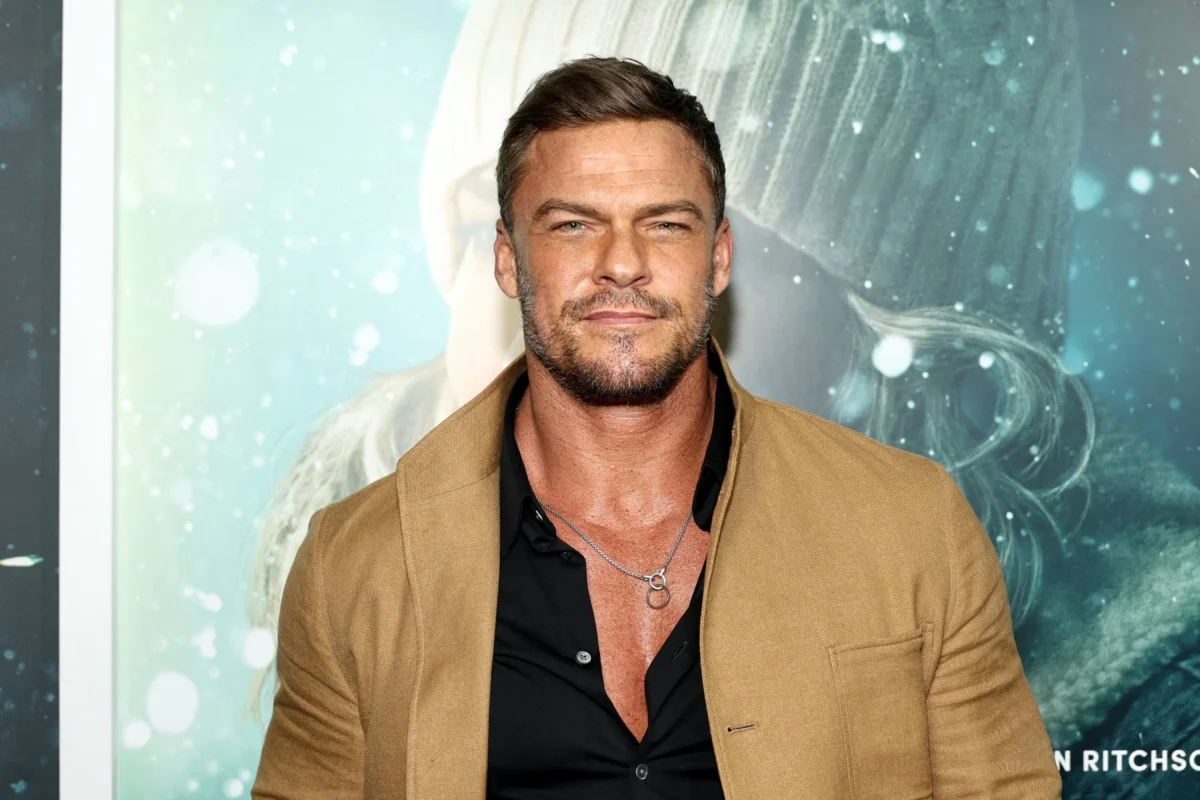
The White House has issued a formal rebuttal following a series of highly critical remarks made by Alan Ritchson, the star of the hit Amazon Prime Video series Reacher, regarding President Donald Trump’s handling of the Jeffrey Epstein investigation and the subsequent release of related documents. The exchange, which has ignited a firestorm across social media and political circles, highlights the ongoing public tension surrounding the legacy of the late convicted sex offender and the degree of transparency provided by the federal government. Ritchson, during a recent appearance on the Happy Sad Confused podcast, used pointed and profane language to demand the full disclosure of the "Epstein files," accusing the administration of shielding individuals associated with the disgraced financier.
In response to the viral interview, White House spokeswoman Abigail Jackson released a statement to Entertainment Weekly and other major outlets, firmly defending the president’s record. Jackson asserted that the president has been "totally exonerated" of any wrongdoing regarding his past acquaintance with Epstein and emphasized that the current administration has taken unprecedented steps to provide closure for the victims. The statement pointed to the signing of the Epstein Files Transparency Act and the release of thousands of pages of documents as evidence of the president’s commitment to the rule of law.
The Catalyst: Ritchson’s Podcast Appearance
The controversy began when Alan Ritchson, who is currently promoting his role in the film Ordinary Angels alongside his continued success as Jack Reacher, joined host Josh Horowitz on the Happy Sad Confused podcast. While the interview initially covered Ritchson’s career trajectory and his experiences in the industry, the conversation shifted toward politics and the actor’s personal views on government accountability.
Ritchson expressed intense frustration over the pace at which documents related to Jeffrey Epstein’s sex-trafficking ring are being made public. He specifically called out President Trump, using harsh epithets and demanding the immediate release of all records. "The Epstein files, the fucking Epstein files!" Ritchson exclaimed during the recording. "Goddamn it! Where are they? It’s a fucking law, bitch. Show it. You fucking pedophiles!"
The actor’s tirade extended to a broader critique of the political establishment, suggesting that there is a concerted effort to protect powerful figures who may be implicated in the files. Ritchson claimed that if he were in a position of power, he would "railroad" those standing in the way of transparency. "I would get those Epstein files out in two seconds," he said. "I don’t care what room they’re in, bitch, move. Give me the fucking manila envelope." His comments tapped into a vein of public skepticism regarding the completeness of the document dumps that have occurred over the last several years.
The Official Response from the White House
The White House’s decision to respond directly to a Hollywood actor underscores the sensitivity of the Epstein narrative in contemporary American politics. Abigail Jackson’s statement sought to frame President Trump not as an associate of Epstein, but as the primary architect of the transparency efforts that have brought the case back into the spotlight.
"Just as President Trump has said, he’s been totally exonerated on anything relating to Epstein," Jackson’s statement read. She further detailed the administration’s actions, noting that the president has cooperated with the House Oversight Committee’s subpoena requests and has actively called for investigations into "Epstein’s Democrat friends." By positioning the president as a champion for the victims, the White House aimed to neutralize Ritchson’s narrative that the administration is complicit in a cover-up.
Jackson specifically cited the Epstein Files Transparency Act, a legislative measure designed to streamline the declassification of records held by federal agencies. According to the White House, this act has been the catalyst for the release of thousands of pages of testimony, flight logs, and investigative notes that were previously under seal. The administration argues that the legal complexities of unsealing documents involving third-party privacy rights are the primary reason for any perceived delays, rather than political interference.
Background Context: The Ongoing Saga of the Epstein Files
The "Epstein files" primarily refer to documents originating from a 2015 civil lawsuit filed by Virginia Giuffre, an Epstein survivor, against Ghislaine Maxwell. While the lawsuit was settled in 2017, the documents remained under seal for years. The process of unsealing these records began in earnest following Epstein’s death in a federal Manhattan jail in 2019 and Maxwell’s subsequent conviction in 2021.
Throughout 2024 and 2025, successive waves of document releases have provided a clearer picture of the scale of Epstein’s operation. These records have included names of high-profile associates, world leaders, and celebrities who visited Epstein’s private island or traveled on his aircraft. However, the presence of a name in the files does not inherently imply criminal wrongdoing, a distinction that legal experts and the White House have frequently emphasized.
The public’s appetite for the full truth remains high, fueled by the fact that many individuals mentioned in the files have not faced legal repercussions. While the United Kingdom saw significant legal and political fallout in 2025 and early 2026—leading to high-profile resignations and investigations—the United States has seen a more stagnant legal landscape. To date, there have been no new major arrests in the U.S. directly tied to the information revealed in the recent document unsealings, a fact that Ritchson highlighted as a failure of the justice system.
A History of Association and Distancing
The relationship between Donald Trump and Jeffrey Epstein has been a subject of media scrutiny for decades. In the 1990s and early 2000s, both men were fixtures of the New York and Palm Beach social scenes. Trump famously told New York Magazine in 2002 that Epstein was a "terrific guy" who liked beautiful women as much as he did.
However, the two reportedly had a falling out in 2004 over a real estate deal in Palm Beach. Since Epstein’s initial arrest in Florida in 2008, Trump has consistently distanced himself from the financier. During his presidency and subsequent term, Trump has maintained that he was never a part of Epstein’s "inner circle" and has denied all allegations of misconduct. The White House’s recent statement reiterates this stance, framing any past association as superficial and long-concluded.
Analysis of Implications: Celebrity Activism and Political Rhetoric
Alan Ritchson’s decision to speak out reflects a growing trend of "tough-guy" celebrity personas engaging in aggressive political discourse. Ritchson, whose portrayal of Jack Reacher—a character defined by a relentless pursuit of vigilante justice—has made him a symbol of moral clarity for many viewers, is using that platform to demand a similar brand of justice in the real world.
His rhetoric, while laden with profanity, mirrors a broader populist frustration with the perceived "two-tiered" justice system in America. By framing the Epstein files as a matter of "holding people accountable," Ritchson aligns himself with a segment of the electorate that feels the political elite are untouchable.
Conversely, the White House response serves a dual purpose. It defends the president’s personal reputation while also attempting to pivot the conversation toward the legislative accomplishments of the administration. By mentioning "Epstein’s Democrat friends," the White House is also utilizing the controversy to score political points against its opposition, suggesting that any further revelations would be more damaging to the president’s rivals than to the president himself.
Timeline of Recent Developments
- August 2019: Jeffrey Epstein dies in federal custody; the Department of Justice vows to continue the investigation into his associates.
- December 2021: Ghislaine Maxwell is convicted of sex trafficking and related charges.
- January 2024: A major tranche of documents from the Giuffre v. Maxwell case is unsealed, revealing names of numerous high-profile figures.
- Mid-2025: The Epstein Files Transparency Act is signed into law, mandating a faster review process for remaining classified materials.
- Late 2025 – Early 2026: Significant legal actions take place in the U.K. based on new evidence found in the files; U.S. authorities face criticism for a lack of similar action.
- February 2024 (Contextual Reference): Ritchson attends the premiere of Ordinary Angels, maintaining a high public profile.
- Recent Days: Ritchson’s Happy Sad Confused interview goes viral, prompting the official White House response.
The Path Forward for Transparency
As the debate continues, the focus remains on the remaining documents that have yet to be released. While the White House maintains that it has done more than any previous administration to ensure transparency, critics like Ritchson argue that as long as names remain redacted and "manila envelopes" remain hidden, the work is unfinished.
Legal experts suggest that the final stages of the document release will be the most difficult, as they involve intense legal battles over the privacy of individuals who may have been mentioned incidentally or who are victims themselves. The Department of Justice continues to review the files for potential criminal leads, though the window for prosecution in many cases may be closing due to statutes of limitations.
For Alan Ritchson, the issue is not merely one of legal procedure but of moral imperative. His outburst, while controversial for its delivery, has successfully forced the highest levels of government to address an issue that many Americans feel has been swept under the rug. Whether this public pressure will lead to the "railroading" of suspects that Ritchson envisions remains to be seen, but the spotlight on the Epstein files is now brighter than ever.