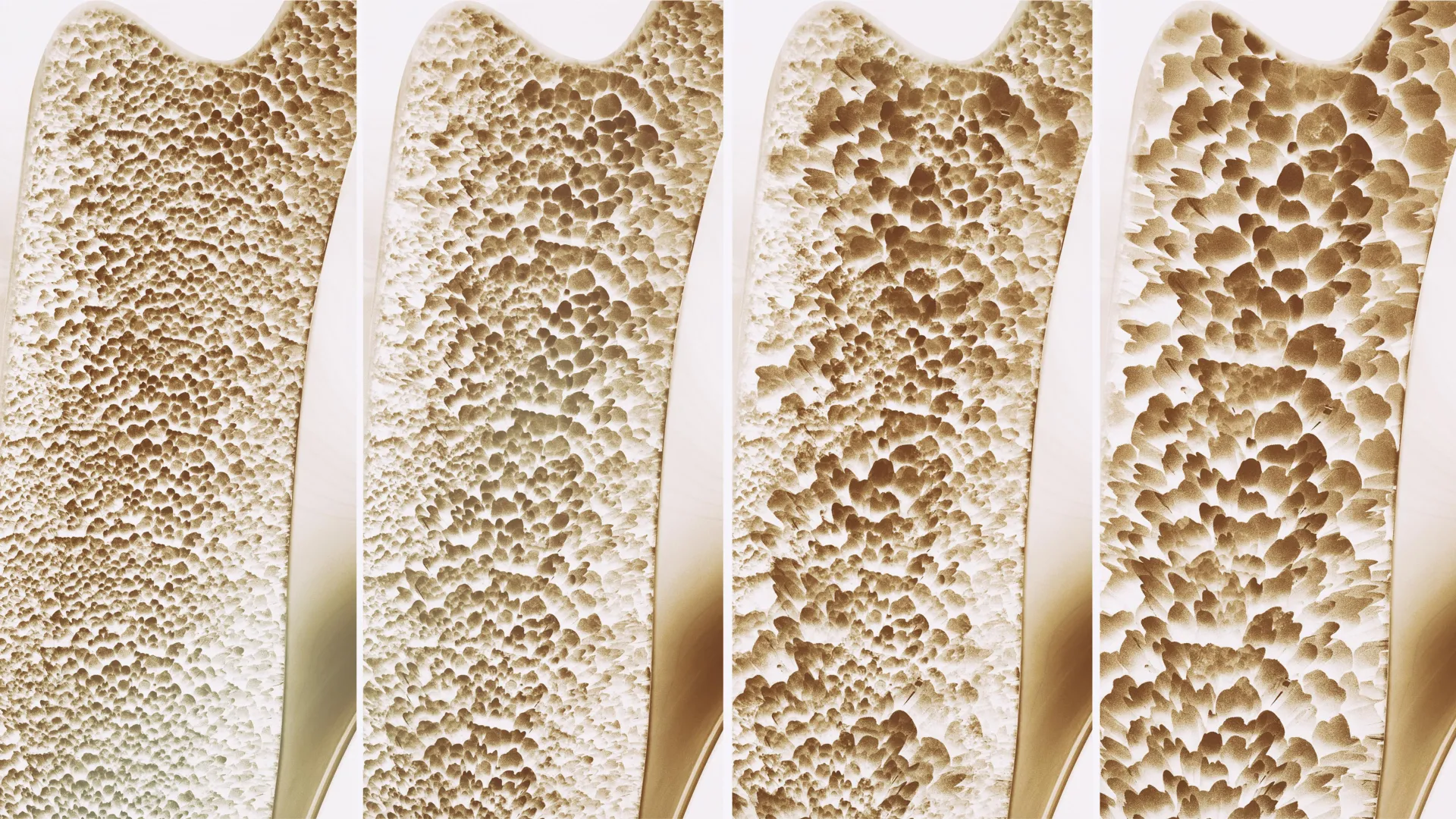
Osteoporosis, a debilitating condition characterized by the progressive loss of bone mineral density and structural integrity, remains one of the most pressing challenges in geriatric medicine. With an estimated six million individuals affected in Germany alone—the vast majority being women—the condition serves as a silent epidemic that significantly impairs the quality of life for an aging global population. Because current pharmacological interventions often carry long-term risks or limited efficacy, the search for novel biological targets has intensified. Recent research conducted at Leipzig University has identified a promising candidate: the GPR133 receptor, a member of the adhesion G protein-coupled receptor (GPCR) family, which appears to act as a crucial regulator of bone homeostasis.
The Global Burden of Bone Fragility
The clinical significance of bone health cannot be overstated. According to the International Osteoporosis Foundation, one in three women and one in five men over the age of 50 will experience an osteoporotic fracture in their lifetime. These fractures, particularly those involving the hip and spine, are associated with increased mortality, chronic pain, and a loss of functional independence.
Current gold-standard treatments often fall into two categories: antiresorptive agents, which slow down the removal of bone, and anabolic agents, which stimulate bone formation. However, many of these therapies are restricted by strict duration limits due to side effects, such as atypical femoral fractures or osteonecrosis of the jaw. The discovery by the team at the Rudolf Schönheimer Institute of Biochemistry suggests that by targeting GPR133, clinicians might eventually possess a method to simultaneously bolster bone formation and inhibit bone resorption, potentially offering a more sustainable long-term therapeutic strategy.
Deciphering the Role of GPR133
GPR133 belongs to the adhesion GPCR family, a complex group of cell-surface proteins known for their large extracellular domains. These receptors act as molecular bridges, sensing physical forces and chemical signals from the cellular microenvironment. Until now, the specific physiological function of GPR133 within the skeletal system remained largely obscure.
The research team, led by Professor Ines Liebscher, began their investigation by examining the consequences of GPR133 deficiency. Their findings were striking: mice lacking the functional receptor exhibited premature bone density loss, mimicking the clinical progression of osteoporosis in humans. This genetic evidence provided the foundational proof that GPR133 is not merely a bystander but an active participant in maintaining skeletal integrity.
By employing a computer-assisted screening process, the scientists identified a small molecule, AP503, which functions as a potent stimulator of the GPR133 receptor. Subsequent trials involving both healthy mice and those modeling osteoporotic conditions demonstrated that systemic administration of AP503 led to a significant increase in bone strength. The substance appears to mimic the receptor’s natural activation process, essentially "turning on" the signaling pathways that favor bone accretion over degradation.
The Mechanism of Bone Remodeling
To understand how AP503 exerts its effects, one must look at the cycle of bone remodeling. Skeletal tissue is in a state of constant flux, mediated by two primary cell types: osteoblasts, which are responsible for synthesizing bone matrix, and osteoclasts, which resorb or break down old bone tissue. In a healthy adult, these two processes are tightly coupled. In osteoporosis, however, this balance is disrupted, with resorption outpacing formation.
The activation of GPR133 via AP503 appears to recalibrate this equilibrium. By stimulating the receptor, researchers observed an upregulation in the activity of osteoblasts, effectively increasing the rate of new bone synthesis. Concurrently, the treatment modulated the behavior of osteoclasts, curbing their destructive activity. This dual-action mechanism is highly sought after in pharmacology, as it addresses the structural deficit of the bone directly rather than simply slowing down its decline.
Chronology of the Leipzig Breakthrough
The success of this study is the culmination of over a decade of concentrated research at Leipzig University. The institution has long been a global epicenter for the study of GPCRs, largely driven by the Collaborative Research Center (CRC) 1423, which focuses on the structural dynamics of these receptors.
- 2014–2020: The CRC 1423 is established, prioritizing the mapping of adhesion GPCRs and their roles in various biological systems.
- 2023: Initial screenings for GPR133 ligands begin, utilizing advanced computational modeling to predict which molecules might interact with the receptor’s unique structure.
- 2024: The discovery of AP503 as a viable stimulator of GPR133 allows for the first successful in vivo tests.
- 2025: Published results confirm that AP503 increases bone strength in animal models, establishing a clear link between GPR133 and skeletal health.
Beyond the Skeleton: The Muscle-Bone Crosstalk
Perhaps the most compelling aspect of the Leipzig findings is the systemic nature of the AP503 intervention. In a separate, earlier study, the research team identified that GPR133 activation also leads to the strengthening of skeletal muscle. This dual effect is particularly relevant for the elderly, a demographic frequently suffering from sarcopenia (the loss of muscle mass) alongside osteoporosis.
Dr. Juliane Lehmann, lead author of the study, emphasized the importance of this multi-tissue impact. "The newly demonstrated parallel strengthening of bone once again highlights the great potential this receptor holds for medical applications in an aging population," she stated. By potentially addressing both musculoskeletal tissues simultaneously, a treatment based on GPR133 activation could revolutionize the management of frailty syndromes, where bone fragility and muscle weakness combine to cause falls and fractures.
Clinical Implications and Future Directions
The transition from murine models to human clinical trials is a long and rigorous process, but the implications of the GPR133 pathway are profound. If researchers can replicate the results of AP503 in human subjects, it could offer a therapeutic option for postmenopausal osteoporosis, where the rapid decline of estrogen levels leaves women particularly vulnerable to bone loss.
Furthermore, the specificity of GPR133 suggests that treatments might be targeted more effectively than existing systemic therapies. However, the team remains cautious, emphasizing that further research is required to understand the full range of GPR133 functions throughout the human body. As the Leipzig researchers continue their follow-up projects, the scientific community will be watching to see how the receptor’s role in other disease states might be elucidated.
A Legacy of Excellence in GPCR Research
The prestige of Leipzig University in this field is not accidental. The university’s commitment to structural biology and the dynamics of cell signaling has fostered an environment where complex, long-term questions—such as the role of orphan receptors—can be systematically addressed. The work on GPR133 is a testament to the power of interdisciplinary collaboration, combining computational biology, biochemistry, and clinical physiology.
As the global population continues to age, the demand for innovative, high-efficacy, and low-toxicity treatments for chronic conditions like osteoporosis will only grow. While a commercial therapy based on GPR133 stimulation is still in the research and development pipeline, the identification of this target marks a milestone in the effort to maintain the physical autonomy of millions. By bridging the gap between basic research and potential clinical application, the Leipzig team has provided a clear, evidence-based pathway toward a future where bone loss is not an inevitable consequence of aging, but a manageable condition.
For now, the next phase of research will focus on the long-term safety profile of GPR133 stimulation and the exploration of whether the receptor’s signaling pathways can be harnessed for other systemic disorders. As the scientific community digests these findings, the focus remains on the promise of AP503 to transform the landscape of geriatric health care, proving once again that the most effective solutions to modern medical challenges often begin at the cellular level.