The universe, in its current state of expansion, is a vast and dynamic entity, but its ultimate fate has long been a subject of profound scientific inquiry. For decades, the prevailing scientific consensus has leaned towards a scenario of perpetual expansion, culminating in a "heat death" where all energy dissipates and the universe becomes cold, dark, and devoid of activity. However, a once-popular, elegant, and now potentially resurgent idea known as cyclic cosmology, or the "big bounce," suggests a far more cyclical existence for the cosmos. This theory posits that the universe will not only expand but will eventually contract, collapsing back upon itself before igniting anew in another Big Bang. Columnist Leah Crane explores the fascinating trajectory of this idea, its historical prominence, its decline, and its potential resurgence, fueled by groundbreaking new data.
The allure of cyclic cosmology lies in its inherent symmetry and its ability to sidestep some of the most perplexing cosmological questions. If the universe undergoes an endless cycle of expansion and contraction, the vexing problem of what existed before the Big Bang, or what initiated it, becomes less critical. This philosophical neatness has long been a strong draw for many cosmologists.
A Historical Perspective: From Popularity to Obscurity
The concept of a cyclical universe is not a new one. It gained significant traction in the mid-20th century, captivating scientists with its theoretical elegance. However, this period of favour was not to last. A series of observational and theoretical developments gradually eroded its standing within the scientific community.
A pivotal moment in the decline of cyclic cosmology arrived with the discovery of dark energy and the subsequent revelation that the universe’s expansion is not only ongoing but is actually accelerating. This groundbreaking work, led by figures like Adam Riess, a Nobel laureate for his contributions to understanding dark energy, provided strong evidence against a universe that would eventually reverse its expansion due to gravity. The observed acceleration suggests that a force, now known as dark energy, is overpowering gravitational attraction on cosmic scales, driving galaxies further apart at an ever-increasing rate.
Catherine Heymans, the Astronomer Royal for Scotland, articulated this challenge during a recent New Scientist subscriber event. She explained, "Unfortunately, all of the measurements that we make tell us that there just isn’t enough mass in the universe to pull it back together. At the moment, the evidence is pointing towards a very cold and sad and empty death for our universe." This perspective aligns with the widely accepted "heat death" scenario, where the universe gradually cools down as its entropy increases, eventually reaching a state of maximum disorder and thermal equilibrium.
Beyond the challenge posed by accelerating expansion, cyclic cosmology faced other theoretical hurdles. Chief among these were issues related to the recycling of matter, energy, and, critically, entropy across cosmic cycles. The second law of thermodynamics dictates that entropy, a measure of disorder, can never decrease in a closed system. In an expanding universe, entropy naturally increases over time, aligning with this fundamental law. However, a contracting universe would seemingly imply a decrease in entropy, a direct contradiction.
Navigating the Entropy Paradox
Scientists have proposed various theoretical frameworks to reconcile cyclic cosmology with the second law of thermodynamics. One approach involves "pushing the problem off" into the inter-cycle period. If each subsequent expansion phase is slightly larger than the last, the overall entropy could still be increasing across multiple cycles. However, extrapolating this far back or forward in time still leads to a Big Bang singularity at the beginning and a heat death at the end, albeit through a more complex, stepwise progression.
A more sophisticated and intriguing attempt to circumvent the entropy problem was popularized in the 2010s by the renowned theoretical physicist Roger Penrose. His model, known as conformal cyclic cosmology (CCC), offers a novel perspective on the transition between cosmic epochs. Penrose’s theory posits that at the extreme end of a universe’s expansion, when it has become incredibly cold, dilute, and uniform, its state becomes mathematically equivalent to the state at the very beginning of a new Big Bang. In this scenario, the end of one cosmic "aeon" effectively seeds the beginning of the next.
Penrose’s CCC suggests that as the universe expands and matter decays, eventually all that remains are massless particles, such as photons, adrift in an almost perfectly empty spacetime. According to the principles of conformal geometry, such an infinitely expanded and uniform universe can be conformally mapped to a universe that is just beginning its expansion. This mathematical equivalence, if correct, would mean that the extreme conditions at the end of one cycle provide the necessary conditions for the initiation of another. While CCC has been proposed as a potential solution to the entropy problem, it remains a niche theory, difficult to test empirically. Penrose has suggested potential observational signatures, such as specific patterns in the cosmic microwave background radiation, but these have largely been met with skepticism by the broader cosmological community.

The Rise of DESI and the Shifting Landscape of Dark Energy
For years, the idea of a cyclical universe remained on the fringes of mainstream cosmology, overshadowed by the compelling evidence for a perpetually expanding cosmos destined for heat death. However, recent developments have begun to shift this landscape, potentially breathing new life into cyclic models.
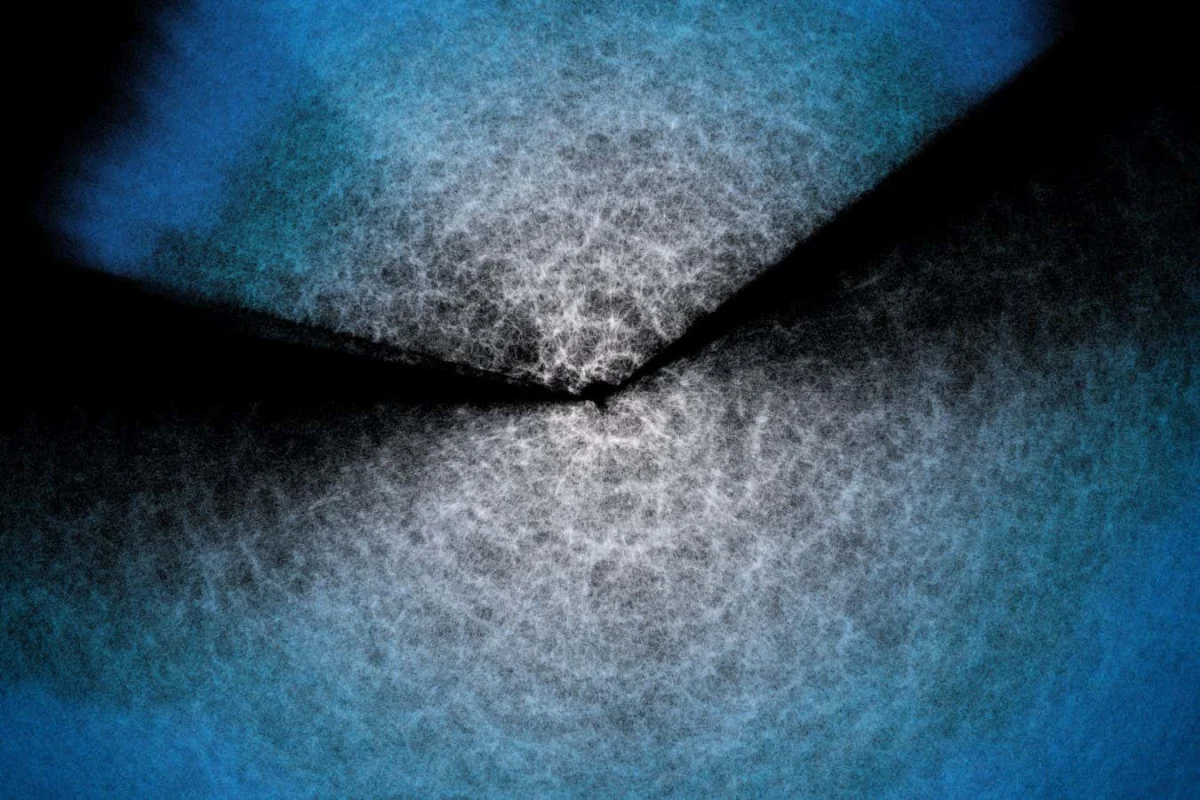
The Dark Energy Spectroscopic Instrument (DESI) is a revolutionary project that has generated the largest and most detailed 3D map of the universe ever created. This ambitious survey, utilizing the Mayall 4-meter Telescope at Kitt Peak National Observatory, has been meticulously mapping the positions and movements of millions of galaxies. The primary goal of DESI is to understand the nature of dark energy, the mysterious force driving the universe’s accelerated expansion.
The initial findings from DESI have yielded a startling revelation: dark energy, far from being a constant and ever-strengthening force, appears to be weakening. This means that the universe’s acceleration is not only continuing but is actually slowing down. While this does not imply an immediate reversal of expansion, it represents a profound departure from previous assumptions and opens the door to a wider range of future cosmic scenarios.
Catherine Heymans, speaking at the aforementioned event, highlighted the significance of this discovery: "What could be causing dark energy to change could mean that in another 10 billion years’ time, dark energy weakens so much that it does reverse and it does pull everything back in on itself, which would be lovely." This observation directly challenges the long-held prediction of a perpetual, accelerating expansion leading to a cold, empty universe.
Implications and the Future of Cosmic Fate
The weakening of dark energy, as suggested by DESI data, has far-reaching implications for our understanding of the universe’s ultimate fate. It revitalizes interest in theories that were previously deemed unlikely, including various forms of cyclic cosmology. If dark energy can indeed weaken, it opens up the possibility that gravity could eventually regain dominance, leading to a cosmic contraction and a subsequent Big Bounce.
Adam Riess, reflecting on the uncertainty surrounding dark energy, stated, "Without understanding the nature of the dark energy that’s driving the present acceleration, it’s very difficult to extrapolate it into the future. Will it weaken? I would say all bets are off about the future." This sentiment underscores the current state of cosmological research: a period of exciting discovery and profound uncertainty.
The fact that we understand so little about dark energy, which constitutes approximately 70% of the universe’s mass-energy content, highlights the vast unknowns in our cosmic model. Identified less than 30 years ago, dark energy’s fundamental nature remains elusive, making predictions about its long-term behavior highly speculative. However, this very ignorance, coupled with the new DESI data, provides fertile ground for theoretical exploration.
While the "heat death" scenario remains the most widely accepted prediction, the possibility of a Big Bounce, once relegated to the realm of historical hypotheses, is now being re-examined. The elegant symmetry and the potential to explain the origin of the universe without resorting to a singular, uncaused event make cyclic cosmology an increasingly attractive, albeit speculative, alternative.
The current scientific landscape suggests a pivotal moment in cosmology. The data from DESI has provided a tantalizing glimpse into the dynamic nature of dark energy, forcing a re-evaluation of our predictions for the universe’s future. Whether this leads to a definitive confirmation of cyclic cosmology or the development of entirely new frameworks for understanding our cosmic destiny remains to be seen. However, for the first time in many decades, the idea of a universe that not only dies but is reborn, is once again a subject of serious scientific consideration, suggesting that the grand narrative of the cosmos might be far more cyclical than we previously imagined. The universe, it seems, may indeed be poised for a rebound.