OpenAI, the artificial intelligence research and deployment company, has ventured into the hardware market with the unveiling of its first-ever physical product: "Micro." This compact keypad, developed in collaboration with specialist keyboard designer Work Louder, is designed to seamlessly integrate with ChatGPT, aiming to streamline user interaction with the AI model. While positioned as a novelty for tech enthusiasts, the launch has been overshadowed by significant legal challenges and the revelation of broader hardware ambitions.
A New Frontier for AI Interaction
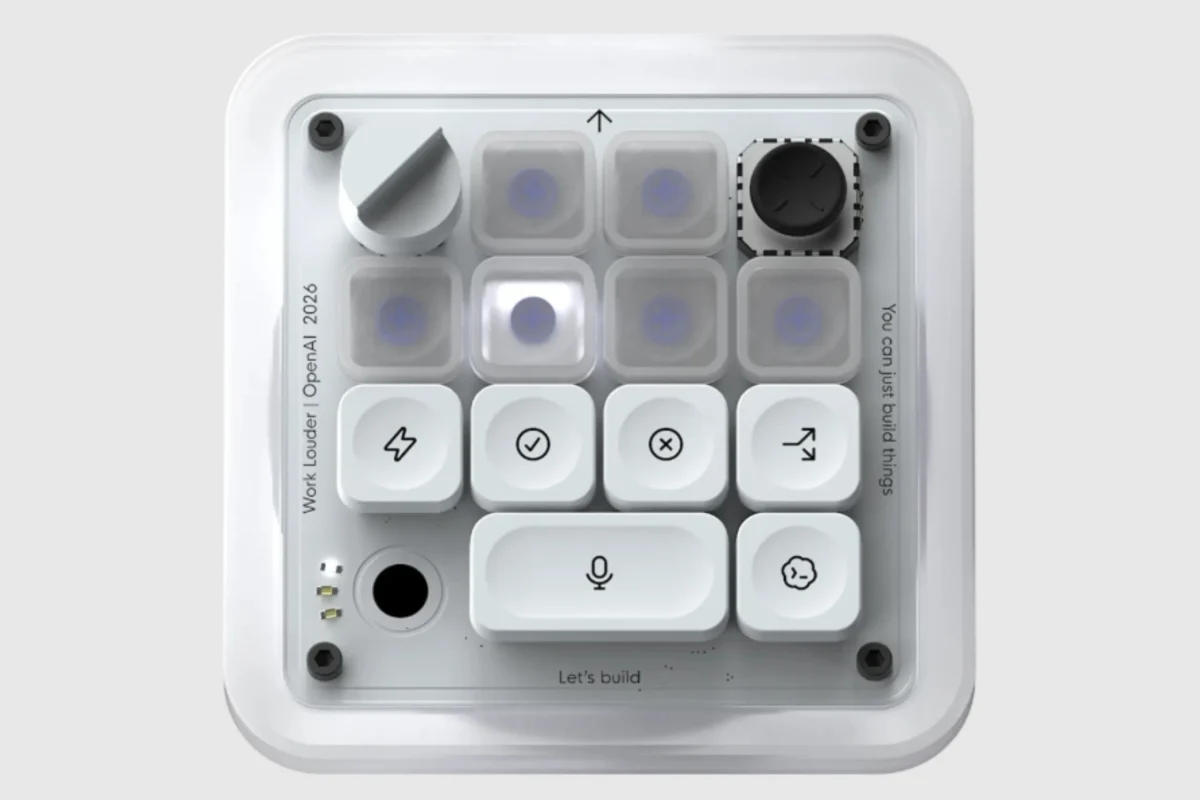
Micro is a meticulously crafted device, featuring six customizable "agent" keys at the top and six command keys below. These keys can be programmed to execute specific tasks within ChatGPT or its coding companion, Codex. Users can connect Micro to their computers via Bluetooth or a USB cable. The device boasts a solid build, described by early reviewers as substantial enough to double as a paperweight. Its packaging, an immaculate white box with a minimalist aesthetic, has drawn comparisons to Apple’s renowned design language, hinting at a deliberate branding strategy.
One of the most practical features of Micro is its dedicated voice dictation button. This allows users to simply speak their commands or queries into the device, which are then processed by ChatGPT. A nearby "send" button facilitates the submission of these requests. Customization of Micro occurs within the ChatGPT interface itself, where a dedicated tab enables users to adjust key brightness, assign specific commands, and manage projects linked to each key. The device also features color-coded LED lights to indicate the status of AI agents: white for idle, blue for processing, green for task completion, and red for errors, requiring users to learn and memorize this visual language.
A Rocky Entry into Hardware
OpenAI’s foray into hardware has not been without controversy. Several weeks prior to the Micro announcement, Apple filed a lawsuit against the AI lab, alleging trade secret theft. This legal action marks the beginning of what is anticipated to be a protracted legal dispute, the ramifications of which are still unfolding.
Adding to the intrigue, news emerged of another OpenAI hardware product in development: a screenless smart home speaker designed to work with ChatGPT. This project has reportedly been helmed by former Apple engineers, a detail that has undoubtedly intensified scrutiny given the ongoing legal battle with Apple. These developments suggest that OpenAI’s hardware ambitions extend far beyond the initial offering of Micro, pointing towards a more comprehensive strategy to integrate AI into physical devices.
Target Audience and Market Reception
The primary target audience for Micro appears to be "code monkeys" and dedicated ChatGPT power users – individuals deeply immersed in the AI ecosystem. The device is engineered to offer a more efficient and perhaps even enjoyable workflow for those who frequently interact with AI models for coding, content generation, or research.

However, the initial reception from the developer community has been decidedly mixed, with many expressing skepticism. Reviews on platforms like Reddit have largely been negative, with some users dismissing Micro as a "prank" or not a "real product." The $230 price tag has also been a significant point of contention. Independent reviews have criticized this cost, especially when compared to more affordable DIY macro pads and off-the-shelf alternatives. One particularly scathing review titled "OpenAI’s expensive macropad feels engineered to piss me off specifically" highlighted the perceived lack of value for money and the steep learning curve associated with programming and operating the device.
The core question for many potential users is whether Micro offers a genuinely superior user experience compared to simply using a laptop’s keyboard and mouse. The time and effort required to learn and program the device might outweigh the perceived benefits for individuals already proficient with conventional input methods.
Analysis of Implications and Future Outlook
The launch of Micro, while a novel step for OpenAI, raises several critical questions about the future of AI hardware interaction.
- The Human-AI Interface: Micro represents an attempt to create a more tangible and dedicated interface for AI, moving beyond the screen-based interactions that currently dominate. This could signal a broader trend towards specialized hardware designed to optimize specific AI workflows.
- Niche Product or Gateway to Mainstream? Currently, Micro appears to be a niche product catering to a highly specific user base. Its success will likely depend on its ability to demonstrate tangible efficiency gains and user satisfaction within this segment. Whether it can evolve into a more broadly appealing device remains to be seen.
- Hardware Ambitions and Strategic Partnerships: The involvement of Work Louder, a specialist in artisanal keyboard design, suggests a focus on quality and a premium user experience. The reported involvement of former Apple engineers in other hardware projects indicates a serious and potentially long-term commitment to developing a diverse range of physical AI products.
- Legal Hurdles and Brand Perception: The ongoing legal battle with Apple poses a significant risk to OpenAI’s hardware ambitions. A protracted lawsuit could not only drain resources but also damage brand perception and create uncertainty around future product releases. The comparison of Micro’s packaging to Apple’s could be seen as either a strategic nod to established design principles or a potentially problematic imitation in the context of legal disputes.
- The Value Proposition of Dedicated Hardware: In an era of increasingly powerful and versatile software, the justification for dedicated hardware often hinges on significant improvements in speed, efficiency, or user experience. For Micro to succeed, it must demonstrably offer these advantages, especially at its premium price point. The current sentiment suggests that for many, the learning curve and the cost do not yet align with the perceived benefits.
The User Experience: A Learning Curve with Potential Rewards
Despite the criticisms, early hands-on experience with Micro can reveal its potential. Once programmed, the keypad can offer a surprisingly enjoyable and efficient workflow. Assigning different ChatGPT sessions to specific keys allows for seamless toggling between various projects, and when combined with the dictation button, it can significantly enhance productivity and the overall user experience for those who are heavily invested in AI.
However, the learning curve is undeniable. Users must commit to memorizing the color-coded key statuses and mapping specific projects to individual keys. This investment of time and cognitive effort is a key factor in determining whether Micro becomes an indispensable tool or an expensive desk ornament.
The ultimate utility of Micro is intrinsically linked to the user’s reliance on ChatGPT. For individuals who do not use AI extensively in their daily workflow, the device might not offer sufficient value to justify the investment. Conversely, for the dedicated ChatGPT power user, particularly those who appreciate vintage-looking hardware with satisfyingly clicky buttons and have the disposable income, Micro could potentially be a worthwhile purchase that adds a touch of novelty and efficiency to their AI interactions. The $230 price tag, however, remains a significant barrier, and its justification will be heavily scrutinized against the backdrop of readily available and more affordable alternatives.
As OpenAI continues to navigate the complexities of hardware development, legal challenges, and evolving user expectations, the trajectory of Micro and its subsequent hardware ventures will be closely watched. The company’s ability to deliver on the promise of enhanced AI interaction through physical devices, while managing its legal entanglements, will be crucial in shaping its future as a player in both the software and hardware arenas.