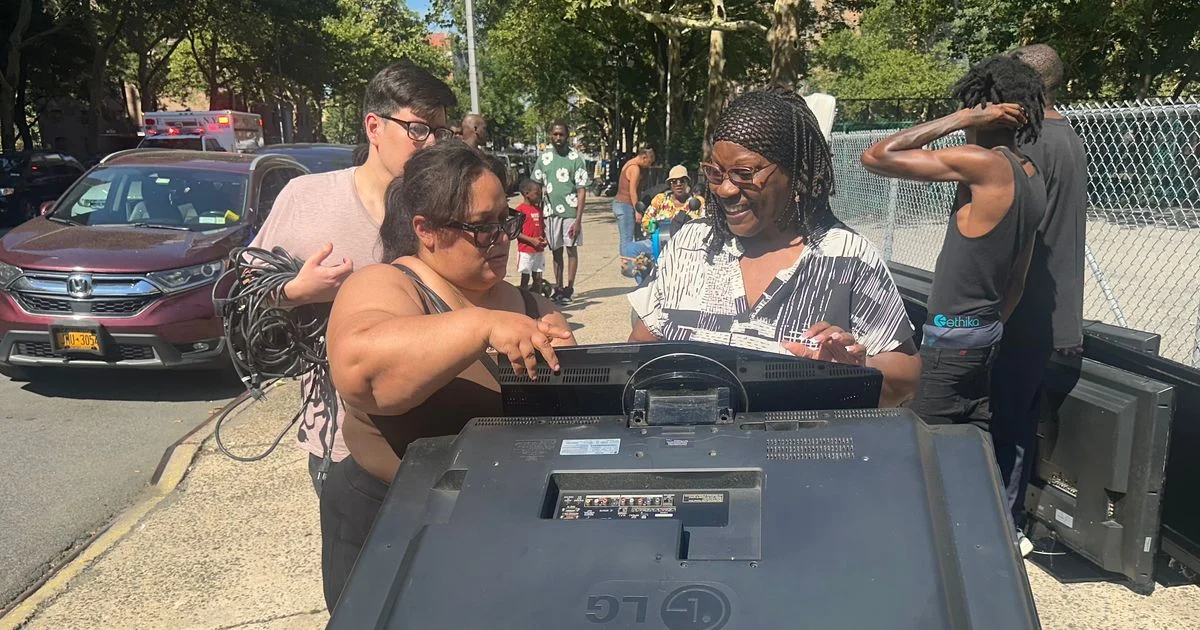
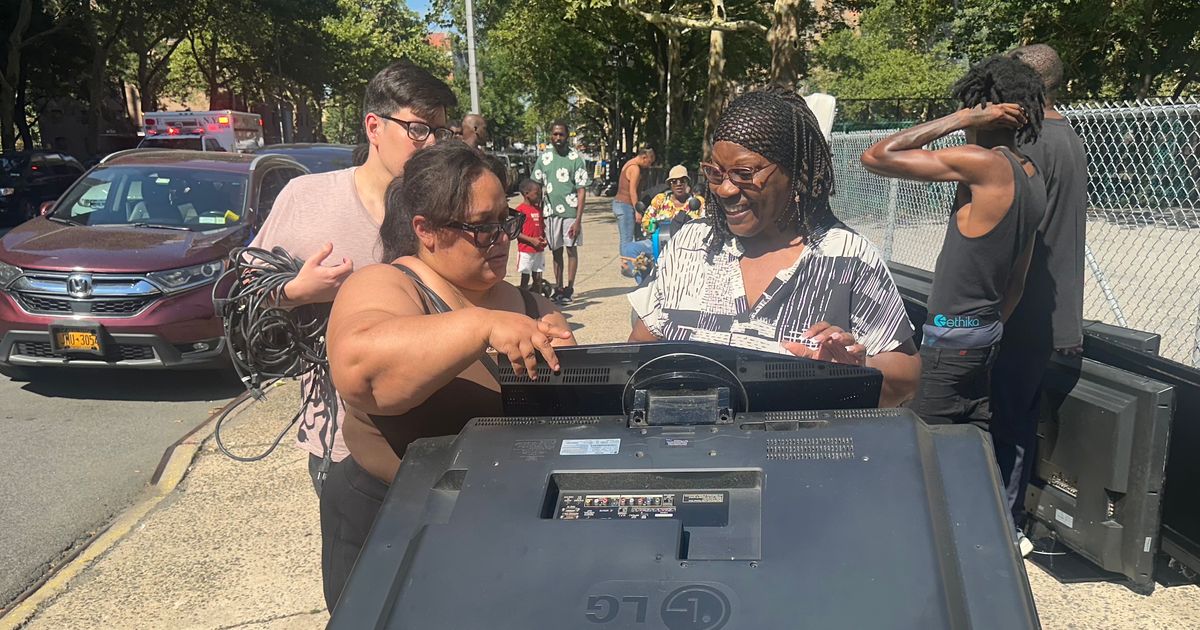
The sidewalk in front of the Morris Houses public-housing complex in the Bronx presented an unusual urban tableau on a recent Saturday afternoon. A rented U-Haul van idled curbside as volunteers systematically unloaded 55 large-screen LG televisions, stacking them neatly for local residents. For 38-year-old Regina Carter, a lifelong resident of the complex and the founder of the grassroots nonprofit Repurposed Life, scenes like this have become a regular weekend operation. To the casual observer or passing patrol officers, the sudden appearance of dozens of high-end consumer electronics might raise questions, but in this neighborhood, Carter is widely recognized and affectionately dubbed the "Furniture Queen."
This particular inventory windfall originated at a former Hilton Hotel in Rye, New York, which was undergoing a major structural conversion into a residential apartment building. Faced with the monumental task of clearing the property entirely, project managers reached out to Carter. Unable to transport the massive volume of goods in a single trip, Carter coordinated a multi-phase retrieval effort, ensuring that functional appliances and electronics were diverted from commercial dumpsters and redirected directly into the hands of families in need.
The Logistics of Urban Redistribution
Operating without a permanent warehouse, storefront, or paid staff, Carter’s initiative relies on a hyper-mobile, pop-up distribution model. Word of upcoming giveaways spreads rapidly through the nonprofit’s digital channels, drawing diverse crowds from surrounding low- and middle-income neighborhoods. At the Morris Houses giveaway, a long queue quickly formed behind a folding card table laden with power cords. Attendees included young families, elderly residents, and individuals representing a mosaic of languages and backgrounds, all waiting for a first-come, first-served chance to secure household essentials.
Among the early arrivals were Lola and Ashe, local residents who attempted to balance a 55-inch television on a handicap scooter before realizing they needed a more practical transport method. Lola noted that the new television would finally replace two broken sets her son had purchased years prior—appliances she had stubbornly retained because of their sentimental value and original cost.
Carter maintains an intentionally low-barrier approach to her distributions. No identification is requested, income verification is not required, and questions are rarely asked. While critics might occasionally question why individuals driving late-model vehicles participate in the giveaways, Carter maintains a steadfast philosophy centered on ecological impact. Her primary objective is diversion—keeping functional goods out of municipal landfills and minimizing the city’s escalating waste footprint. According to organizational estimates, Repurposed Life has successfully redistributed more than half a million pounds of materials since its formal establishment.
Origins and Evolution of a Grassroots Movement
Carter’s dedication to resource redistribution is deeply rooted in her personal history. Growing up within New York City’s foster care system, she experienced frequent relocations between various family placements and group facilities. By age 15, she had her first child, followed by a second at 17. At 21, she secured an apartment in the Morris Houses through public assistance, entering a barren home devoid of furniture. Sleeping on bare floors for an extended period, she slowly pieced together a functional living space utilizing thrift store finds and charitable donations.
The catalyst for Repurposed Life emerged during the COVID-19 pandemic. While volunteering for her local tenant association, Carter received an unexpected inquiry from Materials for the Arts regarding 15 racks of nearly new clothing previously utilized in television and film production. She successfully arranged for the delivery and distribution of the garments to local families.
Encouraged by that initial success, Carter expanded her outreach to corporate sustainability networks, establishing contact with Green Standards, an enterprise that manages corporate surplus and office decommissioning. Through this partnership, corporate entities discarding used break-room tables, ergonomic desk chairs, filing cabinets, and small appliances found a reliable channel for charitable donation. What began as occasional, single-truckload deliveries rapidly evolved into a recurring schedule of pop-up events across multiple housing projects throughout New York City.
Meeting Critical Urban Needs
As her supplier network broadened, Carter identified specific seasonal demands within public housing communities. Portable air conditioning units are in exceptionally high demand during sweltering summer months, while electric heaters become vital necessities during winter freezes. Mattresses and foundational furniture remain in high demand year-round.
Despite the proven efficacy of her model, Repurposed Life remains an ultra-lean operation. Two years after achieving official nonprofit status, the organization continues to operate without commercial real estate or institutional backing. Last year, the nonprofit brought in approximately $5,500 in monetary contributions. To bridge the gap, Carter finances the remaining operational expenses out of pocket—spending roughly $12,000 annually, predominantly on U-Haul van rentals. Balancing her responsibilities requires immense personal sacrifice; Carter works a full-time position answering phones as an information-service agent for the city’s Human Resources Administration while dedicating an additional 25 to 30 unpaid hours a week to her nonprofit operations.
Broader Implications and Future Horizons
Urban policy experts and environmental advocates frequently point to New York City as a paradox of excess and scarcity. While commercial sectors, hospitality groups, and academic institutions routinely discard millions of pounds of high-quality furniture, fixtures, and equipment during renovations or relocations, low-income residents frequently face severe financial barriers to acquiring basic household goods. Carter’s work addresses this systemic disconnect, illustrating how grassroots intervention can temporarily bridge the logistical chasm between corporate waste streams and housing insecurity.
Recognition for these efforts has recently expanded beyond neighborhood boundaries. Carter was named a finalist for The David Prize, an annual philanthropic initiative funded by the Walentas Family Foundation—the philanthropic arm of real estate developer Two Trees Management—which awards unrestricted cash grants to individuals implementing innovative solutions to urban challenges in New York City.
A victory would provide a $200,000 financial injection, funding that Carter plans to direct toward formalizing her organization. Proposed enhancements include offering financial stipends to her dedicated team of volunteers and interns, as well as implementing a digital inventory and tracking system to streamline logistics. Although acquiring a dedicated warehouse space remains a long-term aspiration, Carter notes that the absence of permanent storage has never hindered operations. Whether transporting cracked filing cabinets or premium hotel televisions via rental van, her mission remains straightforward: connecting abundant urban surplus with families who need it most.