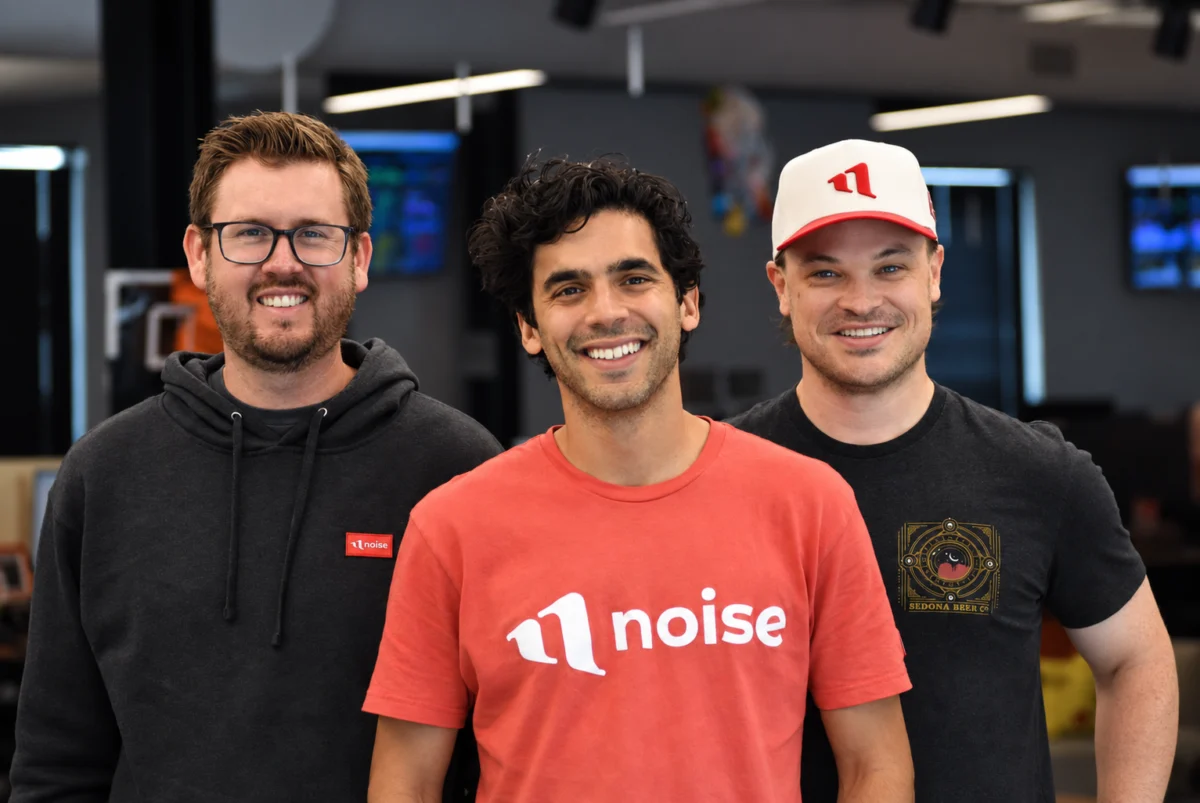
The influencer marketing landscape is undergoing a radical structural shift as Noise, a startup designed to bridge the gap between brands and everyday content creators, announced a $5.5 million seed funding round on Wednesday. Led by Capital Midwest, M25, and Girshin Robotics, the investment brings the company’s total capital raised to $7.2 million. The round also saw participation from CapitalizeVC and various high-profile operators from industry giants such as DoorDash. This infusion of capital signals a growing investor appetite for "creator infrastructure" platforms—tech-forward solutions that bypass the traditional, high-cost agency model in favor of automated, performance-based content networks.
The Evolution of the Creator Economy
Founded in 2025 by Diego Kafie, Stu Feldt, and Nic Weber, Noise operates on a premise that challenges the conventional hierarchy of social media marketing. Unlike traditional platforms that prioritize "mega-influencers" with massive, curated followings, Noise taps into the long tail of the creator economy. The platform allows anyone with a smartphone and a social media account to participate, regardless of their current follower count.
The genesis of Noise lies in the founders’ previous venture, Playbite, a mobile gaming app. During their two-year tenure building Playbite, Kafie and his co-founders experimented with various growth strategies to scale their user base. Faced with the prohibitive costs of hiring established influencers—whose rates often exceed the budgets of early-stage startups—they pivoted toward a grassroots approach. They began recruiting their own players, coaching them on how to produce engaging, authentic social media content that highlighted the app’s features.
What started with a handful of users quickly snowballed. By systematically training their own community members, they built a decentralized marketing force that posted daily across TikTok, Instagram, Facebook, and YouTube. The strategy resulted in a significant surge in app installs at a fraction of the cost associated with traditional influencer campaigns. This proof-of-concept served as the blueprint for Noise, which today boasts a network of 1.5 million creators.
Operational Mechanics and Brand Integration
The core value proposition of Noise is its automation of the creator-brand relationship. Brands sign up for the platform, submit their creative briefs, and define their budgets. Noise’s proprietary infrastructure then matches these campaigns with creators from its vast, diverse pool.
Unlike traditional influencer marketing, where brands often pay a flat fee regardless of performance, Noise utilizes a performance-based payment model. Creators are compensated primarily per view, which aligns the creator’s incentives with the brand’s goals. This shift effectively removes the operational burden from the brand, eliminating the need to manage individual relationships, source talent manually, or handle complex payment logistics.
"Our top brands work with several thousand creators on autopilot," said CEO Diego Kafie. "This gives brands an unprecedented level of content diversity and reach at a fraction of the cost of other traditional marketing playbooks."
Currently, the platform is heavily utilized by mobile applications and startups that require high-volume user acquisition but possess limited marketing budgets. By leveraging the "small army" of everyday advocates, these companies can achieve a level of market penetration that would be structurally impossible through conventional methods.
Addressing the Professionalization of the Creator Class
The rise of platforms like Noise comes at a time when the aspiration to become an influencer has reached record levels. Recent data indicates that more than 57% of young people and over 40% of U.S. adults now express interest in professional content creation. However, the path to monetization is notoriously difficult, often gated by the "clout economy" where only the top 1% of creators secure lucrative brand deals.
Noise seeks to democratize this process through a structured training program. New users joining the platform are guided through modules designed to teach the fundamentals of brand-aligned content creation. As creators complete these modules and demonstrate consistent performance, they gain access to higher-paying, more exclusive campaigns.
Kafie rejects the notion that the platform exploits creators or drives down industry wages. "Brands name their rates, and creators decide whether to accept or decline," he noted. He emphasized that the platform is not designed to replace top-tier influencers, but rather to create an entirely new tier of "micro-advocates" who might otherwise never have had the opportunity to monetize their social media presence. By providing the tools and the training, Noise is effectively lowering the barrier to entry, allowing millions to potentially earn their first dollar on the internet.
Scaling Through the Organic-to-Ads Program
With the new capital, Noise plans to aggressively expand its product capabilities and scale its internal team. A primary focus of this expansion is the recently launched "Organic-to-Ads" program. This initiative allows brands to take successful organic content created by Noise users and convert it into paid advertising assets on platforms like Meta and TikTok.
This hybrid approach acknowledges that while authentic, organic content performs well for brand awareness, paid amplification is often necessary for significant conversion. By allowing brands to put "paid spend" behind the best-performing user-generated content, Noise provides a bridge between social media trends and measurable, bottom-line results.
Broader Market Implications
The emergence of Noise places it in direct competition with other creator infrastructure firms such as Billo and JoinBrands. These companies represent a larger, tectonic shift in the advertising industry: the transition from "celebrity-driven" marketing to "community-driven" performance marketing.
For the advertising industry, this trend has several implications:
- Cost Compression: By commoditizing content creation, platforms like Noise drive down the cost of production, forcing traditional agencies to prove their value beyond mere content sourcing.
- Algorithmic Alignment: Social media platforms increasingly prioritize authentic, low-production-value content. Noise’s model, which relies on the raw, relatable style of everyday users, is naturally optimized for current algorithm preferences.
- Data-Driven Influencer Marketing: The shift to pay-per-view metrics allows for a more granular analysis of marketing spend. Brands can now see exactly which pieces of content drive the most value, rather than relying on "vanity metrics" like follower count or engagement rates that do not always correlate with revenue.
Challenges and Future Outlook
Despite the optimism surrounding the platform, the model is not without potential friction. Scaling a community of 1.5 million creators requires sophisticated content moderation and quality assurance to ensure that the content produced remains brand-safe and effective. Additionally, as the creator economy continues to mature, regulatory scrutiny regarding how these platforms handle taxes, employment classification, and disclosure of paid partnerships is likely to increase.
Noise’s leadership remains focused on its objective of working with companies of all sizes, moving beyond the current focus on mobile apps to broader retail and consumer goods categories. The company’s success will ultimately depend on its ability to maintain the "human touch" of its creators while scaling the technical infrastructure required to manage thousands of simultaneous, complex campaigns.
As the lines between personal social media use and professional marketing continue to blur, the success of the Noise model suggests that the future of advertising may lie not in the hands of the elite, but in the collective efforts of the everyday user. By transforming passive consumers into active brand advocates, Noise is tapping into a vast, latent labor market that is increasingly eager to participate in the digital economy.