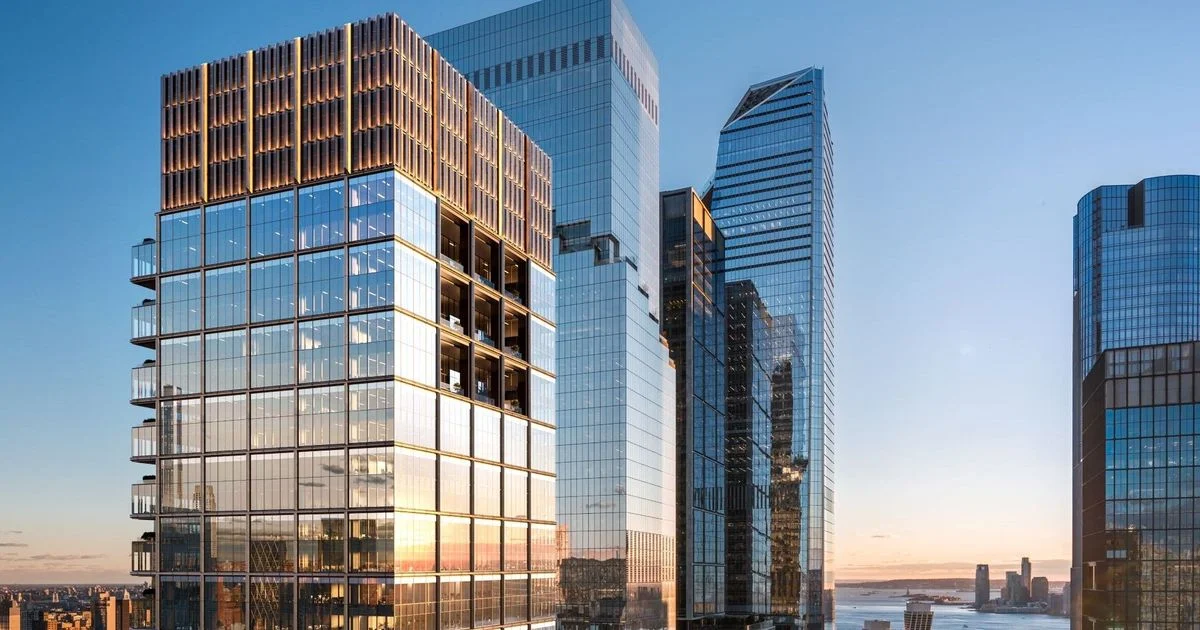
The Manhattan commercial real estate landscape is undergoing a dramatic and unexpected resurgence, sharply reversing the apocalyptic narrative that dominated the post-pandemic era. Only a few years ago, the city’s office market faced an existential threat characterized by soaring vacancy rates, plummeting asset values, and widespread anxiety over the permanence of remote work. Today, however, market indicators point toward a staggering recovery, with 2026 tracking to become the most active leasing year since the turn of the millennium.
According to data compiled by real estate services firm Colliers, nearly 30 million square feet of office space has been leased in Manhattan since January. This velocity puts the market on a trajectory that rivals historical pre-pandemic averages, which typically hovered around 34 million square feet annually. For a sector that once appeared on the brink of structural collapse, this rapid revitalization has caught tenants, landlords, and brokers completely off guard.
From Sublease Surpluses to Skyrocketing Rents
The narrative of recovery is best illustrated by the drastic shift in market pricing and availability. Commercial brokers across the borough report instances where office rents have not only stabilized but surged to unprecedented highs. Ruth Colp-Haber, who leads the commercial brokerage Wharton Properties, recalls dealing with a client who rented a sublet space on 46th Street and Sixth Avenue for a modest $28 per square foot in 2023. When that sublease expired and the client attempted to secure a long-term agreement, they discovered that asking rents in the building had tripled. Ultimately, the tenant was forced to relocate to a lower-tier building on 41st Street and Lexington Avenue, paying more than double their previous rate—a transaction Colp-Haber describes as still being a relative bargain given current market conditions.
This dynamic is widespread. Availability rates in prime corridors such as Park Avenue and the World Trade Center district have plummeted below 10 percent. In prime submarkets like Soho and Hudson Square, large blocks of contiguous office space have become virtually nonexistent. Kirill Azovtsev, vice-chairman at Savills, describes the current environment as "red hot," noting that the scarcity of high-end inventory has ignited bidding wars among prospective tenants. Asking rents for elite skyscrapers have climbed significantly, with some ultra-luxury properties reportedly commanding as much as $250 per square foot.
The Chronology of a Crisis and Recovery
To understand the magnitude of the current boom, one must look back at the trajectory of the Manhattan office market over the past six years.
- 2020–2021 (The Pandemic Nadir): Widespread remote-work mandates emptied commercial towers. Manhattan accumulated roughly 52 million square feet of available office space, pushing the vacancy rate to an alarming 22 percent. Landlords struggled with heavily leveraged assets, and the prevailing commercial conversation centered on downsizing and shedding square footage.
- 2022–2024 (The Stabilization Phase): Companies gradually addressed their workplace strategies. Contrary to fears that remote work would permanently decimate physical footprints, most corporate tenants determined that their baseline desk requirements remained largely consistent, regardless of whether employees worked hybrid schedules of three or five days a week. Tech startups and expanding enterprises began quietly re-entering the market.
- 2025–2026 (The Expansion and AI Surge): Driven by robust job growth and a massive wave of technological innovation—particularly centered around artificial intelligence—leasing activity exploded. New York officially surpassed San Francisco in tech job creation for the first time, while legal and financial giants committed billions to newly constructed towers.
The Catalysts: Tech, AI, and Traditional Powerhouses
While the recovery spans multiple sectors, the technology industry—bolstered heavily by the explosive growth of artificial intelligence—has generated some of the market’s most high-profile transactions. In July, AI safety and research firm Anthropic secured a massive lease encompassing all 16 floors of 330 Hudson Street in Hudson Square. Earlier in the year, Harvey AI doubled its footprint at One Madison in the Flatiron District, expanding from nearly 100,000 square feet to approximately 200,000 square feet. Additional major commitments include AI sales platform Clay securing 163,000 square feet at SL Green’s 11 Madison Avenue, and tech giant Google renewing its massive 411,000-square-foot lease at 315 Hudson Street. Data from CBRE indicates that tech companies alone have absorbed roughly 2.8 million square feet of office space in 2026.
Despite the heavy media focus on artificial intelligence and technology, industry experts emphasize that the broader recovery is fundamentally diversified. Michael T. Cohen, principal at Williams Equities and tristate president of Colliers, notes that while tech and AI have recently claimed the headlines, the foundation of the recovery was built and sustained by traditional stalwarts like financial services and legal institutions.
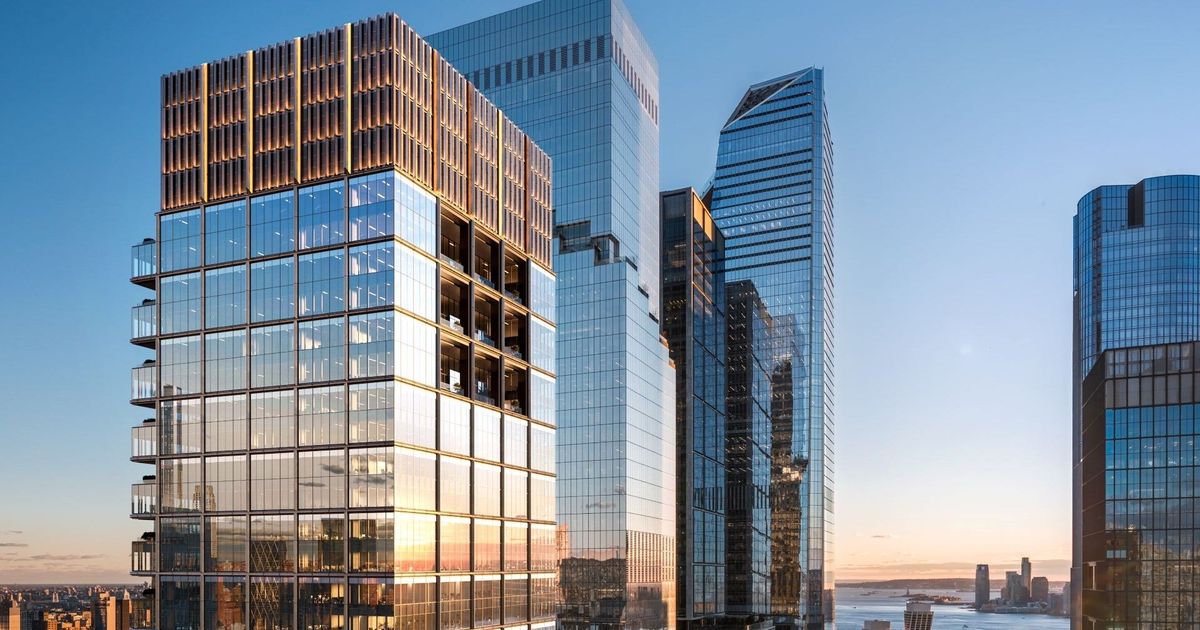
In June, major law firm Simpson Thacher & Bartlett executed a massive lease for 916,000 square feet at Extell Development’s upcoming tower at 570 Fifth Avenue, effectively doubling its existing footprint on Lexington Avenue. Simultaneously, American Express broke ground on 2 World Trade Center, completing the roster of corporate giants investing in proprietary tower construction. This follows landmark developer-backed projects such as JPMorgan Chase’s newly unveiled headquarters at 270 Park Avenue and Citadel’s record-financed tower at 350 Park Avenue.
The Impact of Office-to-Residential Conversions
Another vital factor accelerating the tightening of the commercial market is the aggressive pivot toward office-to-residential conversions. According to Frank Wallach, executive managing director of research and business development for New York City at Colliers, approximately 25 million square feet of obsolete office inventory is currently undergoing or slated for residential conversion across various neighborhoods.
These adaptive reuse projects have effectively removed distressed or functionally obsolete inventory from the commercial ledger. Districts that suffered the highest vacancy rates during the pandemic—most notably the Financial District and the Third Avenue corridor—have seen availability drop sharply as older buildings are repurposed for housing. This reduction in supply has naturally catalyzed upward pressure on remaining commercial rents. On Park Avenue, where blue-chip corporations continue to cluster, vacancy rates have dropped below 3 to 4 percent, with top-tier rents exceeding $200 per square foot. Consequently, tenants priced out of prime Midtown locations are cascading eastward toward Third Avenue or exploring prewar buildings that were previously overlooked.
Market Polarization: Premium Towers vs. Prewar Alternatives
The divergence between premier, amenity-rich new construction and older, secondary assets remains a defining feature of the current cycle. Trophy properties continue to command record-breaking pricing. Azovtsev notes that downtown buildings near the World Trade Center are now boasting roughly 90 percent occupancy rates, driving asking rents at 4 World Trade Center from under $90 per square foot to $120 within an eight-month span. Similarly, One World Trade Center sits at 97 percent occupancy, with competitive multiple offers routinely submitted for remaining vacancies, according to representatives from the Durst Organization. Hudson Yards maintains the second-lowest availability rate in the city at 4.5 percent, accompanied by the highest average asking rents.
Conversely, older, prewar side-street buildings are no longer languishing. Landlords who invested in modernizing lobby spaces, upgrading building infrastructure, or incorporating desirable amenities—such as rooftop terraces—are successfully attracting budget-conscious tenants. Properties offering pre-built, move-in-ready suites are seeing rapid absorption. For instance, at 136 Madison Avenue, a 1916 office building with asking rents in the high $60s per square foot, multiple mid-sized tenants engaged in a bidding war for a single remaining 20,000-square-foot pre-built space. Commercial brokers report that modern tenants exhibit a distinct impatience, heavily favoring spaces that minimize build-out timelines and allow for immediate occupancy.
Broader Implications and Future Outlook
The sudden acceleration of Manhattan’s office market carries profound implications for the broader regional economy, municipal tax revenues, and urban planning. The stabilization of commercial real estate alleviates immediate municipal concerns regarding potential losses in property tax revenue, which funds essential city services. Furthermore, the willingness of major corporations and tech startups to commit long-term capital to physical infrastructure signals renewed confidence in New York City’s status as a global hub for commerce, innovation, and intellectual talent.
However, this rapid tightening of supply creates significant hurdles for smaller businesses and non-venture-backed enterprises. As affordable sublets vanish and baseline rents climb across virtually every submarket, expanding operations in Manhattan is becoming an increasingly costly endeavor. Tenants unwilling or unable to pay top-tier pricing must increasingly accept compromises, such as locating further from major transportation hubs or settling for older, column-heavy prewar floor plates.
As 2026 progresses toward its final quarter, the Manhattan office market has decisively moved past the existential dread of the pandemic era. What remains is a hyper-competitive, bifurcated landscape where prime assets command astronomical figures, older spaces find new life through strategic repositioning, and the foundational demand for physical workspace in New York City proves remarkably resilient.