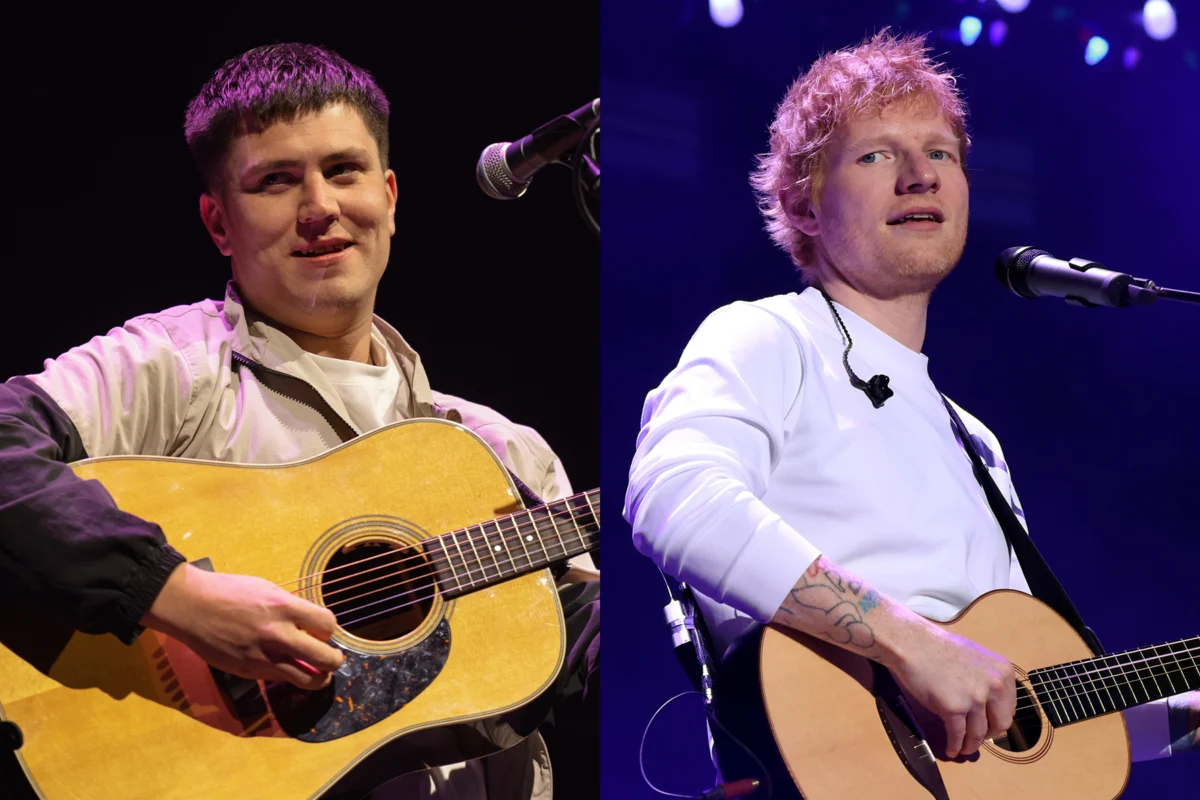
The intersection of popular music, geopolitical activism, and corporate influence reached a new boiling point following a series of high-profile departures and expulsions from Ed Sheeran’s ongoing Loop Tour. Irish singer-songwriter Aaron Rowe, who voluntarily stepped down from his opening slot on the tour, has publicly urged the public and media to redirect their scrutiny away from Sheeran. Instead, Rowe argues, attention should be concentrated on pro-Israel lobbying groups and high-profile figures whom he accuses of orchestrating the suppression of pro-Palestinian voices within the entertainment industry.
The controversy stems from the sudden removal of rapper Macklemore from the tour lineup after the artist made explicit onstage remarks condemning Israel’s military campaign in Gaza and expressing solidarity with the Palestinian people. The fallout has since expanded beyond a mere booking dispute, drawing in international recording artists, billionaire sports franchise owners, and widespread debates over freedom of expression, corporate accountability, and the humanitarian crisis in the Middle East.
Background and Chronology of the Tour Controversy
The tension within the Loop Tour ecosystem began when Macklemore used a live performance platform to voice political opinions concerning the ongoing conflict in Gaza. His comments called attention to the devastating humanitarian impact of the war on Palestinian civilians, drawing immediate praise from activist groups but swift backlash from institutional stakeholders. Shortly after his statements, reports emerged that Macklemore had been dropped from the tour roster.
The abrupt cancellation sparked immediate speculation and criticism directed at Ed Sheeran, who was widely perceived by fans and observers as bearing ultimate responsibility for the lineup change. However, statements released in the wake of the decision clarified that the removal was driven by the tour’s promoter, Messina Touring Group, under substantial pressure from venue operators and external figures—notably New England Patriots owner Robert Kraft.
As public pressure mounted against Sheeran for allowing the exclusion, several supporting acts began evaluating their positions. Aaron Rowe ultimately chose to abandon his opening slot in solidarity with the underlying principle of artistic expression, yet he has since taken to social media to correct what he perceives as a misplaced public narrative. In an extensive video statement published on Instagram, Rowe asserted that critics were targeting the wrong individual by fixating on Sheeran, pointing instead to systemic institutional pressures.
Aaron Rowe’s Defense of Ed Sheeran and Critique of Lobbies
In his digital address, Rowe maintained that Sheeran was caught in a high-pressure corporate machinery and reacted out of panic rather than ideological malice. Rowe noted that he had not spoken extensively with Sheeran since the incident, but expressed firm confidence that the British pop star recognized the decision as a misstep. Furthermore, Rowe highlighted the ideological makeup of the tour’s supporting acts, emphasizing that the collective lineup featured artists who openly supported Palestinians living in Gaza.
"If Ed Sheeran was a Zionist, why would he have all these people on the tour?" Rowe remarked in his video, emphasizing the incongruity of targeting Sheeran when the broader roster openly engaged in pro-Palestinian advocacy.
Rowe shifted the focus of his critique toward external influences, specifically naming Robert Kraft and what he characterized as Zionist lobbies actively working to silence discourse regarding the humanitarian crisis in Palestine. Rowe argued that media outlets, international governments, and the music industry at large possess immense financial and political power, yet have failed to meaningfully address the situation while simultaneously suppressing dissenting opinions. He called on critics and activists to pivot their energy toward holding figures like Kraft accountable for attempting to curb free speech, rather than directing continuous outrage toward Sheeran.
Escalating Financial Pledges and Public Responses
The controversy escalated further as Macklemore doubled down on his stance following his exclusion from the tour. In an effort to turn the dispute into tangible humanitarian relief, the rapper announced a $1 million donation directed toward Palestinian support organizations. Simultaneously, Macklemore publicly challenged Robert Kraft to match the contribution.
The challenge prompted a formal response from representatives of Kraft, who announced a $2 million commitment aimed at providing aid to the region and combating the ongoing humanitarian crisis. However, Kraft’s statement framed the allocation as a direct match to a donation made by Ed Sheeran rather than Macklemore, muddying the waters regarding the specific origins and motivations behind the corporate contributions. Representatives for Ed Sheeran did not immediately issue a public comment or clarification regarding the specific nature of the donation matching claims reported by international media outlets.
Broader Implications for the Music Industry and Free Speech
The events surrounding the Loop Tour highlight a growing tension within the global entertainment industry, where artists increasingly use international platforms to address polarizing geopolitical conflicts. As musicians navigate the complexities of global touring, venue ownership, and corporate sponsorships, the boundaries between commercial entertainment and political activism continue to blur.
Industry analysts note that incidents of this nature expose the vulnerabilities of major concert tours, which rely heavily on cooperation between artists, promoters, corporate venue owners, and local authorities. When political discourse enters the stage, the intersecting financial and ideological interests of these stakeholders frequently trigger rapid, risk-averse management decisions aimed at protecting brand value and venue security.
At the same time, the backlash from artists such as Aaron Rowe and Macklemore underscores a rising counter-movement within the creative community. Many performers are increasingly unwilling to separate their artistic output from their personal convictions, pushing back against what they perceive as corporate censorship and the suppression of political speech.
As the discourse continues to evolve across social media and institutional news platforms, the incident serves as a significant case study in the modern intersection of celebrity influence, geopolitical advocacy, and corporate power. Whether this controversy will lead to permanent shifts in how major tours handle political expression remains to be seen, but the events have firmly established that artists and industry leaders alike will face intense scrutiny regarding their stances on international conflicts.