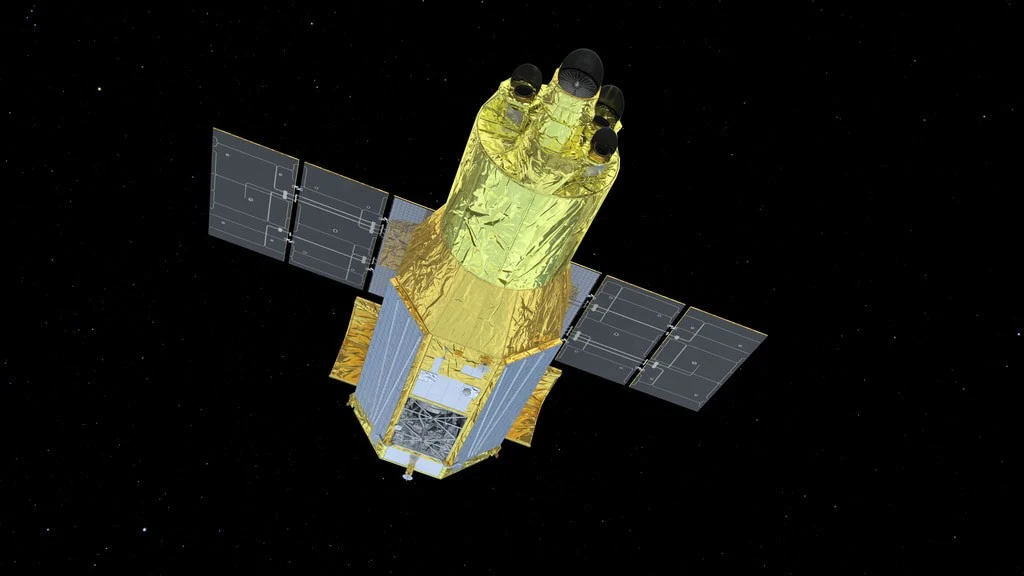
In a breakthrough discovery that marks a significant milestone for high-energy astrophysics, researchers using data from the Japan-led X-ray Imaging and Spectroscopy Mission (XRISM) have provided the first direct observational evidence of a stellar wind being captured by a compact companion star. This process, known as accretion, serves as the engine for the intense X-ray flares that have long puzzled scientists studying high-mass X-ray binaries. The findings, detailed in a paper published Friday in the journal Science Advances, offer a unprecedented look at the volatile interactions occurring 13,000 light-years away in the southern constellation Crux.
The Celestial Laboratory: BP Crucis
The subject of this study is the binary system BP Crucis, an enigmatic pair consisting of a blue hypergiant star, Wray 977, and its dense companion, the neutron star GX 301-2. Wray 977 is a stellar titan, possessing roughly 40 times the mass of our Sun and spanning a diameter approximately 60 times greater. As a blue hypergiant, the star exists in a state of constant, violent upheaval, shedding its outer layers in the form of a high-velocity, ionized stream of gas known as a stellar wind.
Orbiting this hypergiant is GX 301-2, the crushed, ultra-dense core of a star that ended its life as a supernova. Despite being only about 12 miles (20 kilometers) in diameter, it packs more than the mass of the Sun into its compact frame. As it rotates once every 11 minutes, the neutron star emits a beam of X-rays, identifying it as a pulsar. The gravitational dance between these two objects is characterized by a 41.5-day orbital period, during which the pulsar experiences significant fluctuations in its X-ray brightness.
Chronology of an X-ray Flare
The X-ray flares associated with BP Crucis are not random occurrences; they are linked to the pulsar’s trajectory through the hypergiant’s dense plasma stream. Twice during each 41.5-day orbit—at the points of closest and farthest approach—the pulsar undergoes a period of intense X-ray emission.
The mechanism behind these eruptions has long been hypothesized, but the XRISM data has now provided a real-time window into the physics of the interaction. When the pulsar enters the denser regions of the stellar wind, it captures a portion of the outgoing gas. This captured matter forms a turbulent, swirling accretion disk around the neutron star. As the pulsar pushes deeper into the stream, the flow of gas becomes so intense that the traditional disk structure fails to maintain itself. The plasma, stripped of the angular momentum necessary to sustain an orbit, begins to fall directly onto the pulsar’s surface.
This transition from disk-fed accretion to direct-stream accretion represents a critical phase in the life cycle of a high-mass X-ray binary. Observations conducted on February 1, 2025, lasting approximately 16 hours, captured the system near the conclusion of one of these high-intensity flare events, providing a "smoking gun" for the physical state of the gas as it is consumed by the neutron star.
Technical Precision: The Resolve Instrument
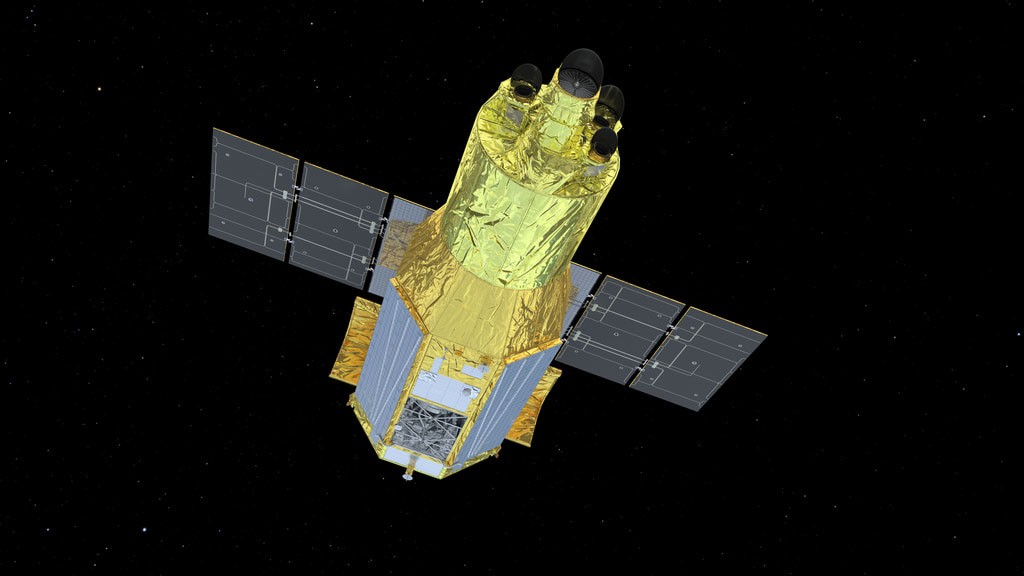
The success of this investigation is largely attributed to the Resolve instrument, a high-resolution X-ray spectrometer developed through a collaborative effort between NASA and the Japan Aerospace Exploration Agency (JAXA). By analyzing the X-ray spectra emitted by the system, researchers were able to detect subtle "redshifts" in absorption lines associated with ionized iron.
In physics, a redshift occurs when light or other electromagnetic radiation is stretched as an object moves away from the observer. In the case of BP Crucis, the redshift observed in the iron spectral lines indicated that the plasma was racing toward the pulsar at speeds of approximately 335,000 mph (540,000 kph). This provided the team with the necessary data to confirm the direction and velocity of the gas flow, effectively mapping the dynamics of the accretion process in three dimensions.
Perspectives from the Research Team
Roi Rahin, a researcher at the University of Maryland, Baltimore County (UMBC) and NASA’s Goddard Space Flight Center, noted that the clarity of the XRISM data was unprecedented in the field of high-energy astronomy. "We’ve never before seen clear indications of wind plasma falling onto a compact object," Rahin stated. "We can now test our understanding of these processes in much greater detail."
The groundbreaking nature of the study necessitated an exhaustive analytical approach. Nazma Islam, a co-author of the study formerly at UMBC and now an assistant professor at the Manipal Centre for Natural Sciences in India, emphasized the rigor required to interpret the findings. "It was clear that these observations were groundbreaking, but at the same time this meant the analysis had to be especially detailed," Islam explained. "We could see how the dense stream of plasma acts very close to the neutron star."
The sentiment was echoed by Brian Williams, the XRISM mission’s project scientist at NASA Goddard. Williams characterized the BP Crucis system as an "ideal laboratory" for studying wind-fed accretion, underscoring that the high resolution provided by the Resolve spectrometer is essential for advancing the current understanding of how matter behaves in extreme gravitational environments.
Broader Implications for Astrophysics
The observation of BP Crucis serves as a foundational study for understanding the broader "extreme universe." High-mass X-ray binaries are essential to astrophysics because they act as engines of matter transformation. The ability to witness the direct feeding of a neutron star allows scientists to refine models of accretion physics, which are applicable not only to neutron stars but also to the supermassive black holes at the centers of galaxies.
Furthermore, the data collected from XRISM suggests that the accretion process is far more dynamic than previously modeled. The shift from a turbulent disk to direct plasma impact, and the eventual re-formation of a disk spinning in the opposite direction, indicates that the environment surrounding these compact objects is highly sensitive to the surrounding wind geometry. These findings will likely influence future research into how pulsars and black holes interact with their host environments over cosmological timescales.
Future Research Directions
As the XRISM mission continues its operations, the scientific community anticipates further observations of binary systems. The successful identification of these spectral signatures provides a template for future investigators. By applying the same spectroscopic techniques to other high-mass systems, astronomers hope to determine if the "disappearing disk" phenomenon is a universal characteristic of wind-fed binaries or a unique quirk of the BP Crucis system.
The mission’s capacity to resolve the motion of gas in the vicinity of extreme gravity has effectively opened a new chapter in the study of compact objects. By linking the micro-scale movements of ionized iron atoms to the macro-scale luminosity flares observed from Earth, the XRISM team has successfully connected theoretical physics to empirical observation, confirming that even the most extreme cosmic environments can be mapped with precision instrumentation.
As researchers continue to synthesize the data, the focus will shift toward creating more accurate simulations of these systems. With the empirical data provided by the February 2025 campaign, the next generation of astrophysical models will be better equipped to predict the behavior of matter under the intense pressures found in the wake of hypergiant stars. This work reinforces the importance of the XRISM mission in NASA’s broader portfolio of space exploration, proving that the most profound insights into the mechanics of our universe often come from observing its most violent and energetic events.