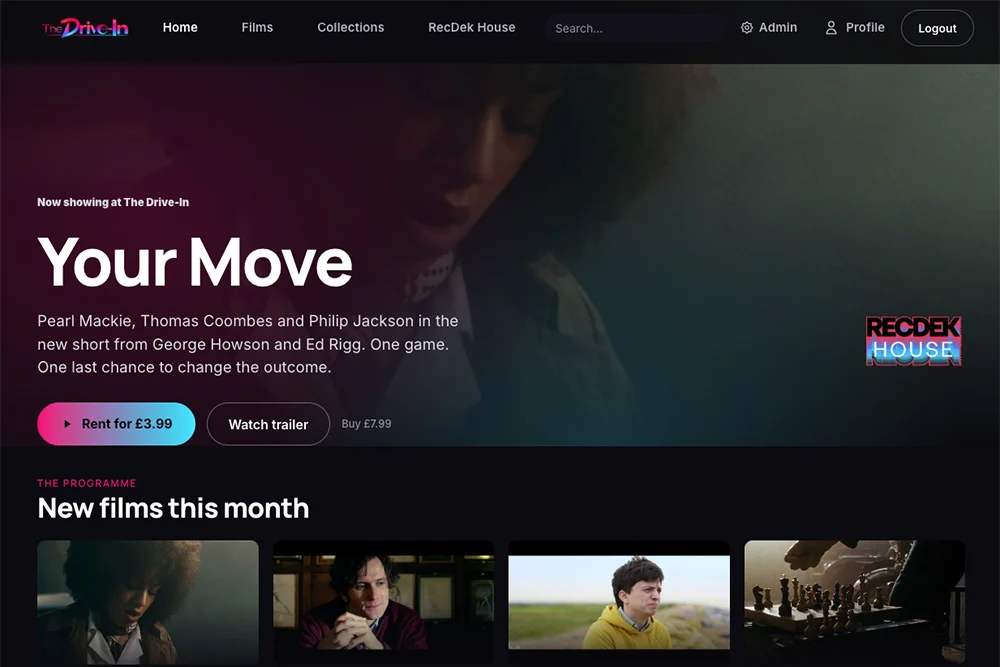
The landscape of independent cinema is undergoing a profound structural evolution with the official announcement of The Drive-In, a pioneering Transactional Video on Demand (TVOD) streaming service designed specifically to champion independent films and empower the creators behind them. Set to make its formal debut on October 17, aligning with the prestige and global spotlight of the annual London Film Festival, this new platform aims to dismantle the traditional, often opaque distribution barriers that have historically stifled independent voices. Operating natively within RecDek—an established independent film and television discovery application—The Drive-In arrives with a foundational cohort of trailblazing indie filmmakers ready to test a model that prioritizes creator ownership, transparent data sharing, and direct-to-fan monetization.
The launch comes at a critical juncture for the global independent film sector, which has faced mounting economic pressures in the post-pandemic streaming era. Traditional distribution models, dominated by major studios and legacy aggregators, frequently leave independent creators with negligible returns, lengthy payout cycles, and a complete loss of control over their intellectual property. The Drive-In seeks to rewrite these rules entirely by offering a decentralized yet community-driven alternative. By partnering with Hiway, a specialized direct-to-fan economy infrastructure provider, RecDek has engineered a platform that directly addresses the systemic monetization flaws plaguing the modern film industry, giving marginalized voices a dedicated space to thrive outside the studio system.
The Mechanics of Empowerment: How The Drive-In Operates
At the core of The Drive-In’s value proposition is a radical departure from conventional digital distribution agreements. Historically, filmmakers looking to place their content on major streaming services or TVOD platforms have been forced to hand over master files, relinquish territorial control for extended periods, and wait months—or even years—for accounting statements, all while forfeiting a substantial percentage of their revenue to middlemen.
The Drive-In bypasses these friction points through a streamlined technological architecture. Content is streamed directly from the filmmaker’s own digital library hosted within the platform’s ecosystem. According to the platform’s developers, this means that "nothing is handed over, re-uploaded, or locked away." Creators retain absolute ownership of their intellectual property at every stage of the distribution lifecycle. Furthermore, producers retain the autonomy to set their own pricing models and collect receipts directly from the initial point of sale.
In addition to financial transparency, filmmakers gain unprecedented access to real-time audience data, enabling them to understand precisely who is engaging with their work, where their viewers are located, and how marketing campaigns perform. Perhaps most revolutionary for independent producers navigating the complex web of international sales agents, The Drive-In offers instant territorial flexibility. Should a filmmaker successfully negotiate a distribution deal for a specific country or region with a traditional theatrical or home entertainment distributor, they have the immediate capability to carve out and remove that specific territory from The Drive-In’s availability without penalty or bureaucratic delay. This flexibility ensures that the streaming platform acts as an incubator and springboard rather than a restrictive bottleneck.
From Discovery App to Global Community: The Evolution of RecDek
To understand the strategic positioning of The Drive-In, one must examine the rapid and deliberate evolution of its parent platform, RecDek. Initially conceived and launched as a consumer-facing independent entertainment discovery application, RecDek was designed to combat recommendation fatigue in an increasingly crowded streaming marketplace. Rather than relying on algorithmic curation driven by corporate interests, RecDek centered its user experience on peer-to-peer recommendations sourced from trusted circles—friends, family members, professional film critics, and curators from international film festivals.
However, the platform quickly transcended its initial consumer utility. Recognizing a deep-seated industry hunger for genuine networking and peer collaboration, the creators established RecDek House, an exclusive professional hub within the broader ecosystem. Over a relatively short timeframe, RecDek House has organically expanded into a thriving global community comprising approximately 17,000 directors, producers, below-the-line talent, financiers, sales agents, and distributors.
This vibrant digital network transformed RecDek from a passive discovery tool into an active professional nexus. The introduction of The Drive-In is viewed by its creators as the natural next step in this journey—a mechanism that "turns a festival-season relationship with the industry into a year-round collaboration." By bridging the gap between networking and commercial distribution, RecDek is attempting to build a self-sustaining ecosystem where creators can not only find collaborators and financing but ultimately exhibit and monetize their completed works to an engaged global audience.
Strategic Infrastructure: The Partnership with Hiway
Building a robust, secure, and scalable streaming service requires specialized technological architecture, which led RecDek to forge a strategic partnership with Hiway, a leading infrastructure provider for the direct-to-fan economy. Hiway specializes in equipping creators and communities with the commercial and logistical rails needed to monetize their intellectual property independently, bypassing legacy gatekeepers.
David Orman, the founder and CEO of Hiway, noted that while the RecDek team had successfully cultivated one of the most tightly knit and connected communities in independent cinema, a critical infrastructure component was missing. "The missing piece was a screen of their own," Orman explained. "The Drive-In gives them that, on terms the industry rarely offers: every filmmaker keeps their IP, their audience, and the majority of their revenue. RecDek owns the brand and the relationship, we provide the rails. The tools now exist for RecDek to run their own show."
This division of labor allows RecDek to focus entirely on community cultivation, editorial curation, and audience engagement, while Hiway ensures seamless payment processing, secure video delivery, and robust data analytics. The synergy between RecDek’s deep industry roots and Hiway’s technical expertise creates a formidable commercial engine tailored specifically for the realities of modern micro-budget and independent filmmaking.
Industry Context and the Crisis of Indie Distribution
The launch of The Drive-In arrives against a backdrop of mounting structural challenges within the global independent film market. Over the past decade, the proliferation of subscription video-on-demand (SVOD) giants fundamentally altered consumer expectations regarding content access. While streaming democratization initially appeared to offer boundless opportunities for independent creators, the reality has proven far more austere.
Major streaming platforms have increasingly consolidated their content libraries around proprietary originals or high-profile studio acquisitions, leaving independent films with diminishing visibility. Furthermore, traditional licensing fees have plummeted, and many independent filmmakers find themselves priced out of effective digital marketing campaigns that can cost tens or even hundreds of thousands of dollars. Independent films that secure festival distribution often experience a brief, intense window of attention during the autumn festival circuit—encompassing events like Sundance, Cannes, Toronto, and the London Film Festival—only to vanish into obscurity once the festival concludes.
Ed Rigg, a working writer and director who serves as the founder of RecDek, articulated the frustrations that inspired the creation of The Drive-In. "We champion the voices studios drown out, and for too long it has been unclear exactly how filmmakers get their movies distributed," Rigg stated. He acknowledged the traditional hustle required of independent creators—the endless pitching, private screenings, and networking that define the indie circuit. "Sure you can pitch, screen your work, hustle, and so you should. Go after wherever you think your movie will be looked after best."
At the same time, Rigg emphasized that The Drive-In is designed to serve as a reliable, empowering fallback when traditional avenues fail or prove financially disadvantageous. The platform "exists for when filmmakers decide to take their film’s future into their own hands," offering a transparent marketplace where they can directly monetize their creative output. "Filmmakers keep everything that should be theirs, and our community on the app, and in the wider industry, get a place to watch the shows we have been shouting about," Rigg added.
Timeline and Launch Strategy: What to Expect in October
The rollout of The Drive-In has been meticulously timed to capitalize on the media attention and industry concentration surrounding the BFI London Film Festival, which annually draws thousands of international producers, directors, sales agents, and critics to the British capital.
- Current Phase (Ongoing): RecDek is actively accepting submissions from independent filmmakers worldwide via its dedicated portal at RecDekHouse.com. The initial intake focuses on establishing a diverse founding cohort of narrative features, documentaries, and innovative episodic content that reflects the broad tastes of the RecDek community.
- Official Launch Date (October 17): The Drive-In will formally go live, opening its digital storefront to the public concurrent with the latter half of the London Film Festival. This timing ensures maximum visibility among industry professionals who are already engaged in discussions regarding film acquisition and exhibition.
- Post-Launch Integration: Throughout the fourth quarter of the year, RecDek plans to deeply integrate the streaming capabilities of The Drive-In with its existing discovery app, allowing users to transition seamlessly from reading peer reviews and festival recommendations to purchasing and watching the films instantly.
Broader Implications and Future Outlook
The introduction of platform-agnostic, creator-first distribution models like The Drive-In signals a broader paradigm shift in the entertainment industry. As creators increasingly seek refuge from the commodification of their work by legacy conglomerates, decentralized and community-centric distribution networks are gaining significant traction.
By empowering producers with real-time analytics, absolute ownership of intellectual property, flexible territorial licensing, and direct revenue streams, initiatives such as The Drive-In challenge the traditional gatekeeper model. If successful, this framework could serve as a viable blueprint for other creative communities seeking to reclaim financial sovereignty in the digital age.
For the independent filmmakers whose voices are frequently drowned out by studio blockbusters and algorithm-driven recommendation engines, The Drive-In offers more than just another digital storefront—it provides a sustainable economic foundation designed by filmmakers, for filmmakers, ensuring that cinema’s most adventurous and marginalized stories finally find the audience they deserve.