An enormous number of invisible particles are constantly traveling through Earth, passing through our bodies and continuing into space as though almost nothing stands in their way. Known as neutrinos, these subatomic entities represent one of the most significant challenges in modern experimental physics. Because they lack an electric charge and possess a mass so infinitesimal that it remains a subject of intense scientific debate, neutrinos are notoriously difficult to observe. Yet, by building massive, unconventional detectors in the most remote corners of the planet, researchers are finally beginning to capture evidence of their passage, effectively turning the entire Earth into a telescope to investigate the cosmos and its most extreme environments.
The recent recognition of physicist Francis Halzen, who was awarded a prestigious prize for his decisive contributions to the IceCube Neutrino Observatory, underscores the transformative nature of this field. Neutrino research has become a cornerstone of modern astrophysics, having already been central to five Nobel Prizes in Physics. As we refine our ability to detect these "ghost particles," we are opening a new window into the high-energy processes that govern black holes, collapsing stars, and the very dawn of time.
A Chronology of the Elusive Particle
The journey to understand the neutrino began in the 1930s, not in a laboratory, but as a mathematical necessity. Physicist Wolfgang Pauli proposed the existence of an unknown particle to account for "missing" energy observed during beta decay—a form of radioactive disintegration. Pauli’s frustration with the particle’s nature was palpable; he famously declared, "I have done a terrible thing, I have postulated a particle that cannot be detected."
For decades, Pauli’s hypothesis remained purely theoretical. It was not until 1956 that physicists Clyde Cowan and Frederick Reines achieved the first experimental detection of neutrinos in a project aptly dubbed "Project Poltergeist." By utilizing a nuclear reactor as a massive source of particles, they proved that neutrinos were not merely a mathematical convenience but a physical reality.
The decades following 1956 saw a shift from simple detection to detailed study. Scientists realized that neutrinos come in three distinct "flavors"—electron, muon, and tau—and that they possess the strange ability to oscillate, or change from one flavor to another as they travel. This discovery, which confirmed that neutrinos must have a non-zero mass, fundamentally altered the Standard Model of particle physics.
The Physics of the Invisible
Neutrinos are elementary particles, meaning they are not composed of smaller building blocks. Their interaction with matter is governed by the weak nuclear force, which is approximately 20 orders of magnitude weaker than electromagnetism. This extreme detachment from the electromagnetic world is exactly what makes them "ghost-like." They can pass through a light-year of lead without hitting a single atom, making them the ultimate cosmic messengers.
According to George Fuller, a Distinguished Professor of Physics at the University of California San Diego and a long-time researcher in the field, the abundance of these particles is staggering. "Estimates suggest the universe contains roughly 10 to the 89th power neutrinos," Fuller notes. "That is approximately one billion neutrinos for every single atom in existence."
Because they do not interact with electromagnetic fields, they are not deflected by the magnetic fields of galaxies or stars. Unlike light or cosmic rays, which are bent and scattered by interstellar matter, neutrinos travel in straight lines from their source to our detectors, providing a pristine, unadulterated map of the most violent events in the universe.
The IceCube Observatory: A Masterpiece of Engineering
By the 1990s, the scientific community realized that to detect the rarest, high-energy cosmic neutrinos, they needed a detector of unprecedented scale. Traditional laboratory-sized tanks were insufficient; they required a medium that was both vast and transparent. The answer was found at the South Pole.
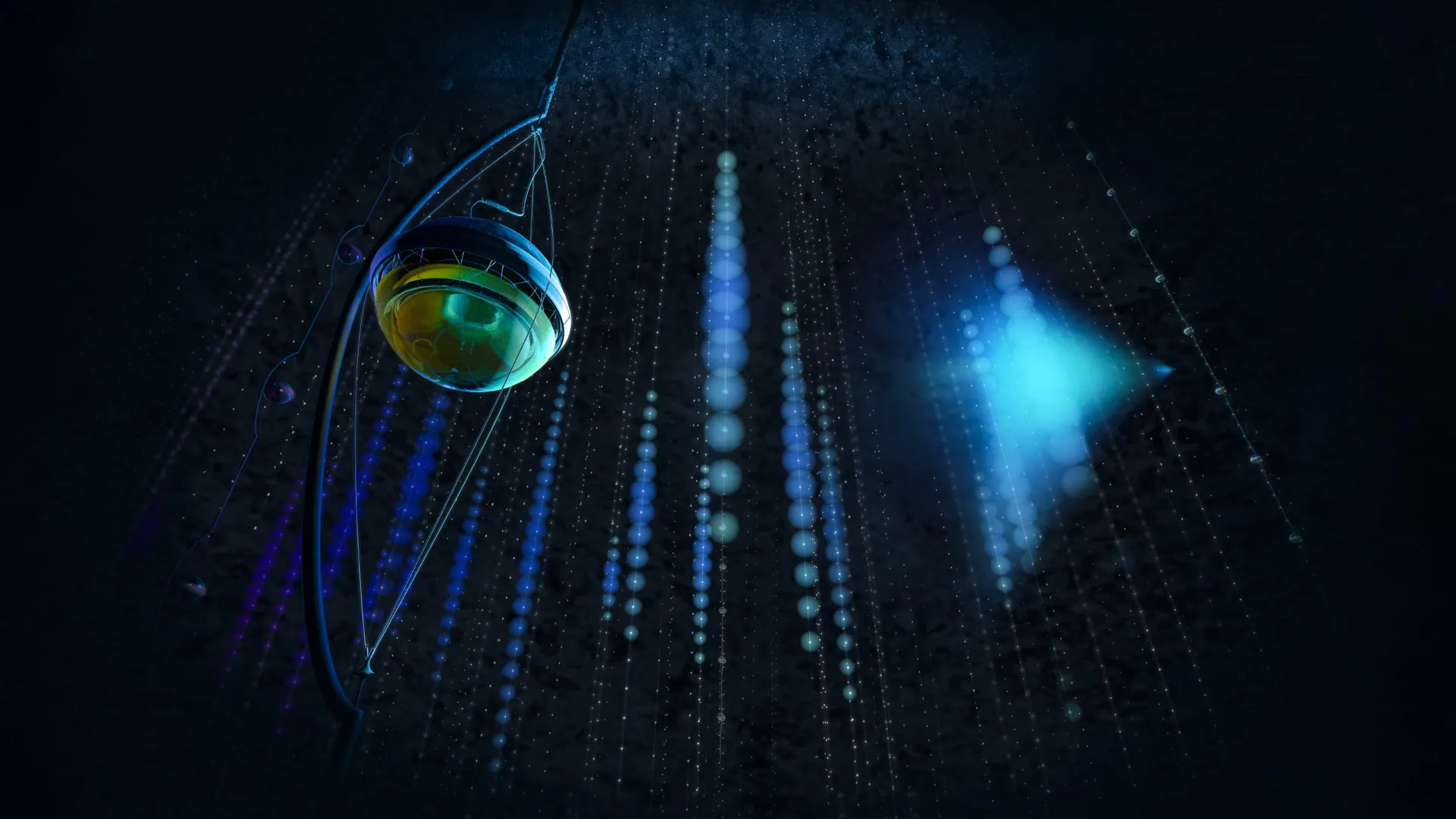
Francis Halzen’s vision for the IceCube Neutrino Observatory involved utilizing the deep, pristine ice of Antarctica as a natural detector. The process of construction was a feat of polar engineering: researchers drilled 86 holes, each 2,500 meters deep, and lowered strings of photomultiplier tubes into the ice. When these tubes are frozen in place, they form a cubic kilometer of sensor array.
The detection mechanism relies on Cherenkov radiation. When a high-energy neutrino strikes an atom within the ice, it creates a charged secondary particle that moves faster than the speed of light through the medium of ice. This movement generates a characteristic flash of blue light, which the sensors record. By analyzing the timing and intensity of these flashes, scientists can reconstruct the direction and energy of the original neutrino, effectively pointing back to a specific celestial coordinate.
Global Implications and Data Analysis
The data coming out of IceCube is not merely academic; it is providing insights into the "extreme universe." The observatory detects only a few dozen high-energy cosmic neutrinos per year, each carrying energy billions of times greater than those produced by our Sun. These neutrinos are likely accelerated by the most powerful engines in the cosmos, such as active galactic nuclei or gamma-ray bursts.
"Some ultra-high-energy neutrinos detected at IceCube have roughly 10 billion times the energy of a typical neutrino from the Sun," says Fuller. "We don’t really know exactly where some of these came from, but the fact that they reached us at all is profound. It tells us about the power of the environments that birthed them."
Beyond the Antarctic, the scientific effort is expanding to the Atacama Desert in Chile, where the Simons Observatory is currently monitoring the cosmic microwave background (CMB). While IceCube looks for the "shouts" of high-energy neutrinos, the Simons Observatory acts as an "ear" for the "whispers" of the early universe. By measuring the CMB, researchers can infer the role neutrinos played in the formation of the large-scale structure of the universe shortly after the Big Bang.
The Future of Neutrino Astronomy
The implications of this research are far-reaching. By combining data from IceCube, the Simons Observatory, and other international experiments, physicists hope to resolve the mystery of why neutrinos have mass and how they influence the evolution of the cosmos.
Furthermore, the study of neutrinos provides a unique test for physics beyond the Standard Model. Because neutrinos are so sensitive to the conditions of the early universe, they serve as a probe for dark matter and other phenomena that currently evade direct observation.
"Halzen’s work, and the work of those he inspired with his vision, was foundational in giving humanity a new window on the universe," Fuller adds. As technology improves and more observatories come online, the "ghost particle" will likely stop being a source of mystery and start being the primary tool for mapping the hidden architecture of the universe.
We are currently in a golden age of neutrino astronomy. For decades, these particles were merely a byproduct of radioactive decay that bothered physicists; today, they are the key to understanding the most violent and energetic phenomena in existence. As we continue to refine our ability to "catch" these elusive messengers, we move closer to answering fundamental questions about our origins, the nature of matter, and the future of the cosmos itself. The invisible, once thought to be undetectable, has become the lens through which we see the impossible.