The real estate industry, much like the broader global economy, entered 2026 with a sense of guarded optimism, fueled by the hope that the volatility characterizing the previous twenty-four months would finally subside. However, as the year unfolded, that optimism was quickly replaced by a complex, often overwhelming narrative of shifting interest rates, geopolitical instability, and a paralyzed buyer demographic. For agents and brokers navigating this landscape, the challenge has not merely been one of economic math, but of psychological management—both for themselves and for their clients. During the National Association of Realtors (NAR) NXT conference held over the weekend, industry leaders addressed the critical need to pivot from a defensive stance to a proactive, authoritative role. Holly Mabery, the chief brokerage officer at eXp Realty, provided a framework for professionals struggling to find their footing, emphasizing that in an era of information overload, the agent’s primary value proposition is the ability to simplify complexity and restore consumer confidence.
The Chronology of a Volatile Year
The trajectory of 2026 began in January with expectations that the Federal Reserve would pivot toward a more accommodative monetary policy. Early-year housing reports suggested a modest recovery in transaction volume, buoyed by a slight cooling in mortgage rates compared to the peak levels seen in late 2025. Yet, by the end of the first quarter, new geopolitical pressures—specifically the escalation of conflict in regions critical to global energy stability—sent bond yields surging.
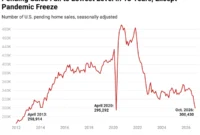
By mid-year, the housing market had entered a period of stagnation. Transaction volume plummeted as potential buyers, reacting to headlines about economic uncertainty and persistent inflation, retreated to the sidelines. This "mud-like" environment, as described by industry experts at the conference, created a paralysis where potential sellers were hesitant to list their homes due to the "lock-in effect" of previously secured low-interest rates, while buyers were priced out by rising costs. By the time of the September Federal Reserve interest rate announcement, the industry was searching for a catalyst to break the stalemate. This context serves as the backdrop for the current reality: a projected sub-4 million home sales environment for 2027, a figure that represents a significant contraction from historical norms.
Noise Versus Action: The Analytical Filter
A central theme emerging from the NAR NXT discussions was the necessity of the "noise versus action" filter. In an age of 24-hour news cycles and algorithmically driven content, real estate professionals are frequently bombarded with conflicting economic indicators. Mabery noted that for many agents, this saturation leads to decision fatigue, causing them to disengage from the very clients who need their guidance the most.
The strategy proposed to combat this is a rigorous process of translation. When a national headline regarding, for example, a Fed rate hike crosses the wires, the average consumer immediately views it through a macro lens of fear. The professional’s duty is to strip away the jargon and apply the "so what" test. By filtering national news through the lens of local market data—such as specific inventory levels, neighborhood price stability, and days-on-market metrics—agents can transform a frightening headline into a manageable conversation.
This approach shifts the professional from being a purveyor of news to a provider of context. For instance, while a rate hike might be perceived universally as a "buyer’s problem," a strategic analysis often reveals it to be a "seller’s problem." As borrowing costs rise, the pool of qualified buyers shrinks. Consequently, sellers who remain in the market are no longer dealing with a supply-constrained environment where they hold all the leverage. They must now compete for a smaller group of buyers, which necessitates a more flexible approach to pricing, concessions, and property preparation. By framing the conversation this way, the agent empowers the client to take action based on reality rather than fear.
Data-Driven Perspectives on the 2027 Outlook
The industry’s collective gaze is now firmly fixed on 2027, with many analysts projecting that transaction volumes will struggle to exceed 3.8 million units. This potential reality necessitates a radical shift in business operations. Data from the first three quarters of 2026 suggests that the traditional lead-generation models, which relied heavily on broad-market volume, are failing to yield the same return on investment.
Instead, the focus is shifting toward "depth over breadth." High-performing agents are increasingly utilizing advanced Customer Relationship Management (CRM) tools to identify past clients whose life events—such as marriage, career changes, or retirement—will inevitably necessitate a move, regardless of the interest rate environment. The "life-event-driven" market remains the most reliable indicator of transaction activity. Even in a high-interest-rate environment, the human need for housing remains constant; the challenge for the industry is to remain the trusted advisor when those life events occur.
Institutional Reactions and Professional Development
The sentiment at the NAR NXT conference reflected a consensus among brokerage leaders: the era of "easy" sales has ended, replaced by an era of "earned" transactions. Official responses from industry associations have focused on upskilling, with an emphasis on storytelling and negotiation. The ability to articulate the value of homeownership in a complex financial climate is considered a primary skill for the coming year.
There is also a growing movement among brokerages to emphasize mental health and resilience for their agents. The "chaos" of 2026, while taxing, has served as a forcing function for professional maturation. Firms that provide their agents with robust data sets, clear communication templates, and consistent support are expected to gain market share in 2027. The implication is that the professionalization of the industry is no longer a suggestion but a requirement for survival.
The Path Forward: Building Trust as a Core Asset
The core of the strategy for the remainder of 2026 and into 2027 rests on the concept of "trust-layering." When consumers feel overwhelmed, they disengage. When they are provided with clear, jargon-free information, they feel empowered to make decisions. The role of the real estate professional, therefore, is to act as a stabilizing force in the client’s life.
Mabery’s assessment that "the relationships you and I have are making all the difference in the world" underscores a shift toward relationship-based business models. In a market where digital lead generation has become more expensive and less effective, the "inner circle" approach—where an agent becomes a consultant for life—is gaining significant traction. By consistently sharing relevant knowledge and acting as a bridge between the confusion of the macro economy and the reality of the local market, agents increase their personal value.
As the industry prepares for the fiscal challenges of 2027, the objective remains clear: to calm the fears of the consumer. This requires a level of transparency that was perhaps less critical during the rapid appreciation years of the early 2020s. Professionals who can successfully communicate the "what is next" for their clients—guiding them through the nuances of current offer strategies and helping them navigate the complexities of financing—will be the ones who remain relevant.
Ultimately, the goal is to replace the paralysis of the last year with informed movement. Whether the 2027 market settles at 3.8 million transactions or slightly higher, the volume exists. The challenge for the individual agent is no longer about predicting the market’s direction but about capturing their specific "piece" of the available activity. By focusing on the individual, prioritizing clarity over noise, and maintaining a commitment to trust-based relationships, real estate professionals can move beyond the chaos of 2026 and establish a sustainable, resilient foundation for the years to come.